A practical way to sell your industrial chiller
Whether a chiller is still connected or has already been retired, its owner can ask us about a sale. We buy industrial chillers in Tennessee. With used industrial chillers, we need an accurate picture of the equipment, its surroundings and the likely release window; a running demonstration is not required for our review.
The page's stated focus is: Statewide buying and removal for sellers with surplus or decommissioned equipment. The information needed will depend on the particular unit and its surroundings. Explain what is known and identify any points that still need to be checked.
From a 20-ton unit to equipment rated 2,000 tons or more, our industrial chiller buying scope covers all tonnages and all refrigerants. We consider air-cooled and water-cooled chillers, including centrifugal, screw and scroll machines. Shutdowns at industrial plants, campuses, hospitals, power plants and data centers can produce surplus units. We make cash offers and pay upfront on agreed terms; the equipment and removal must first be evaluated.
Start with the machine and the property
A useful statewide request identifies both the chiller and its actual site in Tennessee. A unit in a mechanical room may require a different route from one on a pad or roof. Explain whether other equipment must stay in service, who can provide site access and when the chiller is available to be released.
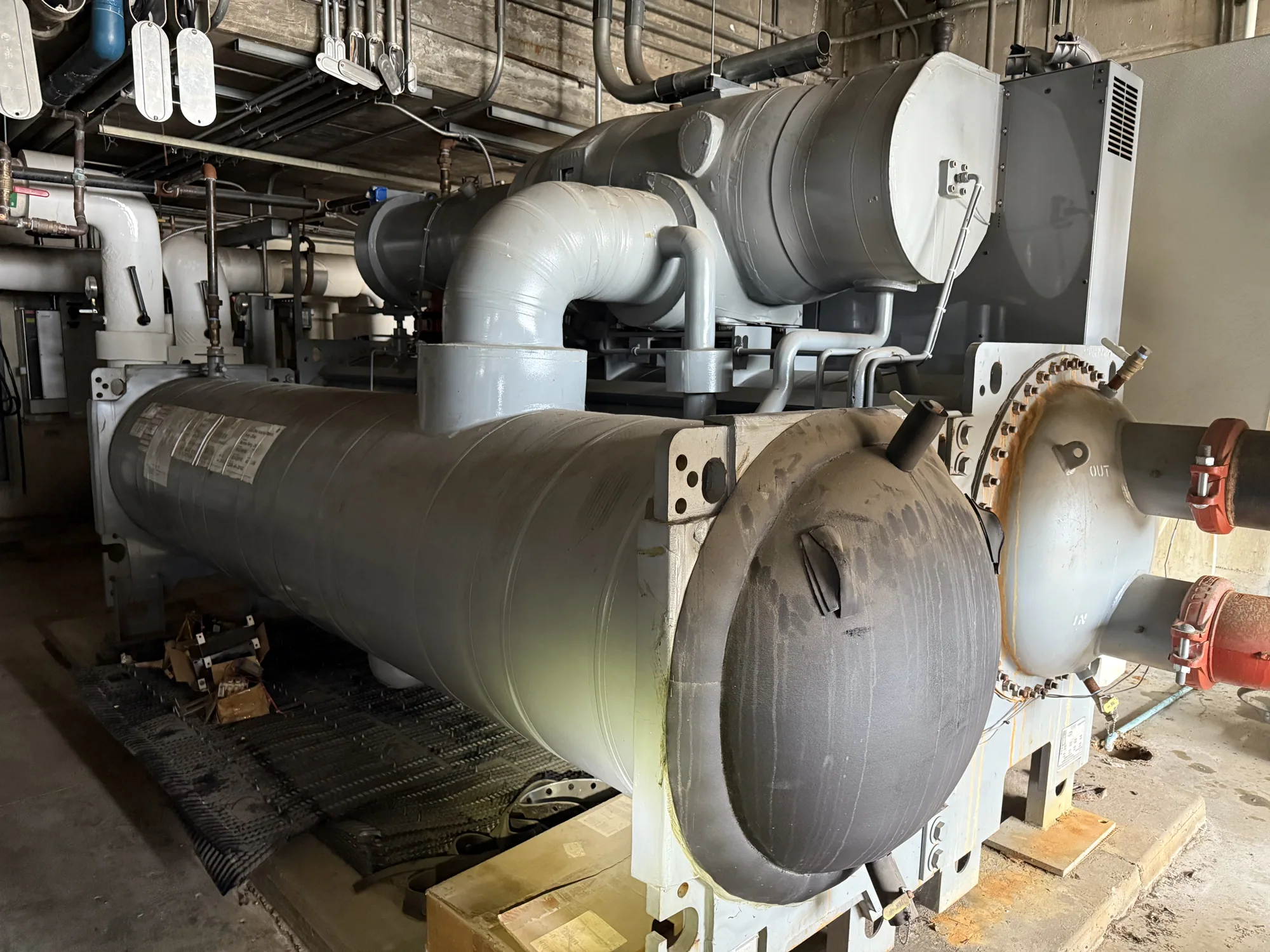
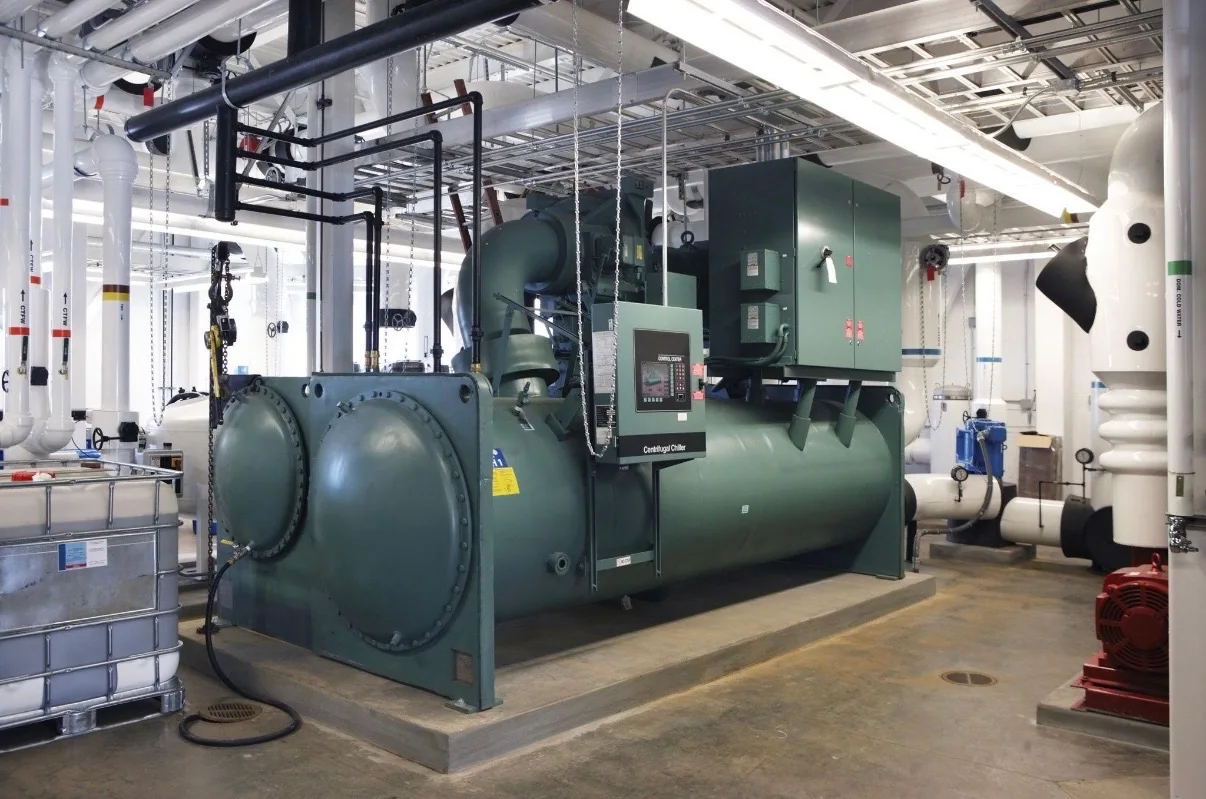
We consider industrial chillers from decommissioned data centers, power plants, hospitals, campuses and industrial plants. A facility does not have to match a particular example: identify the chiller you want to sell and describe its surroundings. We evaluate the equipment and the work needed to remove it, rather than assuming every shutdown is the same.
From first details to an agreed pickup
A first message can be concise without pretending every detail is settled. Include your contact and company, location of the chiller, the person authorized to sell and the intended release window. Add the nameplate and equipment photos and any known type, capacity, refrigerant and voltage. If there are several units, match each specification to its own photograph.
The people who approve a sale and control a building may differ, so tell us whom to contact for each. We review the machine and may follow up about access. If an offer is made, check its scope before accepting. Payment is upfront under agreed terms, and removal and freight are then coordinated around the agreed release and access arrangements.
Access, rigging and removal
A site plan is more useful when it shows obstacles as well as open space. Photograph the chiller in its room or outdoor setting, the openings toward the exit and the prospective truck area. Note roof access, slopes, low clearances or restrictions on entry. Provide known measurements and weight, but do not guess at missing figures.
You do not need to arrange a freight carrier or rigging crew for the agreed purchase. We handle crane work as needed, refrigerant recovery, disconnects, rigging, loading, freight and hauling. Describe the electrical and water connections and any adjacent systems that need protection. A site contact can help coordinate access and release; no seller testing is required.
How we evaluate an offer
A quote has to account for two connected questions: what is being bought, and what work is needed to take it away? Model, capacity, configuration, completeness and visible condition inform the equipment side. Disconnects, the exit route, freight and release date inform the logistics side. We review the whole situation; none of those details guarantees an offer or price.
Read the proposed terms against the asset list and the site plan. Clarify what is included, who can grant access and what pickup window is anticipated. The buyer pays upfront under the agreed sale terms, covers all freight and handles hauling. Agreeing on these points helps avoid treating a tentative date as a confirmed appointment.
What to send for a useful equipment review
Think of the photographs as an identification set: one for the complete machine, one close enough to read the plate and, where safely reachable, others for controls and connections. The plate may give the manufacturer, serial and model numbers, cooling capacity, electrical voltage and refrigerant. Never expose energized parts or defeat guarding for a photo.
If a component is missing, a label is unreadable or a service history is not available, simply say so. Include visible condition and whether the equipment remains connected. Our process does not require testing, so there is no need to run or energize the chiller for us. Clear answers are more useful than invented specifications.
Frequently asked questions
Do disconnected machines need to be reconnected for review?
No. Tell us the chiller is disconnected and send available identification and site photos instead. We do not ask sellers to operate or test equipment to request an offer. Describe missing components and leave uncertain details marked as unknown.
How is an agreed removal coordinated?
The site contact describes access and release requirements. We handle the disconnects, refrigerant recovery, rigging, loading and hauling, with a crane when needed, and cover freight. The actual plan and work window are coordinated under the sale's agreed scope.
When is payment made if we agree to sell?
We pay upfront under the agreed sale terms. Before acceptance, review the equipment included, payment arrangements and removal scope. The individual machine and site are evaluated first, so a cash offer or particular price is not automatic.