A practical way to sell your industrial chiller
Owners and authorized representatives with used industrial chillers in Wilson County, Tennessee can contact us to discuss a potential sale. We buy industrial chillers, not other equipment as part of this service. Describe the machine and its location, and we can review whether a cash purchase and buyer-handled removal are practical.
The subject of this discussion is: County-wide equipment purchase and removal. A useful first step is to separate the confirmed details from those that require checking, whether they concern the chiller itself or the surrounding property.
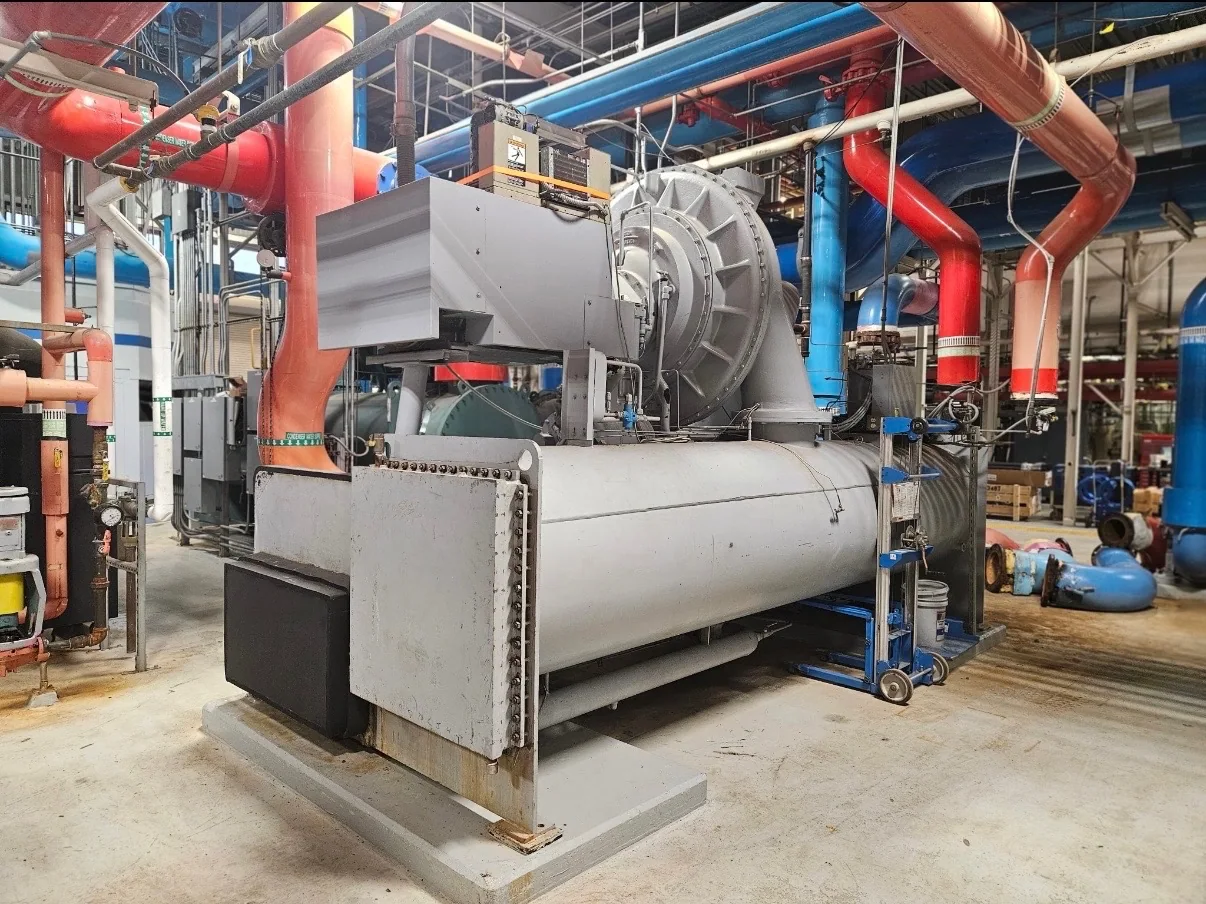
The chiller, rather than the entire facility, is the subject of our buying service. We buy industrial chillers of all tonnages and using all refrigerants, including 20–2,000+ ton units, both air-cooled and water-cooled, with centrifugal, screw or scroll configurations. Sources include data centers, power plants, hospitals, campuses and industrial shutdowns. Cash offers and upfront payment are subject to the equipment review and agreed terms, not an automatic guarantee.
Removing a chiller while a site remains active
An individual chiller can be retired while other equipment at the property continues to operate. If that is the case at your site in Wilson County, Tennessee, identify the unit for sale and describe the adjacent equipment or building systems that need to remain undisturbed during the work.
A facility representative can explain available work windows, access limits and the sequence for releasing the chiller. Share known electrical and water connections and label photographs where several machines look alike. We can review the details without asking you to operate the chiller for us.
Working with incomplete equipment records
Older equipment records can be incomplete, especially when the site contact was not involved when a chiller was installed. For a machine in Wilson County, Tennessee, send the clearest nameplate photograph available and a wider view of the unit. Existing drawings or service records can add context if you have them.
If the refrigerant, voltage, model or weight is not legible, label it unknown rather than guessing. Tell us whether the machine is still connected and describe any visible missing components. We do not require a performance test to start the review.
How we evaluate an offer
Two chillers with the same rated capacity can present different purchase and removal considerations. Their configurations, completeness and condition may differ, as may their locations, routes out and schedules. Share the identifying details and any known restrictions so we can assess the complete job. A specific amount or cash offer cannot be promised before that assessment.
Read the proposed terms against the asset list and the site plan. Clarify what is included, who can grant access and what pickup window is anticipated. The buyer pays upfront under the agreed sale terms, covers all freight and handles hauling. Agreeing on these points helps avoid treating a tentative date as a confirmed appointment.
From first details to an agreed pickup
Build the inquiry around the actual asset and a person we can contact. Provide your name, company and the equipment location, followed by any known type, tonnage, voltage and refrigerant information. Attach plate and full-unit photos. Identify the authorized seller and the expected release window; mark a date or specification tentative if it has not been confirmed. Label each machine separately.
Our review may lead to follow-up questions about the unit, the access route or the date the site can release it. If we make an offer, the seller can review the proposed purchase and removal scope before accepting. Payment is upfront under the agreed terms, and we coordinate the removal and freight rather than asking the seller to arrange hauling.
What to send for a useful equipment review
The words on a nameplate help connect the offered chiller to its actual specification. Photograph the maker, model and serial number, rated tons, voltage and refrigerant marking if legible. A whole-machine picture and safe views of connections and controls add context. If taking an image would require removing a cover or entering an unsafe space, leave it out.
Separate an observation from an operating claim. If you can see damage or know that a part was removed, explain that; if the service history is unavailable, say so. Let us know whether the unit is attached to its connections. We do not ask sellers to energize, run or pressure-test it, and existing records can supplement an unreadable plate.
Access, rigging and removal
The distance from a chiller to a truck is only one part of the route. Changes in floor level, door sizes, overhead structures and fixed equipment can affect the work. If the machine is on a roof or below grade, explain how that location is accessed. Photos and any reliable dimensions or weight help identify questions; estimates should be labeled.
Once a purchase and scope are agreed, the buyer handles refrigerant recovery and disconnects as well as rigging, loading, freight and hauling. Crane work is included when needed. The facility should identify power and water connections, equipment that must remain operational, and its rules for granting access. The seller does not need to test the chiller for our review.
Frequently asked questions
Should we run a performance test before sending photos?
No. Our buying process does not require a seller to run a test. Provide the equipment identification, visible condition and available site details. If the unit has already been shut down or a specification is unknown, say so rather than operating equipment for the quote.
Who organizes lifting and the trip away from the property?
We handle rigging, necessary crane work, loading, freight and hauling, as well as refrigerant recovery and disconnects, in the agreed removal scope. The buyer covers freight. The facility contact should explain restrictions and when access is available.
What should we confirm before accepting a cash offer?
Review the equipment included, the payment terms, the expected release window and the agreed removal scope. We pay upfront when the sale is agreed. An offer depends on the specific unit and logistics, so its availability and amount cannot be promised in advance.