A practical way to sell your industrial chiller
An industrial chiller sale is more than a model number or a pickup date. For used industrial chillers in Roane County, Tennessee, we look at the equipment itself, the space around it and the work involved in removal. Our business buys industrial chillers; we are not offering chillers for sale.
The subject of this discussion is: County-wide equipment purchase and removal. A useful first step is to separate the confirmed details from those that require checking, whether they concern the chiller itself or the surrounding property.
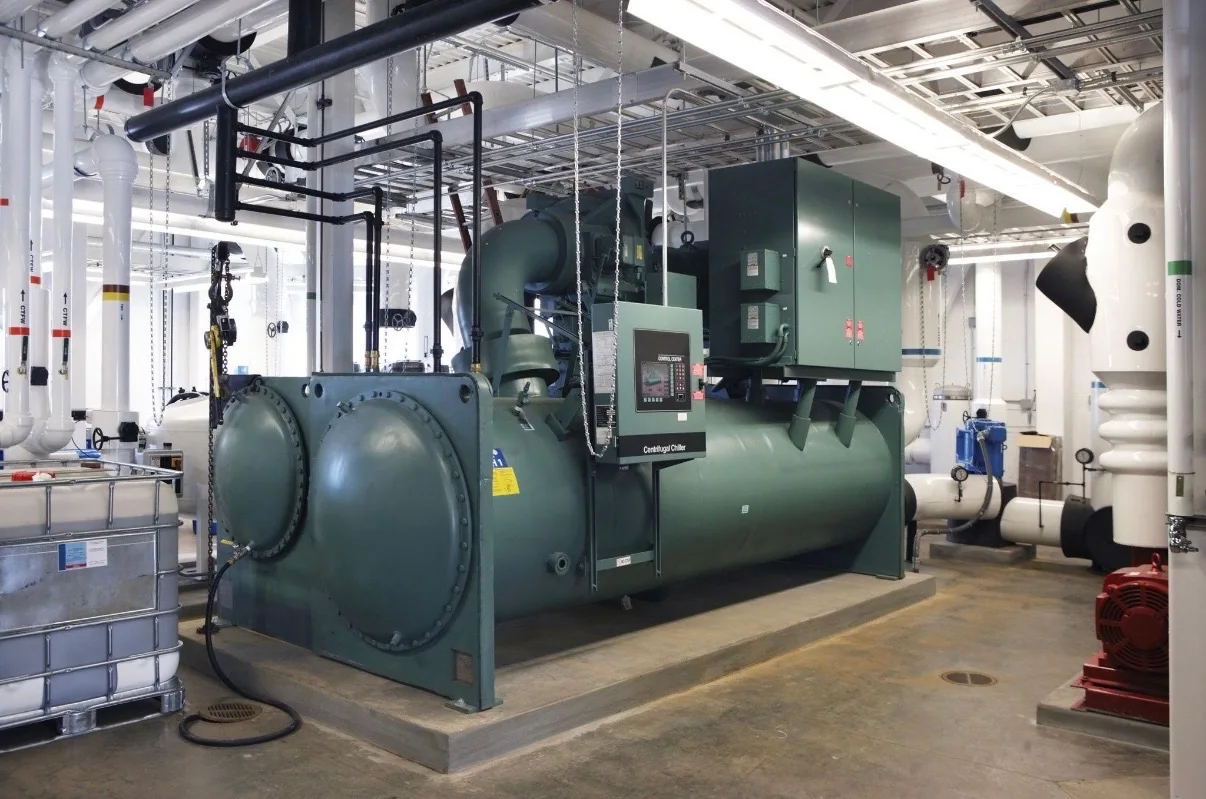
From a 20-ton unit to equipment rated 2,000 tons or more, our industrial chiller buying scope covers all tonnages and all refrigerants. We consider air-cooled and water-cooled chillers, including centrifugal, screw and scroll machines. Shutdowns at industrial plants, campuses, hospitals, power plants and data centers can produce surplus units. We make cash offers and pay upfront on agreed terms; the equipment and removal must first be evaluated.
Handling a property or equipment handoff
If a property in Roane County, Tennessee is changing hands, clarify who owns the chiller and who has authority to sell it before arranging a pickup. Identify the specific machine, any deadline for vacating the area and the person who can explain the building's access conditions.
If the timing depends on a contractor or another project milestone, share that uncertainty. A clear handoff helps us evaluate the machine and removal requirements without assuming that every item in the building is included. Payment and pickup are coordinated under agreed sale terms.
Documenting the path to a truck
A chiller's site in Roane County, Tennessee may offer several possible exits, but the most direct-looking route is not necessarily workable for a large machine. Share pictures of doors, turns, slopes, overhead obstructions and the loading area. If available, provide dimensions and explain where a truck can approach.
Also point out fixed equipment or areas that must remain clear. These facts help the buyer plan rigging, loading and freight as part of the proposed work. You do not need to choose the lifting method yourself or promise a route that has not yet been evaluated.
How we evaluate an offer
In reviewing a possible cash purchase, we look at the unit as described and the practical work at its property. The nameplate, capacity and type help identify it; photographs and condition notes show what is present. Disconnects, access, transport and the release window also affect the review. We do not guarantee that every machine will receive an offer.
The handoff should be clear before anyone schedules a truck. Review which chiller and components the agreement covers, when payment is due and the expected pickup window. We pay upfront according to the agreed terms and cover all freight and hauling. If the site's schedule depends on another party, bring that dependency into the discussion.
What to send for a useful equipment review
A full-unit photograph and a legible nameplate give us a starting point for identifying the chiller. Useful label details include manufacturer, model and serial numbers, rated capacity, voltage and refrigerant. Include accessible views of the controls and connections as well. Leave covers and guards in place rather than taking risks to obtain a photograph.
A unit may be connected, disconnected, incomplete or already retired; describe its actual condition rather than assuming that it must be operational. Mention known damage and any components that are absent. No testing is required, and you should not energize or operate equipment merely to request a quote. Existing records can help when a label is difficult to read.
Access, rigging and removal
Access can change the work needed even when two chillers have similar ratings. Show the unit in its surroundings, the exit route, the space for lifting and the area where freight could be loaded. Mention narrow openings, obstructions, rooftop placement and site-controlled access. Measurements and equipment weights are useful when available, but they do not need to be invented.
The division of responsibility is straightforward: the buyer handles recovery of refrigerant, disconnects, crane work when required, rigging, loading, freight and hauling in the agreed scope. The site contact helps identify access conditions and the connections or neighboring systems that need consideration. There is no need to run a chiller to ask for an offer.
From first details to an agreed pickup
Send the chiller's location, type, tonnage, refrigerant, voltage and nameplate photos, together with your contact details and company name. If some fields are unknown, provide what is available. Include the intended removal date, whether it is flexible, and the name of the person authorized to discuss the sale. For multiple chillers, label the photos and specifications by unit.
We review the information and discuss any questions about the equipment or access. If we can make an offer, you can review it and the scope before deciding whether to proceed. Once terms are agreed, upfront payment and the removal schedule are coordinated. Keep the machine and its surroundings accessible as agreed; our team handles the listed removal and freight work.
Frequently asked questions
The chiller has been shut down. Must it be restarted?
No. We do not require operation or testing for a quote. Send pictures of the equipment and its identification, and describe what you know about its present condition. Unknown history or specifications can be noted without energizing a retired machine.
Do I need a separate freight company?
No. For an agreed purchase, we handle hauling and cover all freight. Our scope also includes refrigerant recovery, disconnects, rigging, loading and crane work when needed. Let us know about the loading area and the site's access requirements.
Does a cash inquiry commit either side to a sale?
No offer is guaranteed. We first evaluate the equipment and its removal circumstances; the seller can review any proposal before agreeing. We pay upfront according to the terms of an accepted sale, with the equipment and work scope clearly identified.