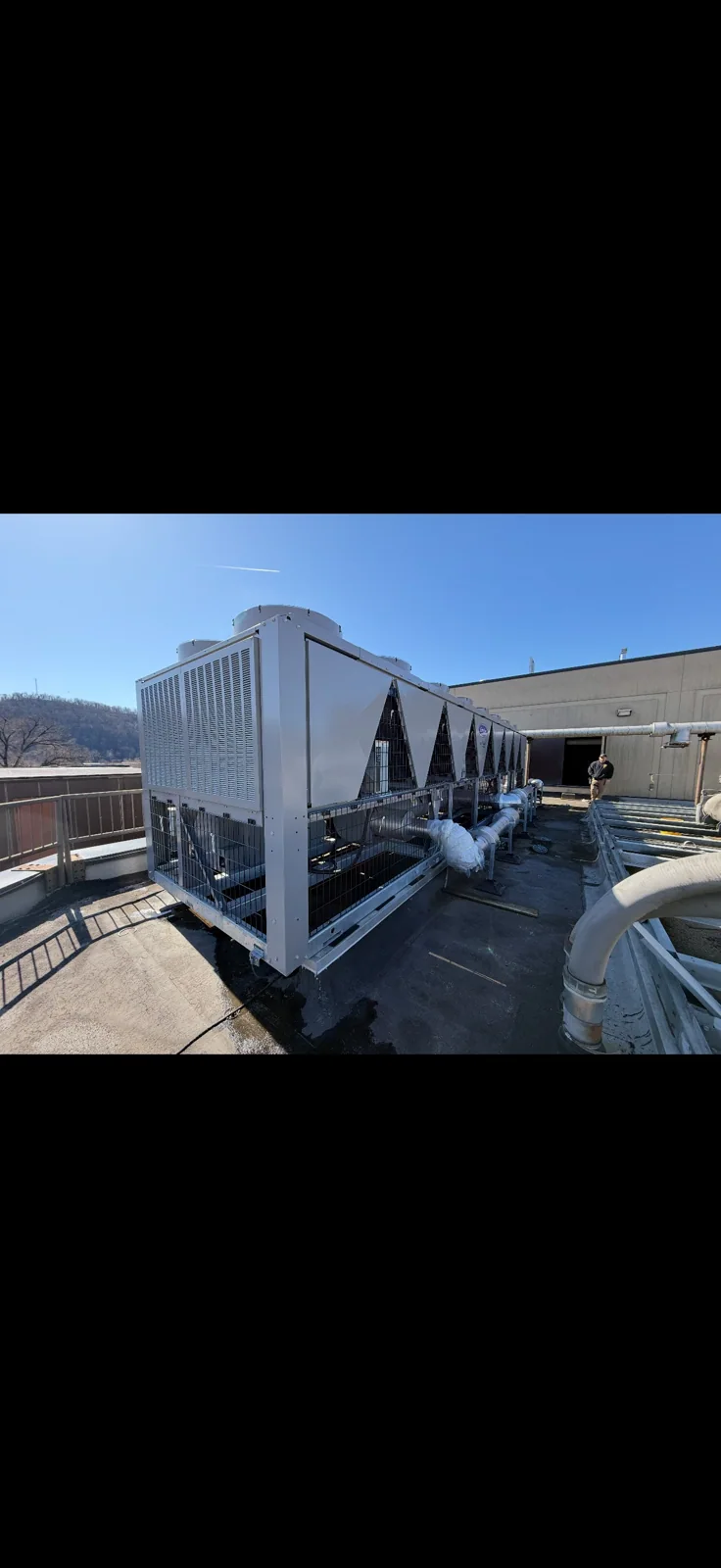
A practical way to sell your industrial chiller
Whether a chiller is still connected or has already been retired, its owner can ask us about a sale. We buy industrial chillers in Lawrence County, Tennessee. With used industrial chillers, we need an accurate picture of the equipment, its surroundings and the likely release window; a running demonstration is not required for our review.
The subject of this discussion is: County-wide equipment purchase and removal. A useful first step is to separate the confirmed details from those that require checking, whether they concern the chiller itself or the surrounding property.
Our buying scope is industrial chillers only. It includes air-cooled and water-cooled units, whether equipped with centrifugal, screw or scroll compressors. We buy chillers of all tonnages and using all refrigerants, including units from 20 to 2,000 or more tons. Data centers, power plants, hospitals, campuses and industrial plants are examples of decommissioning sources. We make cash offers and pay upfront under agreed terms; an individual offer is not guaranteed.
Selling more than one chiller
If you have several units at a property in Lawrence County, Tennessee, identify each one separately rather than sending a single total tonnage. A photo of each nameplate, paired with a full-unit view, helps distinguish models, refrigerants and capacity ratings. Note any missing parts or known differences in condition.
Tell us whether all units are available together or whether their release dates differ. If the machines occupy different rooms or properties, include the location and route for each one. Multiple units can be discussed in the same inquiry, but each situation still needs an equipment and logistics review.
Preparing useful site photographs
Photographs can answer different questions: the nameplate identifies the chiller, a full view shows its configuration, and wider site views show how it is positioned. For equipment in Lawrence County, Tennessee, send these views together and explain which image corresponds to which unit if there are several.
Include the route toward a door or loading area when it is safe to do so. Do not open electrical panels, remove guards or operate machinery for a photo. An approximate measurement or a question about access can be flagged for discussion instead of being presented as a confirmed fact.
Access, rigging and removal
A site plan is more useful when it shows obstacles as well as open space. Photograph the chiller in its room or outdoor setting, the openings toward the exit and the prospective truck area. Note roof access, slopes, low clearances or restrictions on entry. Provide known measurements and weight, but do not guess at missing figures.
For the agreed work, we take responsibility for disconnects, refrigerant recovery, rigging and loading, using a crane when needed; we also handle freight and hauling. Tell the coordinating contact about site rules and the unit's electrical and water connections, including any systems that must remain available. The quote request does not call for a seller-performed test.
From first details to an agreed pickup
You can begin before every record has been located. Share your contact and company, the chiller's location and the name of the person able to authorize a sale. Include a photo of the label and machine, its known type, capacity, refrigerant and voltage, and the expected release date. Flag flexible timing and identify each chiller separately if there is more than one.
We review the information and discuss any questions about the equipment or access. If we can make an offer, you can review it and the scope before deciding whether to proceed. Once terms are agreed, upfront payment and the removal schedule are coordinated. Keep the machine and its surroundings accessible as agreed; our team handles the listed removal and freight work.
How we evaluate an offer
A cash offer is evaluated using the chiller's identification, capacity, configuration, visible condition and completeness, along with the practical costs and timing of removal. Access for equipment and trucks, the work required to disconnect the unit, and the destination for the load can all matter. None of these factors alone determines the price, and not every inquiry results in an offer.
Payment and logistics should not be left implicit. If an offer is accepted, we pay upfront on the agreed terms, cover all freight and handle hauling. Establish which unit is being purchased and discuss the planned release window with the facility contact. Any unresolved questions about access or scope can be addressed before scheduling.
What to send for a useful equipment review
Start with a readable photo of the manufacturer's nameplate. The manufacturer, model, serial number, cooling capacity, voltage and refrigerant marking can help identify what is being offered. Add a full view of the chiller and, if accessible, photos of the controls, compressor area and visible connections. Do not remove guards or enter an unsafe area to take pictures.
Separate an observation from an operating claim. If you can see damage or know that a part was removed, explain that; if the service history is unavailable, say so. Let us know whether the unit is attached to its connections. We do not ask sellers to energize, run or pressure-test it, and existing records can supplement an unreadable plate.
Frequently asked questions
What if we cannot demonstrate that the unit runs?
You can still send the available information. Seller testing is not required, and a machine should not be energized solely for our quotation. Identify the unit and explain its known condition or any gaps in the record; any offer is subject to review.
What should the facility contribute to removal planning?
Explain the route, connections, access rules and release window. We handle refrigerant recovery, disconnects, rigging, loading and hauling; crane work is handled when needed and all freight is covered. The site should identify neighboring equipment that must stay in place or service.
When is payment made if we agree to sell?
We pay upfront under the agreed sale terms. Before acceptance, review the equipment included, payment arrangements and removal scope. The individual machine and site are evaluated first, so a cash offer or particular price is not automatic.