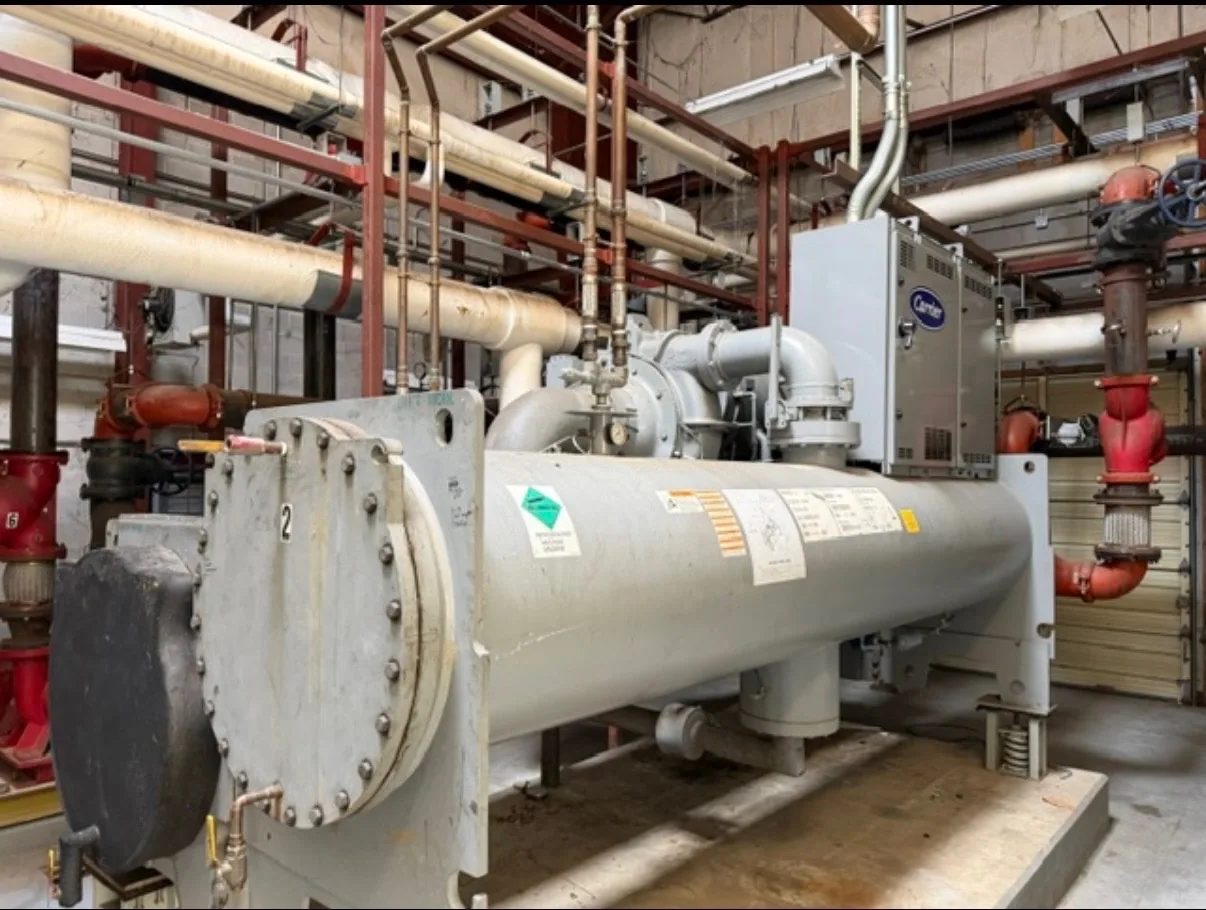
A practical way to sell your industrial chiller
If you have an industrial chiller to remove in Gibson County, Tennessee, you do not need to make it operational before contacting us. We buy industrial chillers and can evaluate a request concerning used industrial chillers using the equipment details, available photographs and the conditions at the site.
For this discussion, keep the specific context in view: County-wide equipment purchase and removal. The right information depends on the machine and the facility, so share what you know and flag anything that remains uncertain.
From a 20-ton unit to equipment rated 2,000 tons or more, our industrial chiller buying scope covers all tonnages and all refrigerants. We consider air-cooled and water-cooled chillers, including centrifugal, screw and scroll machines. Shutdowns at industrial plants, campuses, hospitals, power plants and data centers can produce surplus units. We make cash offers and pay upfront on agreed terms; the equipment and removal must first be evaluated.
Preparing useful site photographs
Photographs can answer different questions: the nameplate identifies the chiller, a full view shows its configuration, and wider site views show how it is positioned. For equipment in Gibson County, Tennessee, send these views together and explain which image corresponds to which unit if there are several.
Include the route toward a door or loading area when it is safe to do so. Do not open electrical panels, remove guards or operate machinery for a photo. An approximate measurement or a question about access can be flagged for discussion instead of being presented as a confirmed fact.
When the unit is outdoors or elevated
If the machine is outdoors, on a roof or on an elevated platform, describe where it sits and what surrounds it. A wide photo can reveal nearby structures, fences or other equipment that may influence the lifting approach. Include the site location in Gibson County, Tennessee and explain how the area is reached.
For a rooftop unit, let us know what access is available and whether there is a suitable area to discuss crane placement. Do not infer the unit's weight from its tonnage. The buyer handles crane work when needed, and the actual approach is planned around the equipment and site conditions.
From first details to an agreed pickup
If you are preparing information for someone else to submit, gather the company and contact details, site location and authority to sell alongside the chiller photographs. Capacity, type, refrigerant and voltage are useful when known. Explain the anticipated removal date and whether it can move. A separate identification set for each unit prevents different machines from being confused.
Our review may lead to follow-up questions about the unit, the access route or the date the site can release it. If we make an offer, the seller can review the proposed purchase and removal scope before accepting. Payment is upfront under the agreed terms, and we coordinate the removal and freight rather than asking the seller to arrange hauling.
Access, rigging and removal
A site plan is more useful when it shows obstacles as well as open space. Photograph the chiller in its room or outdoor setting, the openings toward the exit and the prospective truck area. Note roof access, slopes, low clearances or restrictions on entry. Provide known measurements and weight, but do not guess at missing figures.
Our removal scope includes refrigerant recovery, disconnects, crane service when needed, rigging, loading, freight and hauling. Explain where the unit connects to power or water and whether neighboring equipment must stay in service. Site access and timing are coordinated with the appropriate contact. The seller does not have to test the machine before requesting a quote.
How we evaluate an offer
In reviewing a possible cash purchase, we look at the unit as described and the practical work at its property. The nameplate, capacity and type help identify it; photographs and condition notes show what is present. Disconnects, access, transport and the release window also affect the review. We do not guarantee that every machine will receive an offer.
The handoff should be clear before anyone schedules a truck. Review which chiller and components the agreement covers, when payment is due and the expected pickup window. We pay upfront according to the agreed terms and cover all freight and hauling. If the site's schedule depends on another party, bring that dependency into the discussion.
What to send for a useful equipment review
Start by locating the main equipment label and taking a clear, straight-on photo if it can be reached safely. Pair that with an image of the full chiller; show controls and connections where possible. Manufacturer, model, serial number, cooling rating, refrigerant and voltage are useful details, but do not open energized cabinets or move guards to read them.
The absence of a readable plate or a complete history is worth flagging, not concealing. Provide available records and photographs, indicate whether the chiller is connected and identify missing components or known damage. If you do not know a specification, say so. The seller is not required to run or test the equipment for our evaluation.
Frequently asked questions
What should replace a test in my initial submission?
Provide a readable nameplate if available, a full view of the chiller and an honest description of its condition and location. We do not require a performance test and you should not energize the machine just to seek a quote.
Who handles refrigerant, rigging and freight?
The buyer handles refrigerant recovery, disconnects, crane work when needed, rigging, loading, freight and hauling. We cover all freight. Tell us about the site's access rules and the equipment's connections so those activities can be coordinated within the agreed removal plan.
What should we confirm before accepting a cash offer?
Review the equipment included, the payment terms, the expected release window and the agreed removal scope. We pay upfront when the sale is agreed. An offer depends on the specific unit and logistics, so its availability and amount cannot be promised in advance.