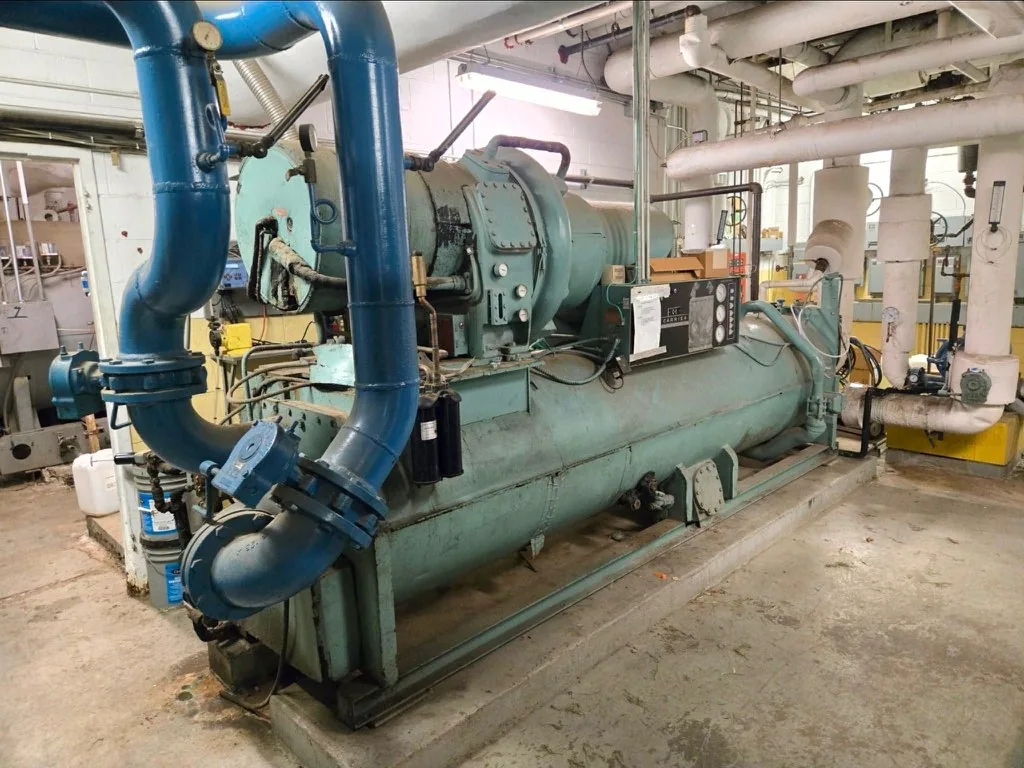
A practical way to sell your industrial chiller
When a cooling project leaves a surplus machine in Tennessee, the first decision is often how to move it from the property. We buy industrial chillers. For Carrier chillers, we review identification and site access together, so a seller can discuss a possible cash purchase without first arranging the move or operating the equipment.
The topic can be summarized as follows: Nameplate, model, configuration and removal planning for Carrier equipment. Start with the equipment you actually intend to sell; give us the information you have and distinguish it from assumptions about the installation or its release date.
Our business buys industrial chillers only, including air-cooled and water-cooled machines with centrifugal, screw or scroll compressors. Equipment from 20 to 2,000+ tons is included, and we buy chillers of all tonnages and using all refrigerants. Sources can include data center decommissioning, power plant shutdowns, hospital or campus closures and industrial plant shutdown projects. A seller may receive a cash offer, with upfront payment under agreed terms. The machine and logistics must be evaluated first; no particular offer is promised.
Manufacturer and model details
When offering Carrier chillers, check whether the records identify the same unit that is available for removal. Model and serial markings on the equipment are preferable to a generic equipment list. A separate label on a compressor or control panel may provide context; photograph it only if it is safely accessible.
If paperwork and the visible label differ, point out the discrepancy rather than choosing one by assumption. Explain whether the chiller is complete, which components are included and how it sits in the building. These details help define the potential purchase, although neither the brand nor the information supplied guarantees an offer.
From first details to an agreed pickup
To begin, provide a contact name and company, the equipment location, and the type, tonnage, refrigerant and voltage shown on the chiller if known. Nameplate and full-unit photos help connect those details to the correct machine. Mention who can authorize the sale and your preferred release window; an unknown specification or tentative date can be marked as such.
First we assess the submitted information; then any unresolved equipment or access questions can be discussed. A seller is free to review an offer, if made, and its stated removal scope before accepting it. An agreed sale moves to upfront payment and pickup coordination. We handle the agreed physical removal and cover the freight rather than requiring a seller-booked carrier.
Access, rigging and removal
Show where the machine sits in relation to the space around it, then photograph the way out and the area available for loading. Point out narrow openings, immovable objects, stairs or overhead barriers, and explain any controlled entrance. If known, give the unit's dimensions and weight. An uncertain measurement should remain an estimate, not a fact.
Our removal scope includes refrigerant recovery, disconnects, crane service when needed, rigging, loading, freight and hauling. Explain where the unit connects to power or water and whether neighboring equipment must stay in service. Site access and timing are coordinated with the appropriate contact. The seller does not have to test the machine before requesting a quote.
How we evaluate an offer
A quote has to account for two connected questions: what is being bought, and what work is needed to take it away? Model, capacity, configuration, completeness and visible condition inform the equipment side. Disconnects, the exit route, freight and release date inform the logistics side. We review the whole situation; none of those details guarantees an offer or price.
An accepted cash offer should specify what will be sold and how the handoff will work. We pay upfront according to the agreed terms, cover all freight and handle hauling. Confirm who will provide access and when the chiller can be released, so the purchase and removal plan match the actual site and equipment.
What to send for a useful equipment review
Start with a readable photo of the manufacturer's nameplate. The manufacturer, model, serial number, cooling capacity, voltage and refrigerant marking can help identify what is being offered. Add a full view of the chiller and, if accessible, photos of the controls, compressor area and visible connections. Do not remove guards or enter an unsafe area to take pictures.
Describe the unit as it stands today, even if it is disconnected, missing pieces or has not been operated recently. Known damage and existing service records can add context, particularly when a nameplate is hard to read. We do not require testing: do not start, energize or pressure-test the equipment simply to make an inquiry.
Frequently asked questions
Should we run a performance test before sending photos?
No. Our buying process does not require a seller to run a test. Provide the equipment identification, visible condition and available site details. If the unit has already been shut down or a specification is unknown, say so rather than operating equipment for the quote.
What should the facility contribute to removal planning?
Explain the route, connections, access rules and release window. We handle refrigerant recovery, disconnects, rigging, loading and hauling; crane work is handled when needed and all freight is covered. The site should identify neighboring equipment that must stay in place or service.
Can you guarantee an offer based on brand and tonnage?
No. Those details help identify a chiller, but its condition, completeness and removal requirements also matter. We buy chillers of all tonnages and using all refrigerants, and evaluate each situation. When a sale is agreed, payment is upfront under the stated terms.