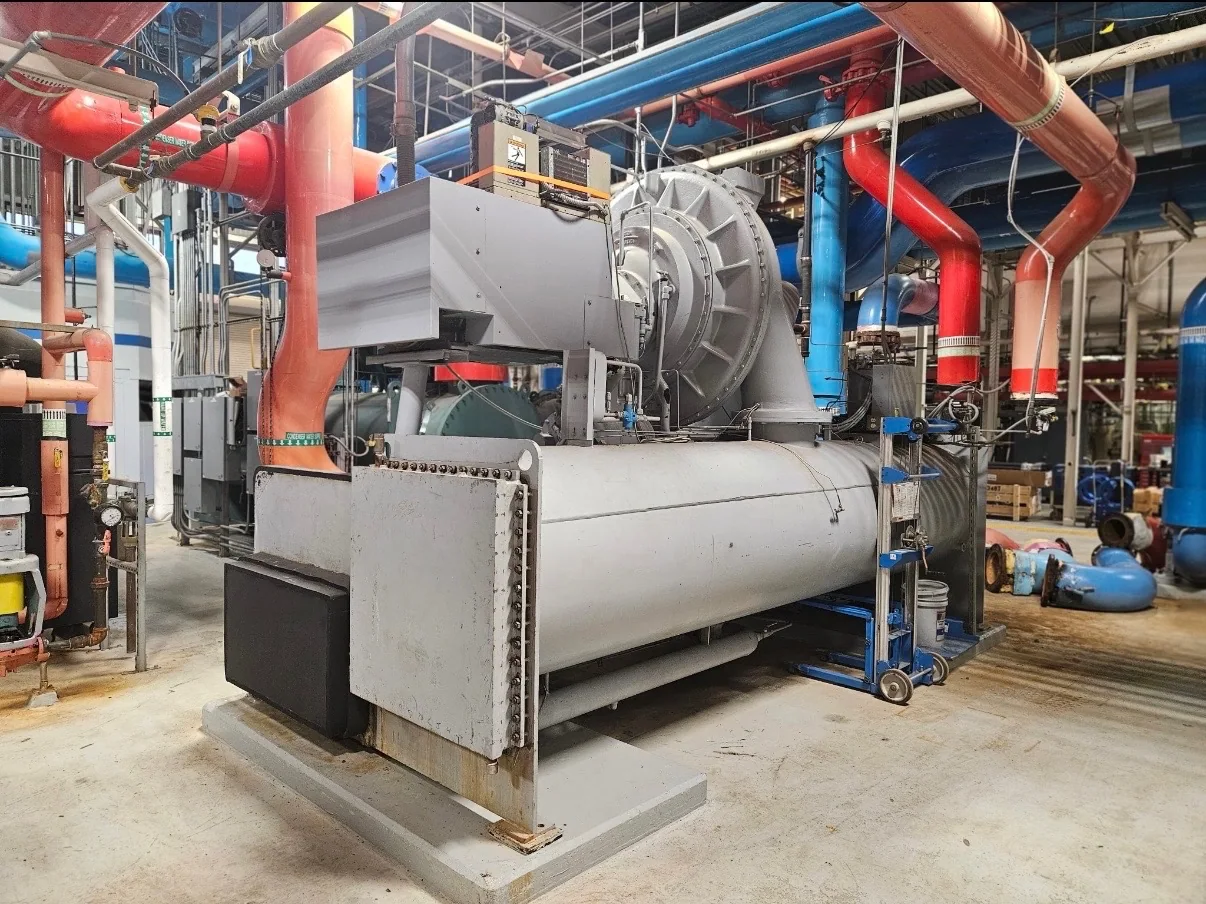
A practical way to sell your industrial chiller
When a cooling project leaves a surplus machine in Clarksville, Tennessee, the first decision is often how to move it from the property. We buy industrial chillers. For used industrial chillers, we review identification and site access together, so a seller can discuss a possible cash purchase without first arranging the move or operating the equipment.
The page's stated focus is: Local service for surplus and decommissioned chillers. The information needed will depend on the particular unit and its surroundings. Explain what is known and identify any points that still need to be checked.
Our business buys industrial chillers only, including air-cooled and water-cooled machines with centrifugal, screw or scroll compressors. Equipment from 20 to 2,000+ tons is included, and we buy chillers of all tonnages and using all refrigerants. Sources can include data center decommissioning, power plant shutdowns, hospital or campus closures and industrial plant shutdown projects. A seller may receive a cash offer, with upfront payment under agreed terms. The machine and logistics must be evaluated first; no particular offer is promised.
Selling more than one chiller
If you have several units at a property in Clarksville, Tennessee, identify each one separately rather than sending a single total tonnage. A photo of each nameplate, paired with a full-unit view, helps distinguish models, refrigerants and capacity ratings. Note any missing parts or known differences in condition.
Tell us whether all units are available together or whether their release dates differ. If the machines occupy different rooms or properties, include the location and route for each one. Multiple units can be discussed in the same inquiry, but each situation still needs an equipment and logistics review.
Access rules and removal coordination
Before scheduling a pickup in Clarksville, Tennessee, find out who can provide access to the chiller, the building and the loading area. Some properties use visitor procedures, escorts, restricted hours or controlled entrances; tell us if any such rules apply to your particular site.
Point out areas that need to remain open to occupants or other contractors and share any proposed work window. The buyer handles refrigerant recovery, disconnects and physical removal in the agreed scope. Knowing the site's requirements in advance helps make that coordination more practical.
Access, rigging and removal
Access can change the work needed even when two chillers have similar ratings. Show the unit in its surroundings, the exit route, the space for lifting and the area where freight could be loaded. Mention narrow openings, obstructions, rooftop placement and site-controlled access. Measurements and equipment weights are useful when available, but they do not need to be invented.
You do not need to arrange a freight carrier or rigging crew for the agreed purchase. We handle crane work as needed, refrigerant recovery, disconnects, rigging, loading, freight and hauling. Describe the electrical and water connections and any adjacent systems that need protection. A site contact can help coordinate access and release; no seller testing is required.
How we evaluate an offer
A useful valuation discussion starts with facts, not an assumed price per ton. Provide the model and configuration, visible condition and whether components are complete, then describe the removal route and available timing. We consider the chiller and the associated work as one proposed transaction. Each case is evaluated and neither a price nor an offer is guaranteed.
Read the proposed terms against the asset list and the site plan. Clarify what is included, who can grant access and what pickup window is anticipated. The buyer pays upfront under the agreed sale terms, covers all freight and handles hauling. Agreeing on these points helps avoid treating a tentative date as a confirmed appointment.
What to send for a useful equipment review
The nameplate is often the quickest way to distinguish one machine from another. Send the manufacturer, model, serial number, tonnage, voltage and refrigerant details visible on the label, along with a wide photo of the whole unit. Photos of controls and connections can add context. Only photograph areas you can access safely; do not open energized equipment for a picture.
A unit may be connected, disconnected, incomplete or already retired; describe its actual condition rather than assuming that it must be operational. Mention known damage and any components that are absent. No testing is required, and you should not energize or operate equipment merely to request a quote. Existing records can help when a label is difficult to read.
From first details to an agreed pickup
You can begin before every record has been located. Share your contact and company, the chiller's location and the name of the person able to authorize a sale. Include a photo of the label and machine, its known type, capacity, refrigerant and voltage, and the expected release date. Flag flexible timing and identify each chiller separately if there is more than one.
We review the information and discuss any questions about the equipment or access. If we can make an offer, you can review it and the scope before deciding whether to proceed. Once terms are agreed, upfront payment and the removal schedule are coordinated. Keep the machine and its surroundings accessible as agreed; our team handles the listed removal and freight work.
Frequently asked questions
What should replace a test in my initial submission?
Provide a readable nameplate if available, a full view of the chiller and an honest description of its condition and location. We do not require a performance test and you should not energize the machine just to seek a quote.
Will the seller need to arrange removal and transportation?
No. We handle disconnects, refrigerant recovery, rigging, crane work when needed, loading and hauling, and we cover all freight. The site contact can help by explaining access, release dates and any systems that must remain in place. Removal is coordinated under the agreed scope.
Why do access and condition matter to an offer?
They help define both the asset being purchased and the work needed to remove it. Model, configuration, completeness and schedule also matter. We buy chillers of all tonnages and using all refrigerants, but the review does not guarantee a price or an offer. Payment for an agreed sale is upfront.