A practical way to sell your industrial chiller
Selling an industrial chiller starts with two questions: what is the equipment, and what will it take to remove it safely? We buy industrial chillers in Carter County, Tennessee. For a request concerning used industrial chillers, photographs and honest site details help us assess the machine and prepare a practical cash offer.
Use this page as a starting point for the following: County-wide equipment purchase and removal. The particular nameplate, condition and site constraints matter more than a general description; uncertain details can be discussed rather than guessed.
Our business buys industrial chillers only, including air-cooled and water-cooled machines with centrifugal, screw or scroll compressors. Equipment from 20 to 2,000+ tons is included, and we buy chillers of all tonnages and using all refrigerants. Sources can include data center decommissioning, power plant shutdowns, hospital or campus closures and industrial plant shutdown projects. A seller may receive a cash offer, with upfront payment under agreed terms. The machine and logistics must be evaluated first; no particular offer is promised.
When the unit is outdoors or elevated
If the machine is outdoors, on a roof or on an elevated platform, describe where it sits and what surrounds it. A wide photo can reveal nearby structures, fences or other equipment that may influence the lifting approach. Include the site location in Carter County, Tennessee and explain how the area is reached.
For a rooftop unit, let us know what access is available and whether there is a suitable area to discuss crane placement. Do not infer the unit's weight from its tonnage. The buyer handles crane work when needed, and the actual approach is planned around the equipment and site conditions.
Planning a mechanical-room removal
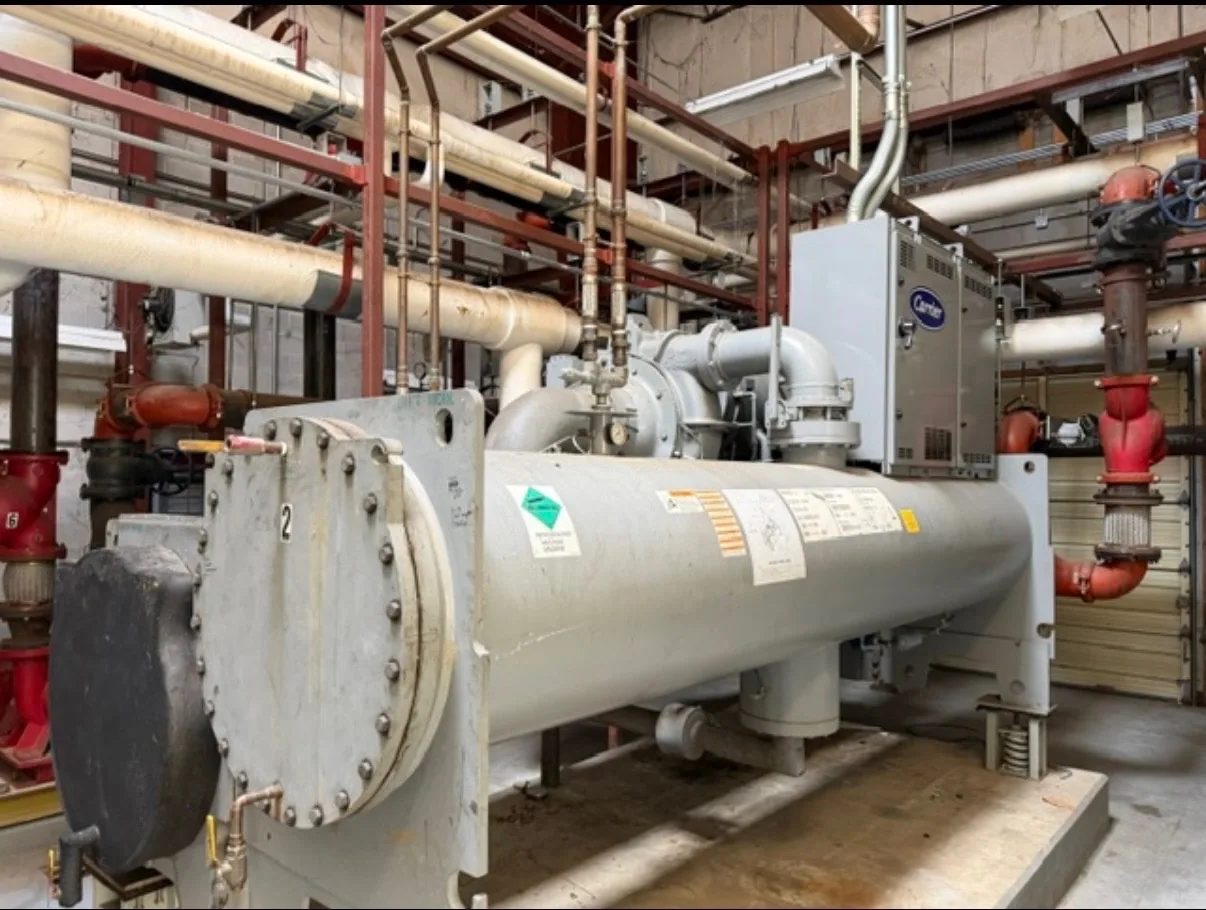
If the chiller in Carter County, Tennessee is inside a mechanical room, show the machine in relation to the walls, nearby equipment and the exit. A building address by itself does not reveal the width of a doorway or whether the route has stairs, a ramp or a change in floor level. Measurements and clear photographs can help identify questions for the removal plan.
Tell us which pipes and electrical connections belong to the unit and which surrounding systems must remain in place. The buyer handles the agreed disconnects and rigging; the facility contact can explain access rules and the window in which the equipment will be released.
How we evaluate an offer
The proposed sale is assessed as a complete job: identify the machine, describe its condition and tell us about the site and schedule. Capacity, configuration, missing parts, disconnects, access and transportation can all affect the evaluation. These are factors we review, not promises of a specific value or a guaranteed offer.
Payment and logistics should not be left implicit. If an offer is accepted, we pay upfront on the agreed terms, cover all freight and handle hauling. Establish which unit is being purchased and discuss the planned release window with the facility contact. Any unresolved questions about access or scope can be addressed before scheduling.
From first details to an agreed pickup
To begin, provide a contact name and company, the equipment location, and the type, tonnage, refrigerant and voltage shown on the chiller if known. Nameplate and full-unit photos help connect those details to the correct machine. Mention who can authorize the sale and your preferred release window; an unknown specification or tentative date can be marked as such.
The review comes before a commitment. We may need clarification on the unit, its connections or the release date; an offer is not automatic. If a proposal is made, compare its equipment, payment and removal terms with your plans. Once accepted, we pay upfront as agreed and arrange the removal and freight with the appropriate site contact.
What to send for a useful equipment review
If all you have at first is a building inventory, compare it with the markings on the chiller itself. We can use a readable nameplate showing the maker, model, serial number, tonnage, voltage and refrigerant, along with a photograph of the complete unit. Show accessible controls and connections too, without disturbing covers or entering hazardous spaces.
If a component is missing, a label is unreadable or a service history is not available, simply say so. Include visible condition and whether the equipment remains connected. Our process does not require testing, so there is no need to run or energize the chiller for us. Clear answers are more useful than invented specifications.
Access, rigging and removal
Start at the unit and trace a possible path to the loading area in your photographs. Doors, corners, ramps, overhead restrictions and nearby equipment may all matter. Explain where a vehicle could approach and whether the machine is elevated or below grade. Share documented dimensions and weight if available, identifying an approximation as such.
Once a purchase and scope are agreed, the buyer handles refrigerant recovery and disconnects as well as rigging, loading, freight and hauling. Crane work is included when needed. The facility should identify power and water connections, equipment that must remain operational, and its rules for granting access. The seller does not need to test the chiller for our review.
Frequently asked questions
Can I request an offer if the unit is not running?
Yes. No testing is required, and you should not start or energize the chiller just for our review. Share the nameplate, photos and what you know about its condition and connections. We evaluate the information rather than assuming that every inquiry results in an offer.
What work does the buyer handle after a sale is agreed?
We handle refrigerant recovery, disconnects, necessary crane work, rigging, loading, freight and hauling; all freight is covered by the buyer. Describe the machine's connections and the route out so the team can coordinate removal with the facility's access requirements.
Can you guarantee an offer based on brand and tonnage?
No. Those details help identify a chiller, but its condition, completeness and removal requirements also matter. We buy chillers of all tonnages and using all refrigerants, and evaluate each situation. When a sale is agreed, payment is upfront under the stated terms.