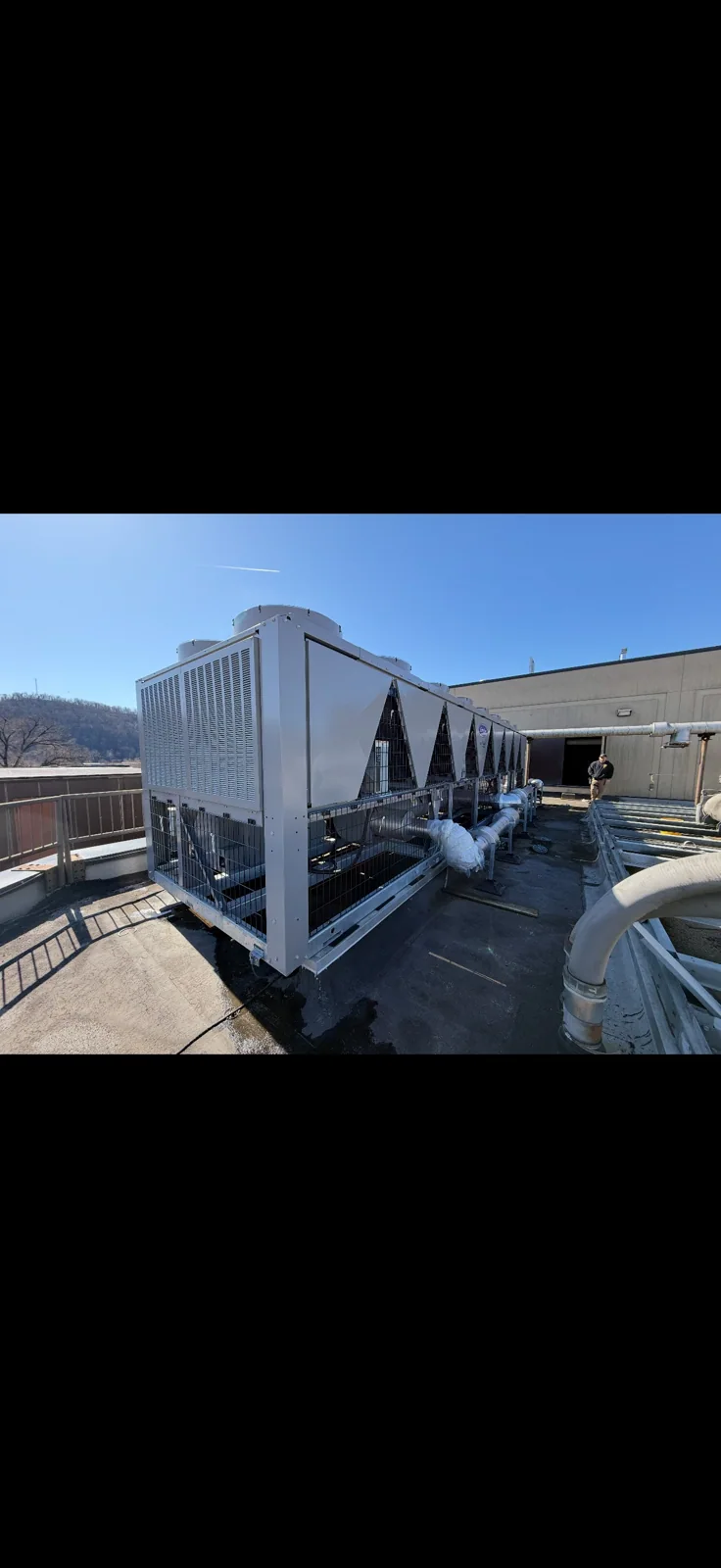
A practical way to sell your industrial chiller
A nameplate can tell part of the story; the route to a loading area tells another part. If you are considering selling Trane chillers in Clarksville, Tennessee, share both equipment and site information. Our business buys industrial chillers, and each possible purchase is assessed on its own circumstances.
Consider the circumstances behind the request: Trane chiller identity, configuration, access and removal. An equipment label, a site photograph and a contact familiar with the property can help turn that broad description into a useful discussion.
From a 20-ton unit to equipment rated 2,000 tons or more, our industrial chiller buying scope covers all tonnages and all refrigerants. We consider air-cooled and water-cooled chillers, including centrifugal, screw and scroll machines. Shutdowns at industrial plants, campuses, hospitals, power plants and data centers can produce surplus units. We make cash offers and pay upfront on agreed terms; the equipment and removal must first be evaluated.
Manufacturer and model details
To discuss Trane chillers, give us an identification trail: a picture of the machine, a legible main plate and any accessible additional labels. A site contact can indicate which photograph belongs to the unit being retired. If the serial number is unavailable, say so and share the records already at hand.
The next question is what will physically transfer with the machine. Identify missing components, alterations and any adjacent equipment that must be left undisturbed. Condition, access and scope all matter to the evaluation; the presence of a particular manufacturer name does not establish a guaranteed offer.
What to send for a useful equipment review
Make the identification images easy to match to the asset. A close view of the main plate may show the manufacturer, model, serial number, capacity, voltage and refrigerant; a separate wide view shows the whole chiller. If safe access permits, add controls and connection photographs. Do not open electrical enclosures or remove protective guards to obtain them.
If a component is missing, a label is unreadable or a service history is not available, simply say so. Include visible condition and whether the equipment remains connected. Our process does not require testing, so there is no need to run or energize the chiller for us. Clear answers are more useful than invented specifications.
Access, rigging and removal
The distance from a chiller to a truck is only one part of the route. Changes in floor level, door sizes, overhead structures and fixed equipment can affect the work. If the machine is on a roof or below grade, explain how that location is accessed. Photos and any reliable dimensions or weight help identify questions; estimates should be labeled.
Our removal scope includes refrigerant recovery, disconnects, crane service when needed, rigging, loading, freight and hauling. Explain where the unit connects to power or water and whether neighboring equipment must stay in service. Site access and timing are coordinated with the appropriate contact. The seller does not have to test the machine before requesting a quote.
How we evaluate an offer
The proposed sale is assessed as a complete job: identify the machine, describe its condition and tell us about the site and schedule. Capacity, configuration, missing parts, disconnects, access and transportation can all affect the evaluation. These are factors we review, not promises of a specific value or a guaranteed offer.
The handoff should be clear before anyone schedules a truck. Review which chiller and components the agreement covers, when payment is due and the expected pickup window. We pay upfront according to the agreed terms and cover all freight and hauling. If the site's schedule depends on another party, bring that dependency into the discussion.
From first details to an agreed pickup
A useful inquiry pairs your contact and company information with the chiller's location and identification. Send photos, capacity, type, voltage and refrigerant details where available, and identify the authorized seller. Add the anticipated pickup window and label each machine if more than one is involved. It is fine to say when a field or date is not yet known.
Once the equipment and location details are received, we review them and may ask about gaps in the record or the removal route. If we make an offer, the seller can consider the purchase and work scope before accepting. After agreement, payment is upfront on the agreed terms and pickup is coordinated with the site. We handle the removal and freight described in that scope.
Frequently asked questions
Should we run a performance test before sending photos?
No. Our buying process does not require a seller to run a test. Provide the equipment identification, visible condition and available site details. If the unit has already been shut down or a specification is unknown, say so rather than operating equipment for the quote.
What work does the buyer handle after a sale is agreed?
We handle refrigerant recovery, disconnects, necessary crane work, rigging, loading, freight and hauling; all freight is covered by the buyer. Describe the machine's connections and the route out so the team can coordinate removal with the facility's access requirements.
Does a cash inquiry commit either side to a sale?
No offer is guaranteed. We first evaluate the equipment and its removal circumstances; the seller can review any proposal before agreeing. We pay upfront according to the terms of an accepted sale, with the equipment and work scope clearly identified.