A practical way to sell your industrial chiller
Selling an industrial chiller starts with two questions: what is the equipment, and what will it take to remove it safely? We buy industrial chillers in Clarksville, Tennessee. For a request concerning Daikin chillers, photographs and honest site details help us assess the machine and prepare a practical cash offer.
Each project has its own boundaries. Keep this focus in mind: Daikin chiller identity, configuration, access and removal. Identify the machine, the responsible contact and any open questions before making decisions about access or timing.
Our business buys industrial chillers only, including air-cooled and water-cooled machines with centrifugal, screw or scroll compressors. Equipment from 20 to 2,000+ tons is included, and we buy chillers of all tonnages and using all refrigerants. Sources can include data center decommissioning, power plant shutdowns, hospital or campus closures and industrial plant shutdown projects. A seller may receive a cash offer, with upfront payment under agreed terms. The machine and logistics must be evaluated first; no particular offer is promised.
Manufacturer and model details
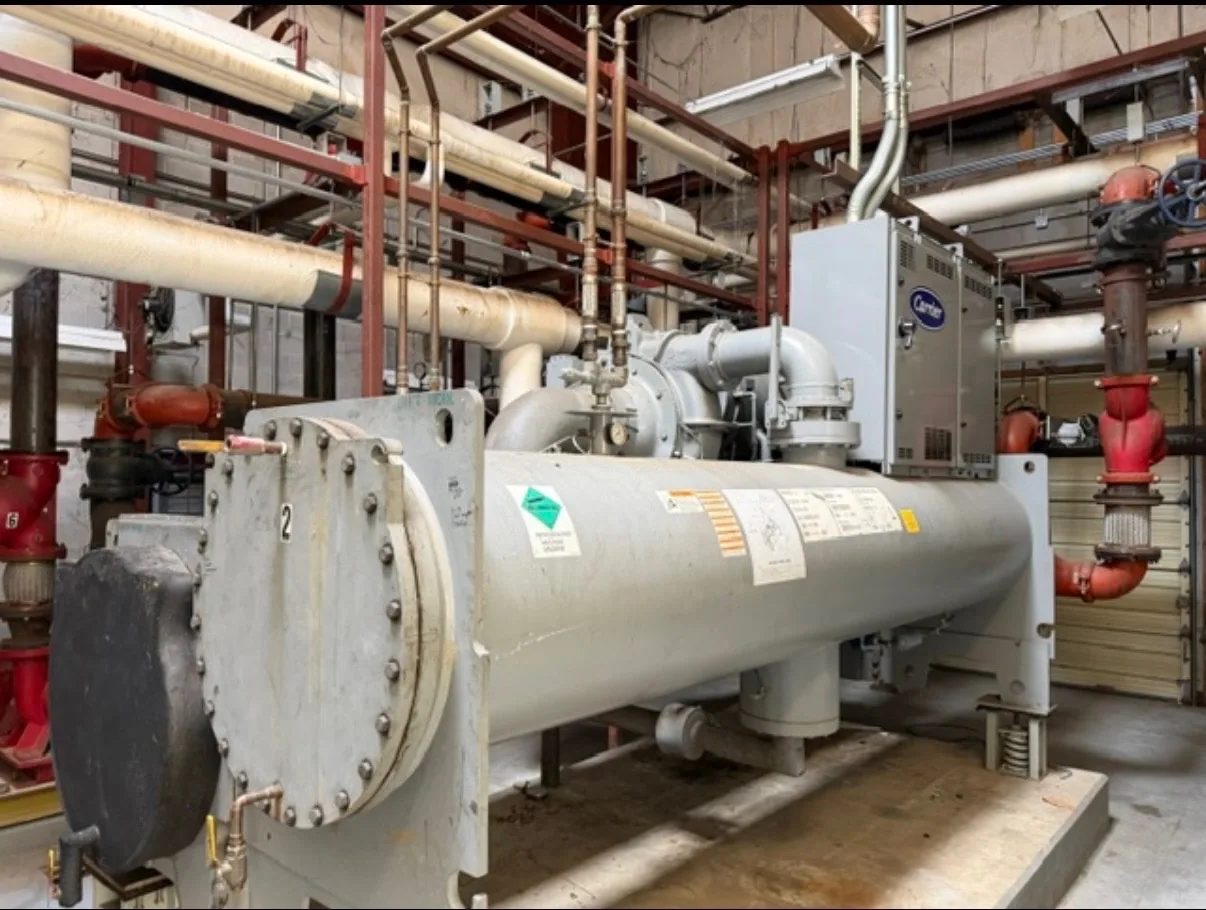
The words Daikin chillers identify a category, not a complete specification. A close view of the plate and a wider view of the whole chiller help connect the manufacturer's name to its model and serial number. Include safely reachable control or compressor labels if useful, and flag any missing or illegible information.
Describe the current machine rather than a typical example: its visible condition, any missing pieces or changes, and the surrounding equipment that will not be sold. The access route and work required also form part of our review. No particular price or offer follows from the brand alone.
From first details to an agreed pickup
If you are preparing information for someone else to submit, gather the company and contact details, site location and authority to sell alongside the chiller photographs. Capacity, type, refrigerant and voltage are useful when known. Explain the anticipated removal date and whether it can move. A separate identification set for each unit prevents different machines from being confused.
First we assess the submitted information; then any unresolved equipment or access questions can be discussed. A seller is free to review an offer, if made, and its stated removal scope before accepting it. An agreed sale moves to upfront payment and pickup coordination. We handle the agreed physical removal and cover the freight rather than requiring a seller-booked carrier.
What to send for a useful equipment review
Think of the photographs as an identification set: one for the complete machine, one close enough to read the plate and, where safely reachable, others for controls and connections. The plate may give the manufacturer, serial and model numbers, cooling capacity, electrical voltage and refrigerant. Never expose energized parts or defeat guarding for a photo.
Separate an observation from an operating claim. If you can see damage or know that a part was removed, explain that; if the service history is unavailable, say so. Let us know whether the unit is attached to its connections. We do not ask sellers to energize, run or pressure-test it, and existing records can supplement an unreadable plate.
How we evaluate an offer
Before valuing the proposed purchase, we need to know whether the description matches the equipment that will actually be released. Missing pieces, model and capacity, together with condition and configuration, can matter. So can the space for rigging, transportation and timing. These are review factors rather than a published price formula, and an inquiry may not result in an offer.
Read the proposed terms against the asset list and the site plan. Clarify what is included, who can grant access and what pickup window is anticipated. The buyer pays upfront under the agreed sale terms, covers all freight and handles hauling. Agreeing on these points helps avoid treating a tentative date as a confirmed appointment.
Access, rigging and removal
For an initial access review, send a sequence of safe photographs: the chiller, its surrounding space, the exit and the place a truck might reach. Mention lifts between levels, rooftop placement and obstructions that are not obvious in the images. Existing weight and size information can help; we can discuss gaps without inventing measurements.
Removal involves more than placing a machine on a truck. We handle the agreed disconnects and refrigerant recovery, arrange rigging and any necessary crane work, and take care of loading, freight and hauling. A site representative can explain water and electrical connections, adjacent operating systems and release procedures. No seller-operated performance test is part of the request.
Frequently asked questions
Can I inquire without current performance readings?
Yes. A performance test is not a condition of our review. The nameplate, overall photographs, known condition and site details are a useful starting point. Do not start or energize the chiller simply to obtain readings for the request.
Who organizes lifting and the trip away from the property?
We handle rigging, necessary crane work, loading, freight and hauling, as well as refrigerant recovery and disconnects, in the agreed removal scope. The buyer covers freight. The facility contact should explain restrictions and when access is available.
When is payment made if we agree to sell?
We pay upfront under the agreed sale terms. Before acceptance, review the equipment included, payment arrangements and removal scope. The individual machine and site are evaluated first, so a cash offer or particular price is not automatic.