A practical way to sell your industrial chiller
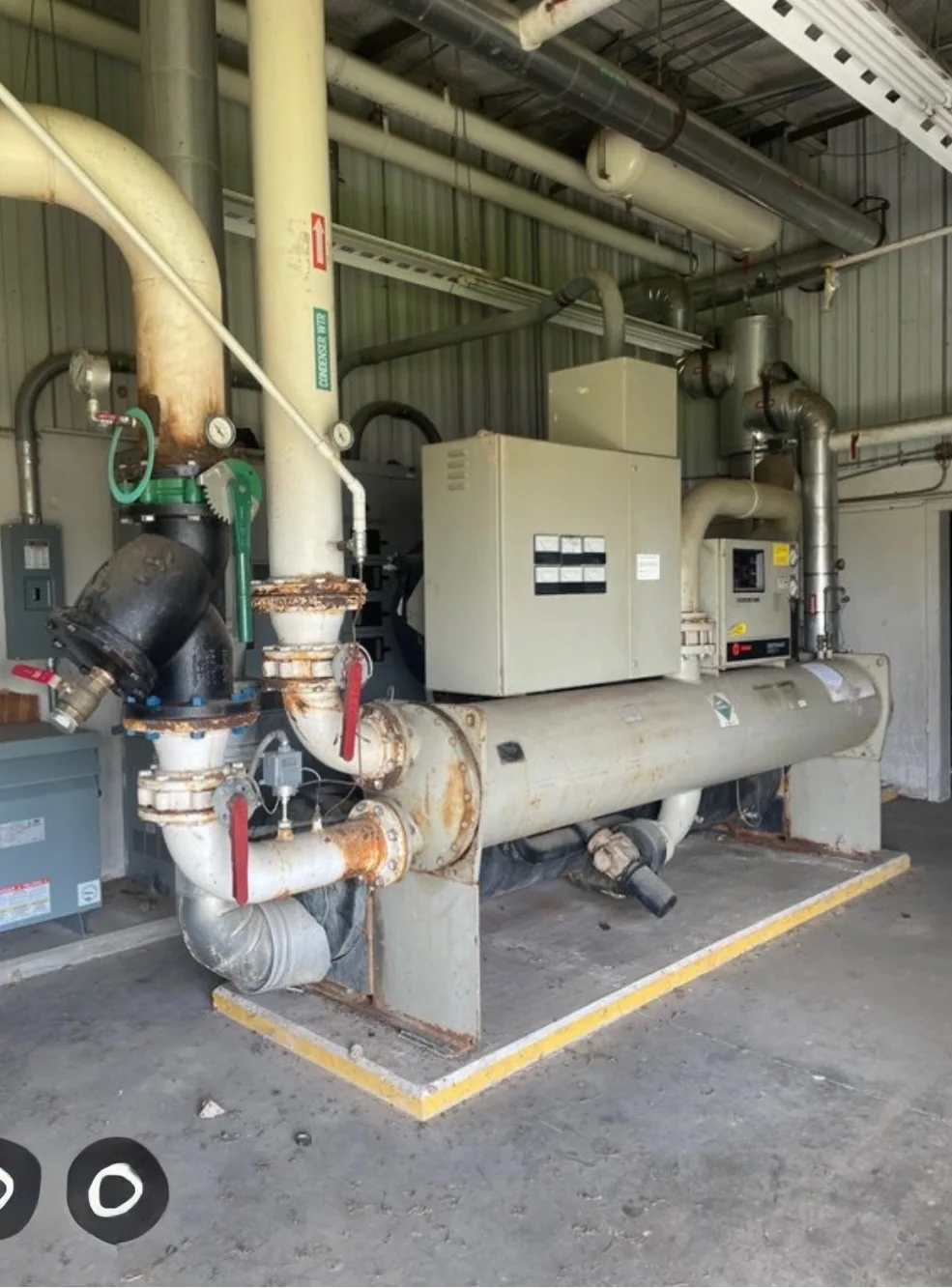
An owner considering the sale of 1,000–2,000+ ton chillers in Clarksville, Tennessee can start with the information already at hand. Send clear pictures and describe where the chiller sits. We buy industrial chillers and evaluate both the machine and the practical work involved before deciding whether to propose a cash offer.
For this discussion, keep the specific context in view: 1,000–2,000+ ton nameplate capacity and equipment rigging. The right information depends on the machine and the facility, so share what you know and flag anything that remains uncertain.
The chiller, rather than the entire facility, is the subject of our buying service. We buy industrial chillers of all tonnages and using all refrigerants, including 20–2,000+ ton units, both air-cooled and water-cooled, with centrifugal, screw or scroll configurations. Sources include data centers, power plants, hospitals, campuses and industrial shutdowns. Cash offers and upfront payment are subject to the equipment review and agreed terms, not an automatic guarantee.
Capacity, dimensions and the lift plan
For a request concerning 1,000–2,000+ ton chillers, give the rated cooling capacity shown on the nameplate if it is legible. Capacity in tons describes cooling output, not the machine's shipping weight. Two units in a similar capacity range can have different dimensions, access requirements or configurations.
The seller need not choose the lift method. Instead, provide known equipment dimensions and weight and show any labeled lifting points and the machine's base. Explain the door and ceiling clearances, roof access and loading route. We handle the necessary rigging and crane work, and assess value in context rather than promising a tonnage-based price.
Access, rigging and removal
A site plan is more useful when it shows obstacles as well as open space. Photograph the chiller in its room or outdoor setting, the openings toward the exit and the prospective truck area. Note roof access, slopes, low clearances or restrictions on entry. Provide known measurements and weight, but do not guess at missing figures.
Once a purchase and scope are agreed, the buyer handles refrigerant recovery and disconnects as well as rigging, loading, freight and hauling. Crane work is included when needed. The facility should identify power and water connections, equipment that must remain operational, and its rules for granting access. The seller does not need to test the chiller for our review.
From first details to an agreed pickup
A useful inquiry pairs your contact and company information with the chiller's location and identification. Send photos, capacity, type, voltage and refrigerant details where available, and identify the authorized seller. Add the anticipated pickup window and label each machine if more than one is involved. It is fine to say when a field or date is not yet known.
A preliminary description lets us determine what additional information, if any, is needed. We may discuss photographs, condition or how the machine can leave the site. If we make an offer, review the equipment and removal terms; there is no guarantee of a proposal. After agreement we pay upfront and coordinate the listed work, including freight, for pickup.
How we evaluate an offer
Before valuing the proposed purchase, we need to know whether the description matches the equipment that will actually be released. Missing pieces, model and capacity, together with condition and configuration, can matter. So can the space for rigging, transportation and timing. These are review factors rather than a published price formula, and an inquiry may not result in an offer.
A seller considering an offer can ask how the scope, payment and pickup fit the proposed sale. Once terms are agreed, payment is upfront; we also cover freight and handle hauling. Confirm the actual equipment being transferred and the access arrangements so the work is planned around an agreed release, not an assumed one.
What to send for a useful equipment review
If all you have at first is a building inventory, compare it with the markings on the chiller itself. We can use a readable nameplate showing the maker, model, serial number, tonnage, voltage and refrigerant, along with a photograph of the complete unit. Show accessible controls and connections too, without disturbing covers or entering hazardous spaces.
Separate an observation from an operating claim. If you can see damage or know that a part was removed, explain that; if the service history is unavailable, say so. Let us know whether the unit is attached to its connections. We do not ask sellers to energize, run or pressure-test it, and existing records can supplement an unreadable plate.
Frequently asked questions
Can I request an offer if the unit is not running?
Yes. No testing is required, and you should not start or energize the chiller just for our review. Share the nameplate, photos and what you know about its condition and connections. We evaluate the information rather than assuming that every inquiry results in an offer.
Must the seller disconnect the machine before pickup?
The buyer handles the agreed disconnects and refrigerant recovery, together with rigging, crane work when needed, loading, freight and hauling. All freight is covered. Identify power and water connections and any nearby systems that must remain in service.
Do similarly rated chillers require the same removal plan?
Not necessarily. Units with similar cooling output can have different dimensions, weights and site access. Supply the rating and any known weight or lifting information rather than equating tons with weight. We handle rigging and needed crane work; the offer depends on the individual review.