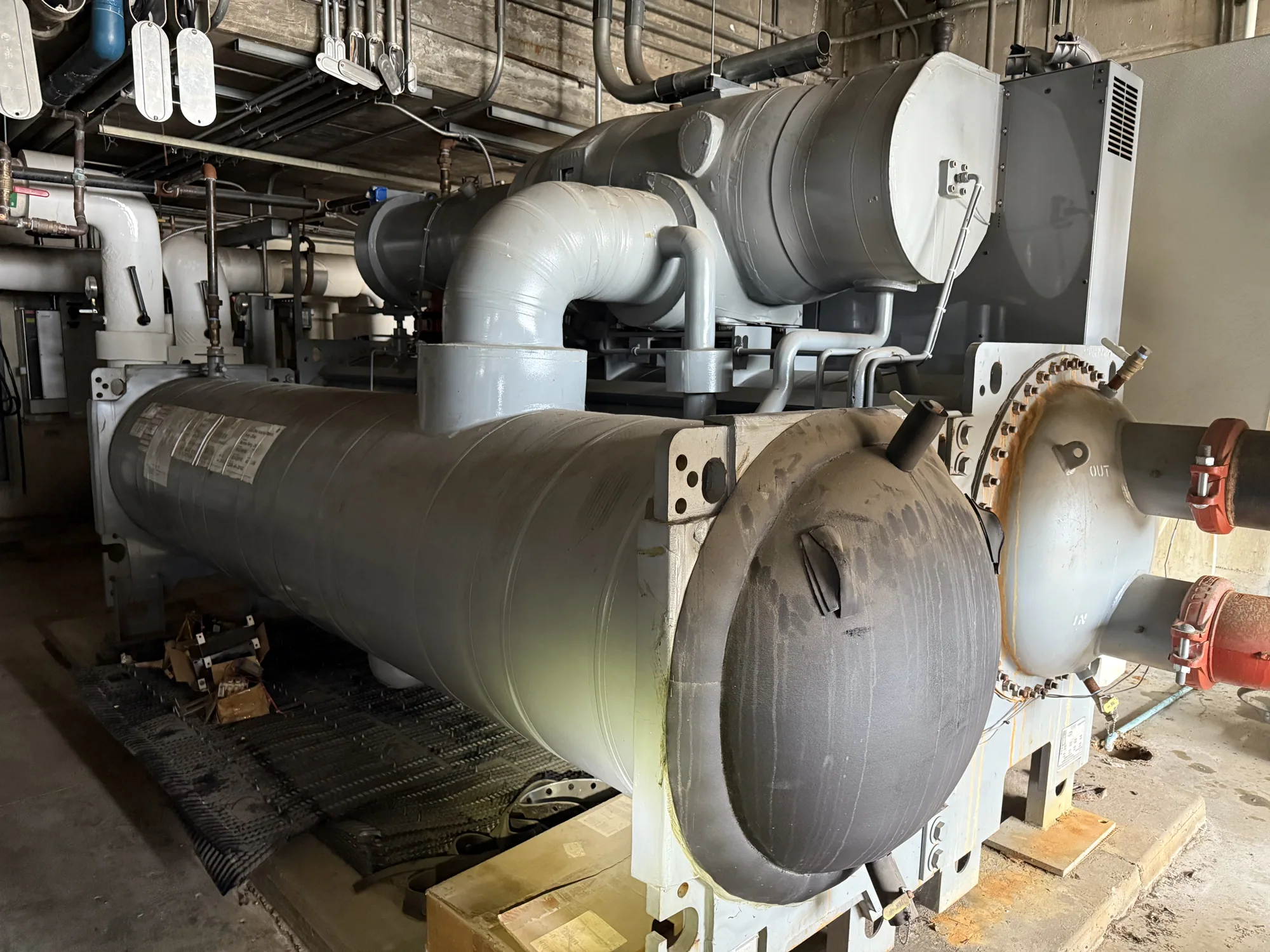
A practical way to sell your industrial chiller
Selling an industrial chiller starts with two questions: what is the equipment, and what will it take to remove it safely? We buy industrial chillers in Clarksville, Tennessee. For a request concerning 100–249 ton chillers, photographs and honest site details help us assess the machine and prepare a practical cash offer.
The subject of this discussion is: 100–249 ton nameplate capacity and equipment rigging. A useful first step is to separate the confirmed details from those that require checking, whether they concern the chiller itself or the surrounding property.
We buy industrial chillers only, of all tonnages and using all refrigerants, including equipment in the 20 to 2,000+ ton range. Air-cooled and water-cooled machines, whether centrifugal, scroll or screw, are within our buying scope. Cash offers and upfront payment are available under agreed terms. We buy from projects such as decommissioned data centers, shut-down power plants, hospital and campus closures, and industrial plant shutdowns. Each unit and its removal must be evaluated to determine whether an offer can be made.
Capacity, dimensions and the lift plan
For a request concerning 100–249 ton chillers, give the rated cooling capacity shown on the nameplate if it is legible. Capacity in tons describes cooling output, not the machine's shipping weight. Two units in a similar capacity range can have different dimensions, access requirements or configurations.
Before a removal approach can be discussed, identify any known weight, dimensions and marked lifting points. Show the base, doorways and route to a loading area, noting ceiling height or rooftop access. The buyer handles rigging and crane work when needed. Those site facts inform the review, but tonnage alone does not guarantee an offer.
What to send for a useful equipment review
Make the identification images easy to match to the asset. A close view of the main plate may show the manufacturer, model, serial number, capacity, voltage and refrigerant; a separate wide view shows the whole chiller. If safe access permits, add controls and connection photographs. Do not open electrical enclosures or remove protective guards to obtain them.
If a component is missing, a label is unreadable or a service history is not available, simply say so. Include visible condition and whether the equipment remains connected. Our process does not require testing, so there is no need to run or energize the chiller for us. Clear answers are more useful than invented specifications.
From first details to an agreed pickup
Build the inquiry around the actual asset and a person we can contact. Provide your name, company and the equipment location, followed by any known type, tonnage, voltage and refrigerant information. Attach plate and full-unit photos. Identify the authorized seller and the expected release window; mark a date or specification tentative if it has not been confirmed. Label each machine separately.
We review the information and discuss any questions about the equipment or access. If we can make an offer, you can review it and the scope before deciding whether to proceed. Once terms are agreed, upfront payment and the removal schedule are coordinated. Keep the machine and its surroundings accessible as agreed; our team handles the listed removal and freight work.
How we evaluate an offer
We consider more than the manufacturer or tonnage when evaluating a cash offer. The machine's configuration and visible condition, whether parts are present, the removal route and the requested schedule all help define the work. A complete description makes it easier to discuss a realistic quote, but a particular value or an offer is never automatic.
Before accepting an offer, review the identified equipment, the proposed payment and the removal scope. Payment is upfront under the agreed sale terms. We cover all freight and handle hauling, so a seller does not need to book a separate carrier for the chiller. Discuss the expected pickup window and any open access questions before scheduling.
Access, rigging and removal
A good removal plan begins with the route out. Show the surrounding room, available openings, any overhead obstructions and the intended loading area. Tell us about roof access, restricted driveways or equipment that cannot be moved. If you have measurements or a documented weight, include them; if not, share clear photos rather than guessing.
For the agreed work, we take responsibility for disconnects, refrigerant recovery, rigging and loading, using a crane when needed; we also handle freight and hauling. Tell the coordinating contact about site rules and the unit's electrical and water connections, including any systems that must remain available. The quote request does not call for a seller-performed test.
Frequently asked questions
The chiller has been shut down. Must it be restarted?
No. We do not require operation or testing for a quote. Send pictures of the equipment and its identification, and describe what you know about its present condition. Unknown history or specifications can be noted without energizing a retired machine.
How is an agreed removal coordinated?
The site contact describes access and release requirements. We handle the disconnects, refrigerant recovery, rigging, loading and hauling, with a crane when needed, and cover freight. The actual plan and work window are coordinated under the sale's agreed scope.
Does a chiller's tonnage tell you its lifting weight?
No. Cooling capacity in tons is not the shipping weight. Nameplate capacity, known weight, dimensions, lifting information and site photographs each help with planning. We buy chillers of all tonnages and handle crane and rigging as needed, but capacity alone does not establish a price or guarantee an offer.