A practical way to sell your industrial chiller
If you have an industrial chiller to remove in Clarksville, Tennessee, you do not need to make it operational before contacting us. We buy industrial chillers and can evaluate a request concerning McQuay chillers using the equipment details, available photographs and the conditions at the site.
Use this page as a starting point for the following: McQuay chiller identity, configuration, access and removal. The particular nameplate, condition and site constraints matter more than a general description; uncertain details can be discussed rather than guessed.
We buy industrial chillers only, of all tonnages and using all refrigerants, including equipment in the 20 to 2,000+ ton range. Air-cooled and water-cooled machines, whether centrifugal, scroll or screw, are within our buying scope. Cash offers and upfront payment are available under agreed terms. We buy from projects such as decommissioned data centers, shut-down power plants, hospital and campus closures, and industrial plant shutdowns. Each unit and its removal must be evaluated to determine whether an offer can be made.
Manufacturer and model details
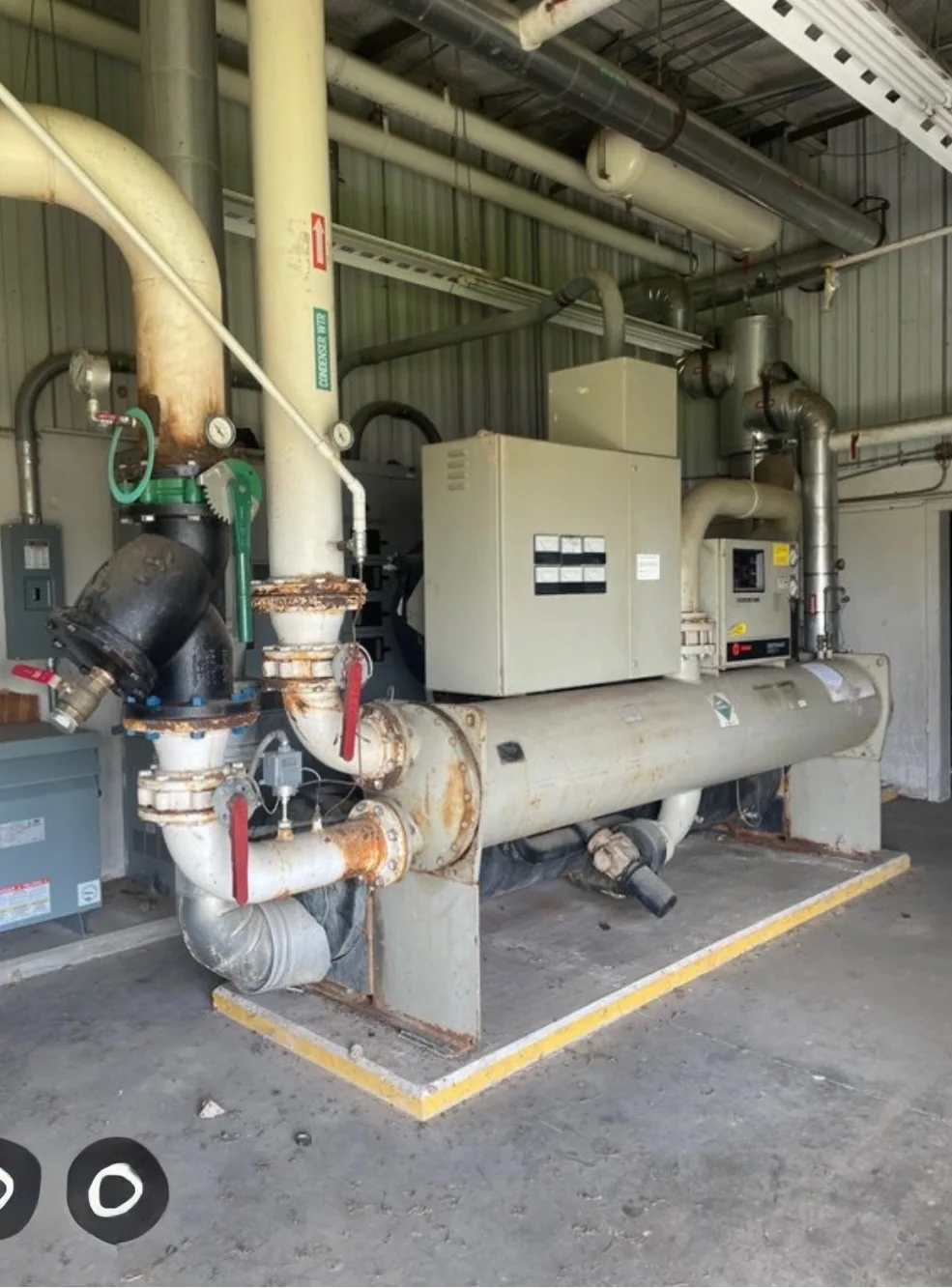
A manufacturer label is a useful starting point for McQuay chillers, but it does not identify the exact machine by itself. A straight-on image of the main plate can establish the model and serial number; an overall view shows the equipment those markings belong to. If several units are present, number the images so the right plate stays with the right machine.
A name on a cabinet cannot tell us which parts are missing or what surrounds the unit. Describe visible damage, modifications and any equipment that will remain at the property. We consider the unit's actual condition and removal requirements, not just its manufacturer, when deciding whether an offer can be made.
Access, rigging and removal
Photograph the path from the chiller to an exit or loading point, not just the machine itself. Include doorways, stairs or ramps, overhead obstructions, nearby equipment and the area where a truck could approach. If the unit is on a roof or below grade, say how that area is reached. Approximate dimensions and known weights are helpful, but mark estimates as estimates.
The division of responsibility is straightforward: the buyer handles recovery of refrigerant, disconnects, crane work when required, rigging, loading, freight and hauling in the agreed scope. The site contact helps identify access conditions and the connections or neighboring systems that need consideration. There is no need to run a chiller to ask for an offer.
How we evaluate an offer
Two chillers with the same rated capacity can present different purchase and removal considerations. Their configurations, completeness and condition may differ, as may their locations, routes out and schedules. Share the identifying details and any known restrictions so we can assess the complete job. A specific amount or cash offer cannot be promised before that assessment.
Payment and logistics should not be left implicit. If an offer is accepted, we pay upfront on the agreed terms, cover all freight and handle hauling. Establish which unit is being purchased and discuss the planned release window with the facility contact. Any unresolved questions about access or scope can be addressed before scheduling.
What to send for a useful equipment review
The words on a nameplate help connect the offered chiller to its actual specification. Photograph the maker, model and serial number, rated tons, voltage and refrigerant marking if legible. A whole-machine picture and safe views of connections and controls add context. If taking an image would require removing a cover or entering an unsafe space, leave it out.
Not all surplus equipment comes with a complete file. Send the clearest label image and records you already have, note any absent parts or visible damage, and indicate whether the chiller is still hooked up. Leave unknown specifications marked as unknown. A seller does not need to perform a test or turn on the machine to begin the review.
From first details to an agreed pickup
A first message can be concise without pretending every detail is settled. Include your contact and company, location of the chiller, the person authorized to sell and the intended release window. Add the nameplate and equipment photos and any known type, capacity, refrigerant and voltage. If there are several units, match each specification to its own photograph.
The people who approve a sale and control a building may differ, so tell us whom to contact for each. We review the machine and may follow up about access. If an offer is made, check its scope before accepting. Payment is upfront under agreed terms, and removal and freight are then coordinated around the agreed release and access arrangements.
Frequently asked questions
What if we cannot demonstrate that the unit runs?
You can still send the available information. Seller testing is not required, and a machine should not be energized solely for our quotation. Identify the unit and explain its known condition or any gaps in the record; any offer is subject to review.
Must the seller disconnect the machine before pickup?
The buyer handles the agreed disconnects and refrigerant recovery, together with rigging, crane work when needed, loading, freight and hauling. All freight is covered. Identify power and water connections and any nearby systems that must remain in service.
Can you guarantee an offer based on brand and tonnage?
No. Those details help identify a chiller, but its condition, completeness and removal requirements also matter. We buy chillers of all tonnages and using all refrigerants, and evaluate each situation. When a sale is agreed, payment is upfront under the stated terms.