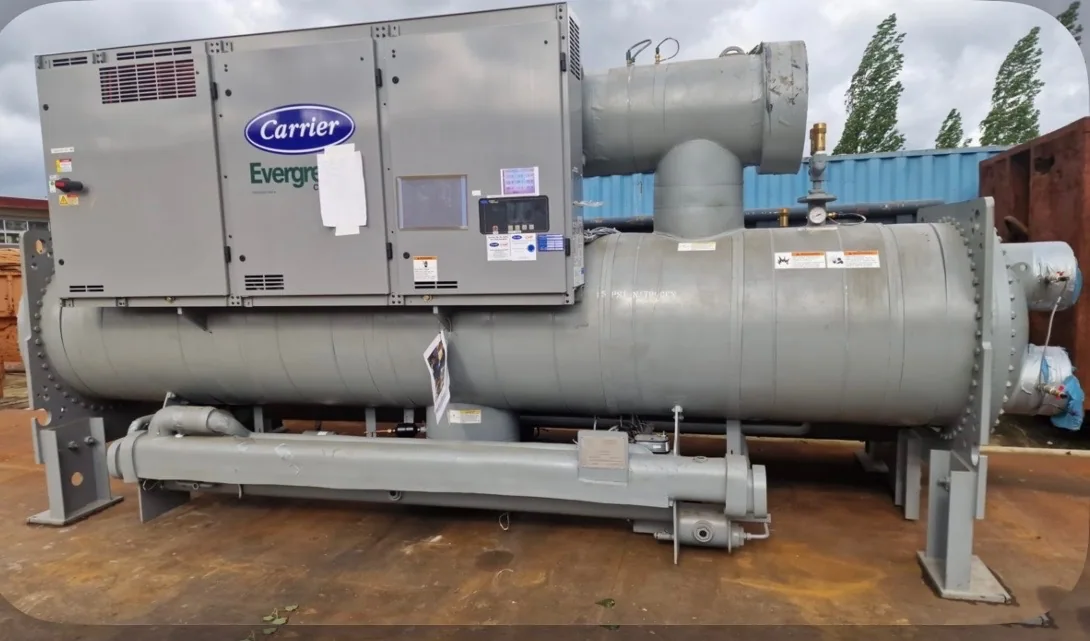
A practical way to sell your industrial chiller
An owner considering the sale of water-cooled chillers in Clarksville, Tennessee can start with the information already at hand. Send clear pictures and describe where the chiller sits. We buy industrial chillers and evaluate both the machine and the practical work involved before deciding whether to propose a cash offer.
The topic can be summarized as follows: water-cooled configuration and site removal. Start with the equipment you actually intend to sell; give us the information you have and distinguish it from assumptions about the installation or its release date.
We purchase industrial chillers, including equipment released by data-center decommissioning, power-plant shutdowns, hospital and campus closures and industrial shutdowns. Both water-cooled and air-cooled machines can be considered, including scroll, screw and centrifugal types. We buy chillers of all tonnages and using all refrigerants, including units from 20 to 2,000 or more tons. Cash offers with upfront payment depend on review and agreed terms; no offer is assured.
Understanding the equipment configuration
With a water-cooled chiller, show the machine and its connections rather than describing the entire cooling system as a single item. Photos of the evaporator and condenser sides, connection points and surrounding piping help identify what must be disconnected. Note whether chilled-water or condenser-water loops must remain available to other equipment.
Tell us if there are pumps, cooling towers or associated piping nearby and whether they are part of the proposed scope. We buy industrial chillers; do not assume that separate equipment is included. The buyer handles the agreed disconnects and removal, with the facility coordinating access and release of the unit.
Access, rigging and removal
Photograph the path from the chiller to an exit or loading point, not just the machine itself. Include doorways, stairs or ramps, overhead obstructions, nearby equipment and the area where a truck could approach. If the unit is on a roof or below grade, say how that area is reached. Approximate dimensions and known weights are helpful, but mark estimates as estimates.
You do not have to select a hauler or lifting crew for an agreed sale. We handle loading, freight and hauling, along with refrigerant recovery, disconnects, rigging and crane work when needed. Please describe the site's access and release requirements, power and water connections, and anything nearby that must stay in service. We do not require the seller to test the unit.
From first details to an agreed pickup
The most helpful submission links three things: the seller, the machine and its availability. Give a company and contact name, site address or location, authorized sale contact and expected pickup window. Send clear nameplate and overall views, plus the type, tonnage, voltage and refrigerant where known. State which fields remain uncertain and label multiple units individually.
We review the information and discuss any questions about the equipment or access. If we can make an offer, you can review it and the scope before deciding whether to proceed. Once terms are agreed, upfront payment and the removal schedule are coordinated. Keep the machine and its surroundings accessible as agreed; our team handles the listed removal and freight work.
How we evaluate an offer
In reviewing a possible cash purchase, we look at the unit as described and the practical work at its property. The nameplate, capacity and type help identify it; photographs and condition notes show what is present. Disconnects, access, transport and the release window also affect the review. We do not guarantee that every machine will receive an offer.
Payment and logistics should not be left implicit. If an offer is accepted, we pay upfront on the agreed terms, cover all freight and handle hauling. Establish which unit is being purchased and discuss the planned release window with the facility contact. Any unresolved questions about access or scope can be addressed before scheduling.
What to send for a useful equipment review
A full-unit photograph and a legible nameplate give us a starting point for identifying the chiller. Useful label details include manufacturer, model and serial numbers, rated capacity, voltage and refrigerant. Include accessible views of the controls and connections as well. Leave covers and guards in place rather than taking risks to obtain a photograph.
Tell us what you know about condition, missing components and whether the machine is still connected. If the plate is damaged, send the clearest available image and any records you have. We do not require testing: please do not start, energize or pressure-test a chiller just to seek an offer. An unknown detail can be described as unknown.
Frequently asked questions
What if we cannot demonstrate that the unit runs?
You can still send the available information. Seller testing is not required, and a machine should not be energized solely for our quotation. Identify the unit and explain its known condition or any gaps in the record; any offer is subject to review.
How is an agreed removal coordinated?
The site contact describes access and release requirements. We handle the disconnects, refrigerant recovery, rigging, loading and hauling, with a crane when needed, and cover freight. The actual plan and work window are coordinated under the sale's agreed scope.
What should we confirm before accepting a cash offer?
Review the equipment included, the payment terms, the expected release window and the agreed removal scope. We pay upfront when the sale is agreed. An offer depends on the specific unit and logistics, so its availability and amount cannot be promised in advance.