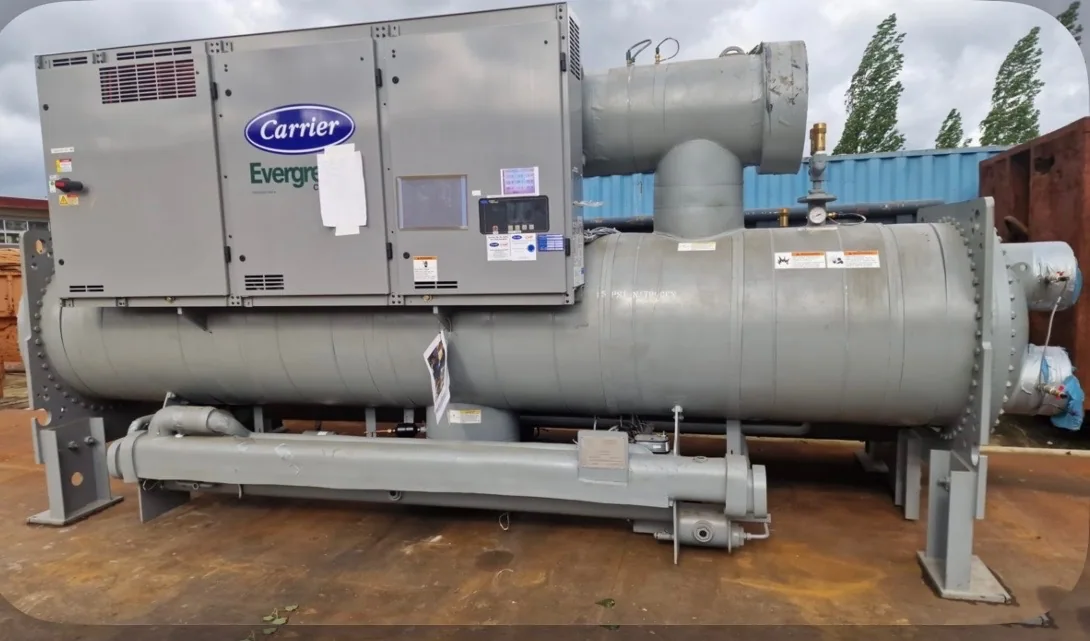
A practical way to sell your industrial chiller
An industrial chiller sale is more than a model number or a pickup date. For York screw chillers in Kingsport, Tennessee, we look at the equipment itself, the space around it and the work involved in removal. Our business buys industrial chillers; we are not offering chillers for sale.
Each project has its own boundaries. Keep this focus in mind: York manufacturer identification and screw equipment configuration. Identify the machine, the responsible contact and any open questions before making decisions about access or timing.
We buy industrial chillers only: air-cooled and water-cooled machines, including centrifugal, screw and scroll units. Our scope includes equipment from 20 to 2,000 or more tons; we buy chillers of all tonnages and using all refrigerants. The equipment may come from decommissioned data centers and power plants, hospital and campus closures, or industrial plant shutdowns. We make cash offers and pay upfront under the agreed sale terms. Every proposal depends on the individual equipment and circumstances, so an offer or price is not guaranteed.
Manufacturer and model details
Not every seller has the original documentation for York screw chillers. Begin with a wide, safely obtained photograph and the best available image of the identification plate. If the plate is worn, any existing service record or drawing may help clarify the model. Leave uncertain markings uninterpreted rather than supplying an invented number.
Tell us what can be observed: whether the machine is connected, which components appear absent and what changes have been made, if known. The manufacturer's name alone does not establish value. We review the physical equipment alongside access and removal needs before deciding whether a cash proposal is possible.
Understanding the equipment configuration
A useful equipment description starts with the configuration: air-cooled or water-cooled, and centrifugal, screw or scroll when known. Photograph a screw chiller, including the compressor arrangement, controls and any separate components. If you do not know the type, the nameplate and a full-unit photo are a practical starting point; an uncertain label is not a reason to run the machine.
Knowing the compressor type does not replace a look at the rest of the installation. Show a water-cooled chiller's connections and loops that must remain available; for an air-cooled machine, show its condenser and nearby access. Distinguish the asset for sale from associated equipment that is not included.
Access, rigging and removal
Photograph the path from the chiller to an exit or loading point, not just the machine itself. Include doorways, stairs or ramps, overhead obstructions, nearby equipment and the area where a truck could approach. If the unit is on a roof or below grade, say how that area is reached. Approximate dimensions and known weights are helpful, but mark estimates as estimates.
Once a purchase and scope are agreed, the buyer handles refrigerant recovery and disconnects as well as rigging, loading, freight and hauling. Crane work is included when needed. The facility should identify power and water connections, equipment that must remain operational, and its rules for granting access. The seller does not need to test the chiller for our review.
What to send for a useful equipment review
Start with a readable photo of the manufacturer's nameplate. The manufacturer, model, serial number, cooling capacity, voltage and refrigerant marking can help identify what is being offered. Add a full view of the chiller and, if accessible, photos of the controls, compressor area and visible connections. Do not remove guards or enter an unsafe area to take pictures.
Describe the unit as it stands today, even if it is disconnected, missing pieces or has not been operated recently. Known damage and existing service records can add context, particularly when a nameplate is hard to read. We do not require testing: do not start, energize or pressure-test the equipment simply to make an inquiry.
From first details to an agreed pickup
You can begin before every record has been located. Share your contact and company, the chiller's location and the name of the person able to authorize a sale. Include a photo of the label and machine, its known type, capacity, refrigerant and voltage, and the expected release date. Flag flexible timing and identify each chiller separately if there is more than one.
Once the equipment and location details are received, we review them and may ask about gaps in the record or the removal route. If we make an offer, the seller can consider the purchase and work scope before accepting. After agreement, payment is upfront on the agreed terms and pickup is coordinated with the site. We handle the removal and freight described in that scope.
How we evaluate an offer
Two chillers with the same rated capacity can present different purchase and removal considerations. Their configurations, completeness and condition may differ, as may their locations, routes out and schedules. Share the identifying details and any known restrictions so we can assess the complete job. A specific amount or cash offer cannot be promised before that assessment.
A seller considering an offer can ask how the scope, payment and pickup fit the proposed sale. Once terms are agreed, payment is upfront; we also cover freight and handle hauling. Confirm the actual equipment being transferred and the access arrangements so the work is planned around an agreed release, not an assumed one.
Frequently asked questions
Do I need to test the chiller before requesting a quote?
No. We buy industrial chillers without requiring the seller to test or operate them. Send the nameplate, photos and any known condition information instead. If a detail is unknown or the machine is disconnected, tell us; do not energize equipment solely for the quotation.
How is an agreed removal coordinated?
The site contact describes access and release requirements. We handle the disconnects, refrigerant recovery, rigging, loading and hauling, with a crane when needed, and cover freight. The actual plan and work window are coordinated under the sale's agreed scope.
What should we confirm before accepting a cash offer?
Review the equipment included, the payment terms, the expected release window and the agreed removal scope. We pay upfront when the sale is agreed. An offer depends on the specific unit and logistics, so its availability and amount cannot be promised in advance.