A practical way to sell your industrial chiller
Selling an industrial chiller starts with two questions: what is the equipment, and what will it take to remove it safely? We buy industrial chillers in Jackson, Tennessee. For a request concerning R-22 chillers, photographs and honest site details help us assess the machine and prepare a practical cash offer.
The request has a specific focus: R-22 identification and buyer-handled recovery. Tell us which parts of the situation are settled and which depend on a facility contact or an upcoming project milestone.
Our business buys industrial chillers only, across all refrigerants and tonnages; the scope includes machines rated 20 to 2,000 or more tons. Air-cooled and water-cooled designs and centrifugal, scroll and screw compressors are included. Projects may involve retired data centers, power stations, hospitals, campuses or industrial plants. We offer cash and pay upfront when terms are agreed, but each proposed purchase requires evaluation.
Refrigerant identification and recovery
For a request concerning R-22 chillers, a clear photo of the refrigerant marking and equipment nameplate is more useful than an estimate based on age or appearance. If the marking is unreadable or you are unsure what is in the system, say so. We buy chillers using all refrigerants; the refrigerant designation by itself does not guarantee a particular offer.
The records supplied with the inquiry can include an existing service report, a noted leak or information on prior recovery. Those details help frame the removal discussion without asking you to run a test. Do not vent or assume the system is empty. The buyer handles refrigerant recovery in the agreed scope.
What to send for a useful equipment review
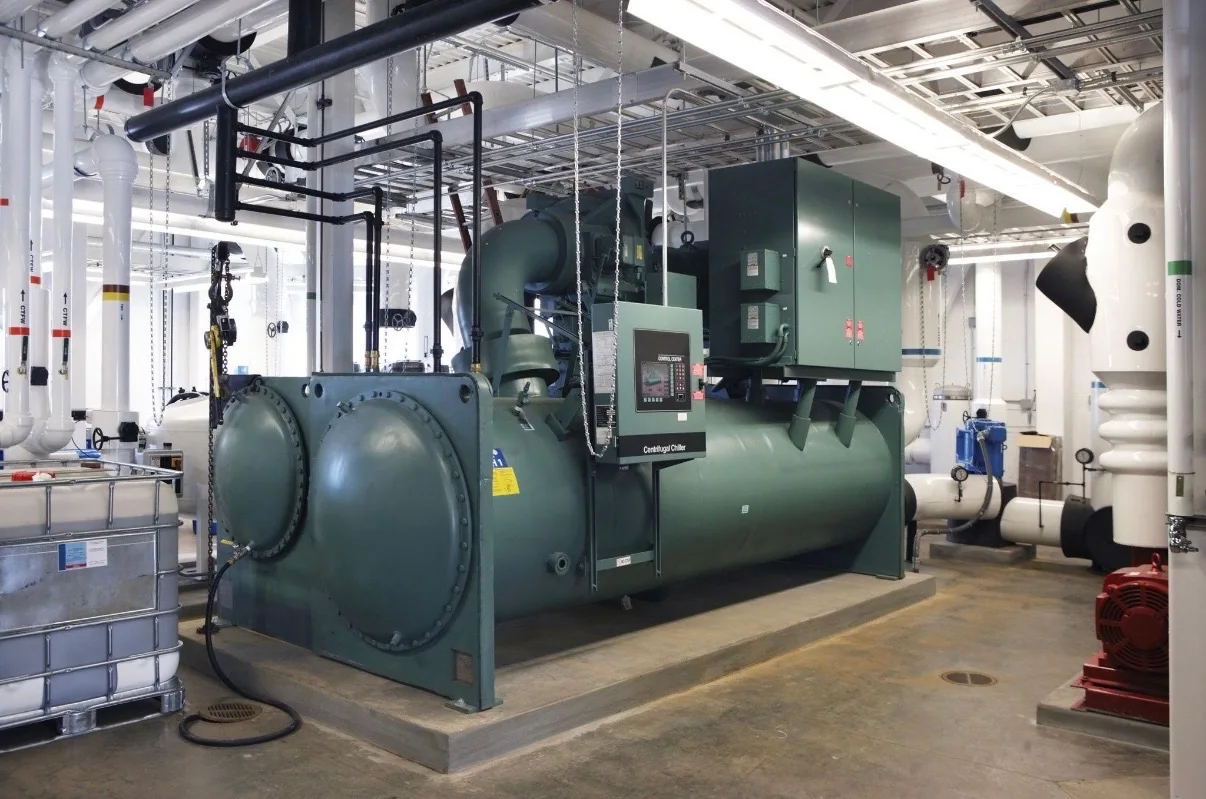
A full-unit photograph and a legible nameplate give us a starting point for identifying the chiller. Useful label details include manufacturer, model and serial numbers, rated capacity, voltage and refrigerant. Include accessible views of the controls and connections as well. Leave covers and guards in place rather than taking risks to obtain a photograph.
A unit may be connected, disconnected, incomplete or already retired; describe its actual condition rather than assuming that it must be operational. Mention known damage and any components that are absent. No testing is required, and you should not energize or operate equipment merely to request a quote. Existing records can help when a label is difficult to read.
Access, rigging and removal
A site plan is more useful when it shows obstacles as well as open space. Photograph the chiller in its room or outdoor setting, the openings toward the exit and the prospective truck area. Note roof access, slopes, low clearances or restrictions on entry. Provide known measurements and weight, but do not guess at missing figures.
Removal involves more than placing a machine on a truck. We handle the agreed disconnects and refrigerant recovery, arrange rigging and any necessary crane work, and take care of loading, freight and hauling. A site representative can explain water and electrical connections, adjacent operating systems and release procedures. No seller-operated performance test is part of the request.
How we evaluate an offer
In reviewing a possible cash purchase, we look at the unit as described and the practical work at its property. The nameplate, capacity and type help identify it; photographs and condition notes show what is present. Disconnects, access, transport and the release window also affect the review. We do not guarantee that every machine will receive an offer.
The handoff should be clear before anyone schedules a truck. Review which chiller and components the agreement covers, when payment is due and the expected pickup window. We pay upfront according to the agreed terms and cover all freight and hauling. If the site's schedule depends on another party, bring that dependency into the discussion.
From first details to an agreed pickup
You can begin before every record has been located. Share your contact and company, the chiller's location and the name of the person able to authorize a sale. Include a photo of the label and machine, its known type, capacity, refrigerant and voltage, and the expected release date. Flag flexible timing and identify each chiller separately if there is more than one.
Once the equipment and location details are received, we review them and may ask about gaps in the record or the removal route. If we make an offer, the seller can consider the purchase and work scope before accepting. After agreement, payment is upfront on the agreed terms and pickup is coordinated with the site. We handle the removal and freight described in that scope.
Frequently asked questions
Should we run a performance test before sending photos?
No. Our buying process does not require a seller to run a test. Provide the equipment identification, visible condition and available site details. If the unit has already been shut down or a specification is unknown, say so rather than operating equipment for the quote.
What should the facility contribute to removal planning?
Explain the route, connections, access rules and release window. We handle refrigerant recovery, disconnects, rigging, loading and hauling; crane work is handled when needed and all freight is covered. The site should identify neighboring equipment that must stay in place or service.
Is a refrigerant reading needed before contacting the buyer?
No test is required. A photo of the marking or existing service information can help identify the system; if neither is available, state that the refrigerant is unknown. Do not vent or presume an empty system. The buyer handles agreed refrigerant recovery.