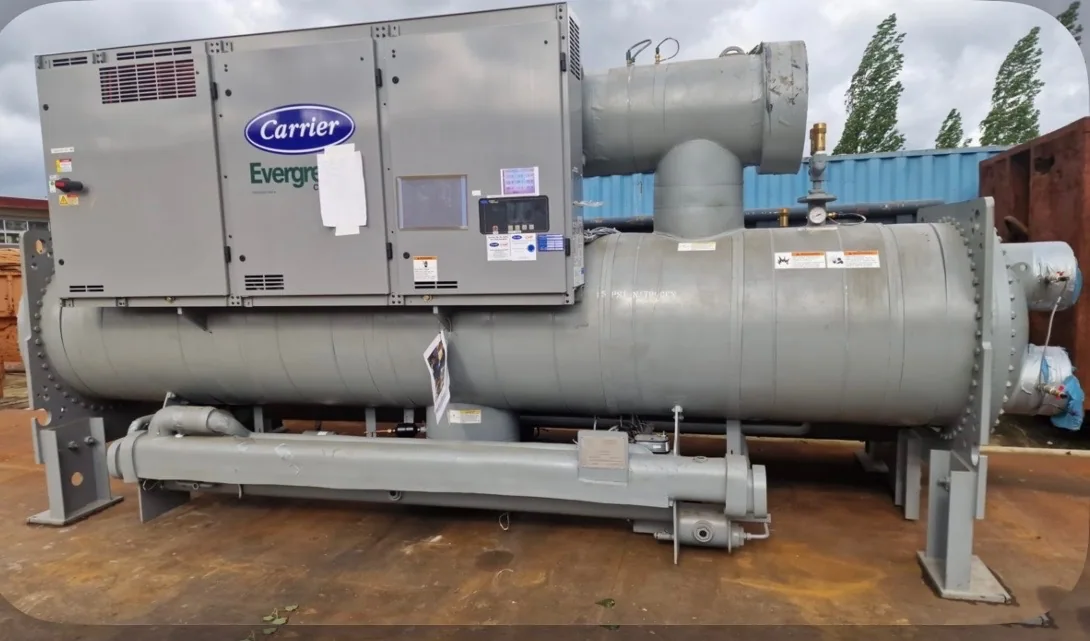
A practical way to sell your industrial chiller
An industrial chiller sale is more than a model number or a pickup date. For R-123 chillers in Memphis, Tennessee, we look at the equipment itself, the space around it and the work involved in removal. Our business buys industrial chillers; we are not offering chillers for sale.
For this discussion, keep the specific context in view: R-123 identification and buyer-handled recovery. The right information depends on the machine and the facility, so share what you know and flag anything that remains uncertain.
We buy industrial chillers only, of all tonnages and using all refrigerants, including equipment in the 20 to 2,000+ ton range. Air-cooled and water-cooled machines, whether centrifugal, scroll or screw, are within our buying scope. Cash offers and upfront payment are available under agreed terms. We buy from projects such as decommissioned data centers, shut-down power plants, hospital and campus closures, and industrial plant shutdowns. Each unit and its removal must be evaluated to determine whether an offer can be made.
Refrigerant identification and recovery
For a request concerning R-123 chillers, a clear photo of the refrigerant marking and equipment nameplate is more useful than an estimate based on age or appearance. If the marking is unreadable or you are unsure what is in the system, say so. We buy chillers using all refrigerants; the refrigerant designation by itself does not guarantee a particular offer.
For recovery planning, communicate what is known rather than trying to prove the system's contents by operating it. Mention previous recovery, leaks and existing service records. Do not vent refrigerant or assume the system is empty. The buyer handles recovery under the agreed removal terms, without requiring a seller-performed test.
How we evaluate an offer
Before valuing the proposed purchase, we need to know whether the description matches the equipment that will actually be released. Missing pieces, model and capacity, together with condition and configuration, can matter. So can the space for rigging, transportation and timing. These are review factors rather than a published price formula, and an inquiry may not result in an offer.
Read the proposed terms against the asset list and the site plan. Clarify what is included, who can grant access and what pickup window is anticipated. The buyer pays upfront under the agreed sale terms, covers all freight and handles hauling. Agreeing on these points helps avoid treating a tentative date as a confirmed appointment.
Access, rigging and removal
Show where the machine sits in relation to the space around it, then photograph the way out and the area available for loading. Point out narrow openings, immovable objects, stairs or overhead barriers, and explain any controlled entrance. If known, give the unit's dimensions and weight. An uncertain measurement should remain an estimate, not a fact.
You do not need to arrange a freight carrier or rigging crew for the agreed purchase. We handle crane work as needed, refrigerant recovery, disconnects, rigging, loading, freight and hauling. Describe the electrical and water connections and any adjacent systems that need protection. A site contact can help coordinate access and release; no seller testing is required.
What to send for a useful equipment review
The words on a nameplate help connect the offered chiller to its actual specification. Photograph the maker, model and serial number, rated tons, voltage and refrigerant marking if legible. A whole-machine picture and safe views of connections and controls add context. If taking an image would require removing a cover or entering an unsafe space, leave it out.
An incomplete record does not need to become a guess. Tell us which components are visibly missing, whether the chiller remains connected and what is known about its condition. A worn label can be supplemented by existing documentation. No performance test is required; leave a retired or disconnected machine off rather than starting it for a quote.
From first details to an agreed pickup
Send the chiller's location, type, tonnage, refrigerant, voltage and nameplate photos, together with your contact details and company name. If some fields are unknown, provide what is available. Include the intended removal date, whether it is flexible, and the name of the person authorized to discuss the sale. For multiple chillers, label the photos and specifications by unit.
A preliminary description lets us determine what additional information, if any, is needed. We may discuss photographs, condition or how the machine can leave the site. If we make an offer, review the equipment and removal terms; there is no guarantee of a proposal. After agreement we pay upfront and coordinate the listed work, including freight, for pickup.
Frequently asked questions
Do disconnected machines need to be reconnected for review?
No. Tell us the chiller is disconnected and send available identification and site photos instead. We do not ask sellers to operate or test equipment to request an offer. Describe missing components and leave uncertain details marked as unknown.
Do I need a separate freight company?
No. For an agreed purchase, we handle hauling and cover all freight. Our scope also includes refrigerant recovery, disconnects, rigging, loading and crane work when needed. Let us know about the loading area and the site's access requirements.
A contractor recovered refrigerant earlier. What should I send?
Mention the known prior recovery and share any available documentation and equipment labels. Do not assume the system is empty or vent it. We handle any refrigerant recovery needed within the agreed removal process and can discuss gaps in the record.