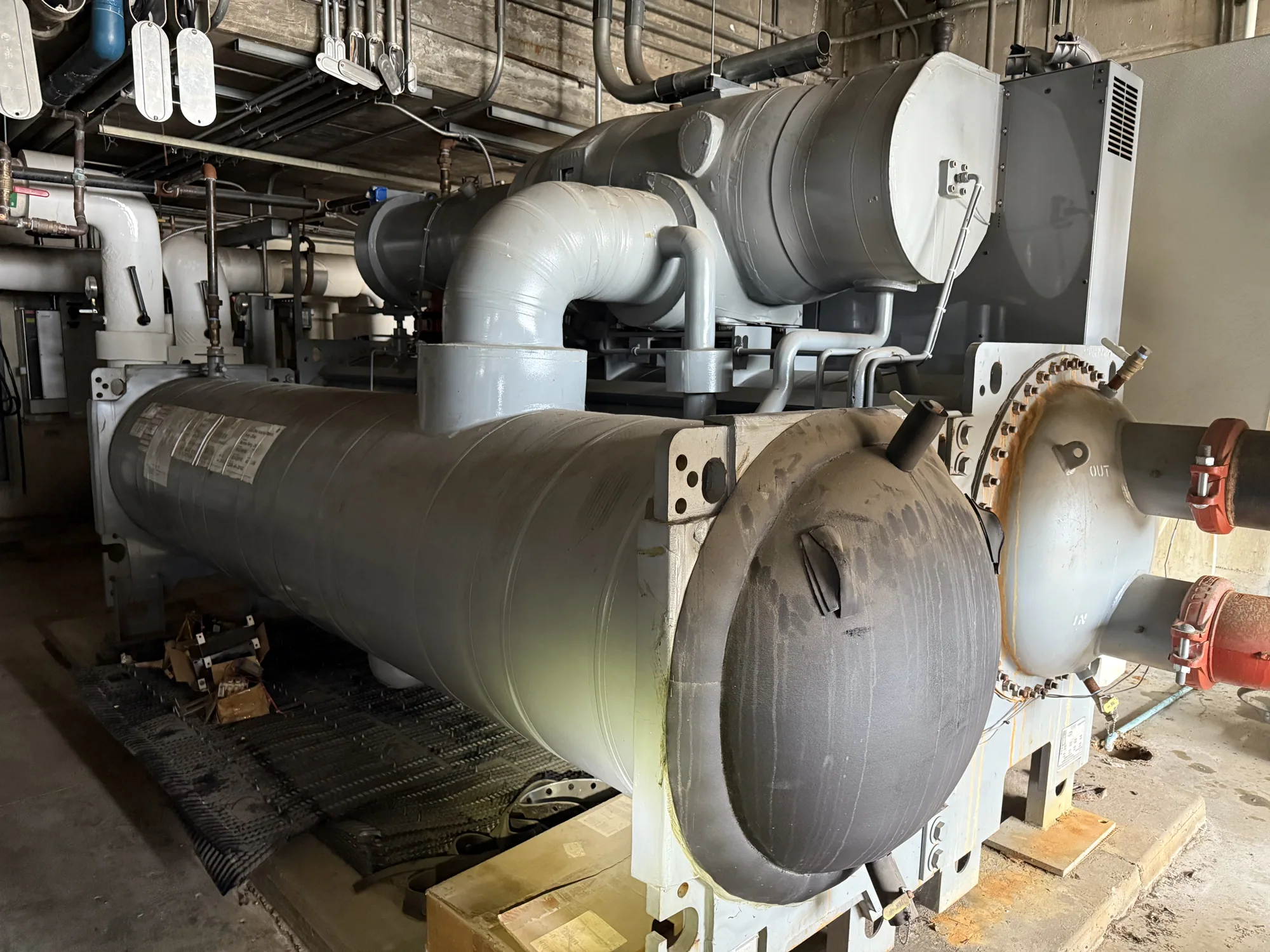
A practical way to sell your industrial chiller
Whether a chiller is still connected or has already been retired, its owner can ask us about a sale. We buy industrial chillers in Memphis, Tennessee. With McQuay chillers, we need an accurate picture of the equipment, its surroundings and the likely release window; a running demonstration is not required for our review.
Use this page as a starting point for the following: McQuay chiller identity, configuration, access and removal. The particular nameplate, condition and site constraints matter more than a general description; uncertain details can be discussed rather than guessed.
Our buying scope is industrial chillers only. It includes air-cooled and water-cooled units, whether equipped with centrifugal, screw or scroll compressors. We buy chillers of all tonnages and using all refrigerants, including units from 20 to 2,000 or more tons. Data centers, power plants, hospitals, campuses and industrial plants are examples of decommissioning sources. We make cash offers and pay upfront under agreed terms; an individual offer is not guaranteed.
Manufacturer and model details
For McQuay chillers, ask the person familiar with the equipment to locate the main identification plate before relying on an asset-list description. The model and serial number help distinguish the proposed unit from other assets. If the label is inaccessible or missing, send what can be safely photographed and explain the limitation.
An asset list may not describe the present condition or the path out. Provide known history, visible defects and a description of what must stay behind. We consider those facts and the practical removal work alongside the manufacturer's identification; an individual review is necessary and a cash offer is not assured.
Access, rigging and removal
The distance from a chiller to a truck is only one part of the route. Changes in floor level, door sizes, overhead structures and fixed equipment can affect the work. If the machine is on a roof or below grade, explain how that location is accessed. Photos and any reliable dimensions or weight help identify questions; estimates should be labeled.
Once a purchase and scope are agreed, the buyer handles refrigerant recovery and disconnects as well as rigging, loading, freight and hauling. Crane work is included when needed. The facility should identify power and water connections, equipment that must remain operational, and its rules for granting access. The seller does not need to test the chiller for our review.
From first details to an agreed pickup
Send the chiller's location, type, tonnage, refrigerant, voltage and nameplate photos, together with your contact details and company name. If some fields are unknown, provide what is available. Include the intended removal date, whether it is flexible, and the name of the person authorized to discuss the sale. For multiple chillers, label the photos and specifications by unit.
After reviewing the equipment and site details, we may ask for clarification or additional photos. If an offer is made, review what is included and the payment and pickup terms before accepting. Following agreement, payment is upfront and the removal work is coordinated around the agreed access window. We handle the listed removal tasks and cover the freight.
How we evaluate an offer
A useful valuation discussion starts with facts, not an assumed price per ton. Provide the model and configuration, visible condition and whether components are complete, then describe the removal route and available timing. We consider the chiller and the associated work as one proposed transaction. Each case is evaluated and neither a price nor an offer is guaranteed.
Payment and logistics should not be left implicit. If an offer is accepted, we pay upfront on the agreed terms, cover all freight and handle hauling. Establish which unit is being purchased and discuss the planned release window with the facility contact. Any unresolved questions about access or scope can be addressed before scheduling.
What to send for a useful equipment review
The words on a nameplate help connect the offered chiller to its actual specification. Photograph the maker, model and serial number, rated tons, voltage and refrigerant marking if legible. A whole-machine picture and safe views of connections and controls add context. If taking an image would require removing a cover or entering an unsafe space, leave it out.
The absence of a readable plate or a complete history is worth flagging, not concealing. Provide available records and photographs, indicate whether the chiller is connected and identify missing components or known damage. If you do not know a specification, say so. The seller is not required to run or test the equipment for our evaluation.
Frequently asked questions
The chiller has been shut down. Must it be restarted?
No. We do not require operation or testing for a quote. Send pictures of the equipment and its identification, and describe what you know about its present condition. Unknown history or specifications can be noted without energizing a retired machine.
What work does the buyer handle after a sale is agreed?
We handle refrigerant recovery, disconnects, necessary crane work, rigging, loading, freight and hauling; all freight is covered by the buyer. Describe the machine's connections and the route out so the team can coordinate removal with the facility's access requirements.
Why do access and condition matter to an offer?
They help define both the asset being purchased and the work needed to remove it. Model, configuration, completeness and schedule also matter. We buy chillers of all tonnages and using all refrigerants, but the review does not guarantee a price or an offer. Payment for an agreed sale is upfront.