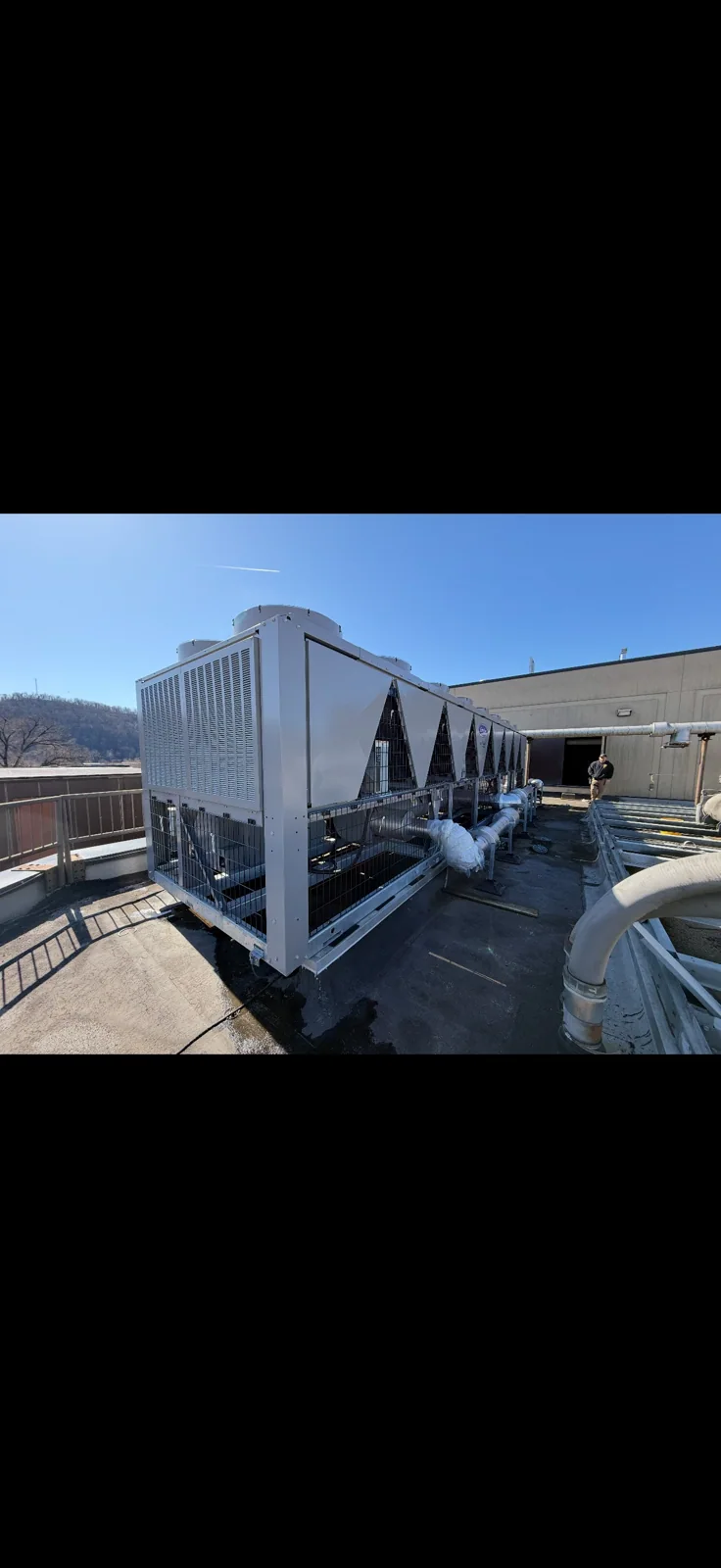
A practical way to sell your industrial chiller
A nameplate can tell part of the story; the route to a loading area tells another part. If you are considering selling R-123 chillers in Kingsport, Tennessee, share both equipment and site information. Our business buys industrial chillers, and each possible purchase is assessed on its own circumstances.
The topic can be summarized as follows: R-123 identification and buyer-handled recovery. Start with the equipment you actually intend to sell; give us the information you have and distinguish it from assumptions about the installation or its release date.
Our business buys industrial chillers only, including air-cooled and water-cooled machines with centrifugal, screw or scroll compressors. Equipment from 20 to 2,000+ tons is included, and we buy chillers of all tonnages and using all refrigerants. Sources can include data center decommissioning, power plant shutdowns, hospital or campus closures and industrial plant shutdown projects. A seller may receive a cash offer, with upfront payment under agreed terms. The machine and logistics must be evaluated first; no particular offer is promised.
Refrigerant identification and recovery
For a request concerning R-123 chillers, a clear photo of the refrigerant marking and equipment nameplate is more useful than an estimate based on age or appearance. If the marking is unreadable or you are unsure what is in the system, say so. We buy chillers using all refrigerants; the refrigerant designation by itself does not guarantee a particular offer.
Let the site contact flag known leaks and any prior recovery when describing the chiller. If service documents are available, share them; if not, identify the gaps. We handle refrigerant recovery as part of agreed removal. Do not vent or treat the system as empty by assumption, and no performance test is required.
What to send for a useful equipment review
The nameplate is often the quickest way to distinguish one machine from another. Send the manufacturer, model, serial number, tonnage, voltage and refrigerant details visible on the label, along with a wide photo of the whole unit. Photos of controls and connections can add context. Only photograph areas you can access safely; do not open energized equipment for a picture.
An incomplete record does not need to become a guess. Tell us which components are visibly missing, whether the chiller remains connected and what is known about its condition. A worn label can be supplemented by existing documentation. No performance test is required; leave a retired or disconnected machine off rather than starting it for a quote.
How we evaluate an offer
A quote has to account for two connected questions: what is being bought, and what work is needed to take it away? Model, capacity, configuration, completeness and visible condition inform the equipment side. Disconnects, the exit route, freight and release date inform the logistics side. We review the whole situation; none of those details guarantees an offer or price.
Payment and logistics should not be left implicit. If an offer is accepted, we pay upfront on the agreed terms, cover all freight and handle hauling. Establish which unit is being purchased and discuss the planned release window with the facility contact. Any unresolved questions about access or scope can be addressed before scheduling.
From first details to an agreed pickup
A useful inquiry pairs your contact and company information with the chiller's location and identification. Send photos, capacity, type, voltage and refrigerant details where available, and identify the authorized seller. Add the anticipated pickup window and label each machine if more than one is involved. It is fine to say when a field or date is not yet known.
The people who approve a sale and control a building may differ, so tell us whom to contact for each. We review the machine and may follow up about access. If an offer is made, check its scope before accepting. Payment is upfront under agreed terms, and removal and freight are then coordinated around the agreed release and access arrangements.
Access, rigging and removal
A site plan is more useful when it shows obstacles as well as open space. Photograph the chiller in its room or outdoor setting, the openings toward the exit and the prospective truck area. Note roof access, slopes, low clearances or restrictions on entry. Provide known measurements and weight, but do not guess at missing figures.
The division of responsibility is straightforward: the buyer handles recovery of refrigerant, disconnects, crane work when required, rigging, loading, freight and hauling in the agreed scope. The site contact helps identify access conditions and the connections or neighboring systems that need consideration. There is no need to run a chiller to ask for an offer.
Frequently asked questions
What should replace a test in my initial submission?
Provide a readable nameplate if available, a full view of the chiller and an honest description of its condition and location. We do not require a performance test and you should not energize the machine just to seek a quote.
Do I need a separate freight company?
No. For an agreed purchase, we handle hauling and cover all freight. Our scope also includes refrigerant recovery, disconnects, rigging, loading and crane work when needed. Let us know about the loading area and the site's access requirements.
Who plans refrigerant recovery after a sale?
The buyer handles recovery within the agreed removal work. The seller can help by identifying the equipment and providing any known refrigerant marking or prior recovery history. If the contents are uncertain, say so rather than assuming the system is empty or venting it.