A practical way to sell your industrial chiller
When a cooling project leaves a surplus machine in Nashville, Tennessee, the first decision is often how to move it from the property. We buy industrial chillers. For McQuay centrifugal chillers, we review identification and site access together, so a seller can discuss a possible cash purchase without first arranging the move or operating the equipment.
The request has a specific focus: McQuay manufacturer identification and centrifugal equipment configuration. Tell us which parts of the situation are settled and which depend on a facility contact or an upcoming project milestone.
We purchase industrial chillers, including equipment released by data-center decommissioning, power-plant shutdowns, hospital and campus closures and industrial shutdowns. Both water-cooled and air-cooled machines can be considered, including scroll, screw and centrifugal types. We buy chillers of all tonnages and using all refrigerants, including units from 20 to 2,000 or more tons. Cash offers with upfront payment depend on review and agreed terms; no offer is assured.
Manufacturer and model details
For a property with several machines described as McQuay centrifugal chillers, identify the one being offered before discussing a pickup. Match each serial number and label image to a full view of that particular chiller. If units have different release dates or locations, include those details with their respective photographs rather than combining the records.
A shared manufacturer does not mean the machines have the same configuration or condition. Note known missing parts, alterations and connections, as well as any neighboring units that must stay in place. A review considers each proposed sale and its logistics; a brand name is not a promise of a price or offer.
Understanding the equipment configuration
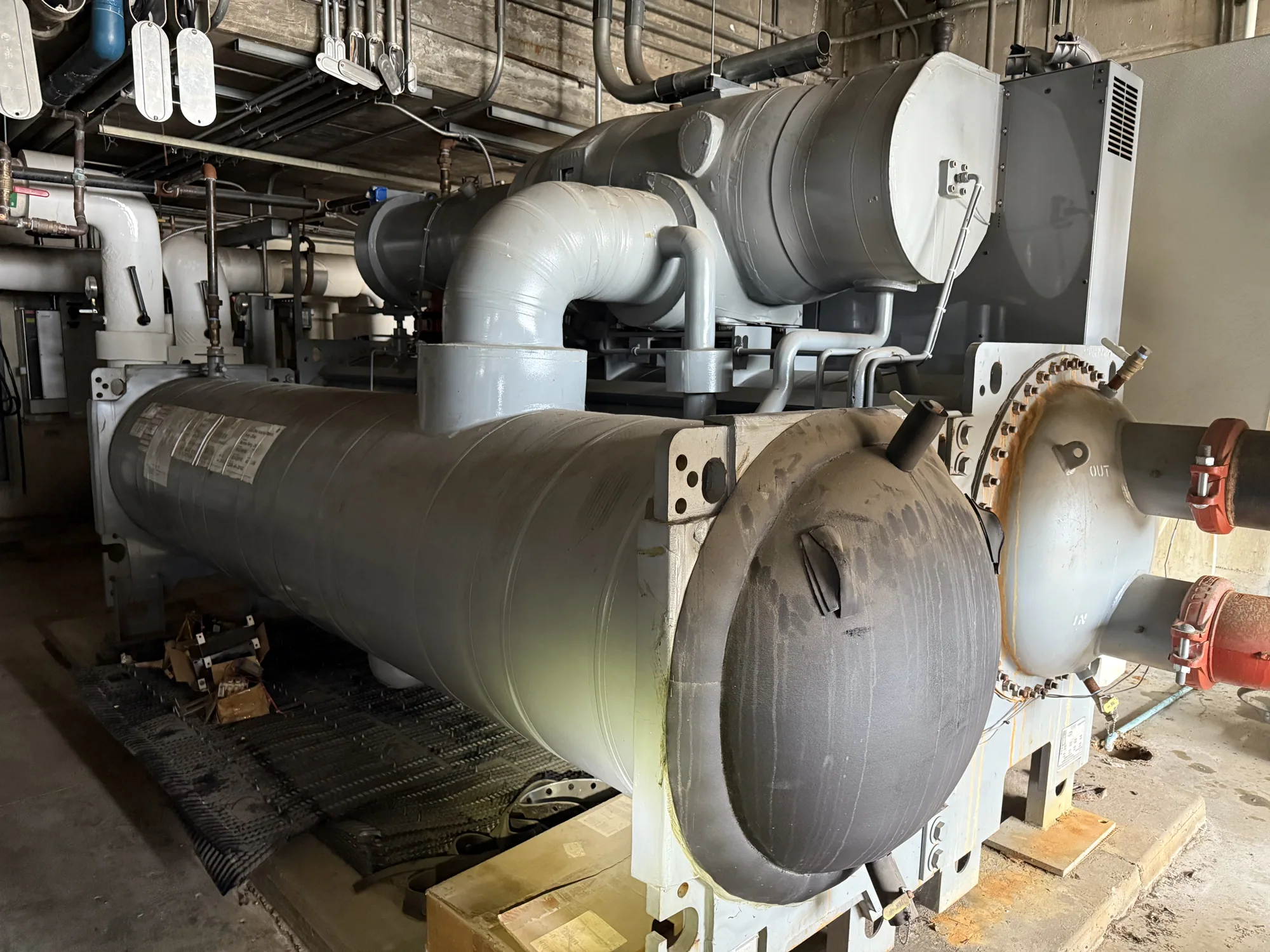
A useful equipment description starts with the configuration: air-cooled or water-cooled, and centrifugal, screw or scroll when known. Photograph a centrifugal machine, including the compressor assembly, controls and any separate components. If you do not know the type, the nameplate and a full-unit photo are a practical starting point; an uncertain label is not a reason to run the machine.
If the machine is water-cooled, explain the water connections and whether other equipment depends on the loops. If it is air-cooled, show the condenser area and the space beside it. Identify which machine will be released and what remains at the site; this defines the scope of the requested quote.
What to send for a useful equipment review
Start with a readable photo of the manufacturer's nameplate. The manufacturer, model, serial number, cooling capacity, voltage and refrigerant marking can help identify what is being offered. Add a full view of the chiller and, if accessible, photos of the controls, compressor area and visible connections. Do not remove guards or enter an unsafe area to take pictures.
Describe the unit as it stands today, even if it is disconnected, missing pieces or has not been operated recently. Known damage and existing service records can add context, particularly when a nameplate is hard to read. We do not require testing: do not start, energize or pressure-test the equipment simply to make an inquiry.
Access, rigging and removal
For an initial access review, send a sequence of safe photographs: the chiller, its surrounding space, the exit and the place a truck might reach. Mention lifts between levels, rooftop placement and obstructions that are not obvious in the images. Existing weight and size information can help; we can discuss gaps without inventing measurements.
You do not have to select a hauler or lifting crew for an agreed sale. We handle loading, freight and hauling, along with refrigerant recovery, disconnects, rigging and crane work when needed. Please describe the site's access and release requirements, power and water connections, and anything nearby that must stay in service. We do not require the seller to test the unit.
How we evaluate an offer
A cash offer is evaluated using the chiller's identification, capacity, configuration, visible condition and completeness, along with the practical costs and timing of removal. Access for equipment and trucks, the work required to disconnect the unit, and the destination for the load can all matter. None of these factors alone determines the price, and not every inquiry results in an offer.
If we propose a purchase, check that the offer identifies the correct machine and states the agreed payment and removal arrangements. Our payment is upfront under the sale terms; we cover freight and handle hauling. Before setting the work window, identify the person who can release the equipment and raise any unresolved site-access questions.
From first details to an agreed pickup
To begin, provide a contact name and company, the equipment location, and the type, tonnage, refrigerant and voltage shown on the chiller if known. Nameplate and full-unit photos help connect those details to the correct machine. Mention who can authorize the sale and your preferred release window; an unknown specification or tentative date can be marked as such.
A preliminary description lets us determine what additional information, if any, is needed. We may discuss photographs, condition or how the machine can leave the site. If we make an offer, review the equipment and removal terms; there is no guarantee of a proposal. After agreement we pay upfront and coordinate the listed work, including freight, for pickup.
Frequently asked questions
Can I inquire without current performance readings?
Yes. A performance test is not a condition of our review. The nameplate, overall photographs, known condition and site details are a useful starting point. Do not start or energize the chiller simply to obtain readings for the request.
How is an agreed removal coordinated?
The site contact describes access and release requirements. We handle the disconnects, refrigerant recovery, rigging, loading and hauling, with a crane when needed, and cover freight. The actual plan and work window are coordinated under the sale's agreed scope.
Why do access and condition matter to an offer?
They help define both the asset being purchased and the work needed to remove it. Model, configuration, completeness and schedule also matter. We buy chillers of all tonnages and using all refrigerants, but the review does not guarantee a price or an offer. Payment for an agreed sale is upfront.