A practical way to sell your industrial chiller
An industrial chiller sale is more than a model number or a pickup date. For McQuay chillers in Nashville, Tennessee, we look at the equipment itself, the space around it and the work involved in removal. Our business buys industrial chillers; we are not offering chillers for sale.
The topic can be summarized as follows: McQuay chiller identity, configuration, access and removal. Start with the equipment you actually intend to sell; give us the information you have and distinguish it from assumptions about the installation or its release date.
Our business buys industrial chillers only, across all refrigerants and tonnages; the scope includes machines rated 20 to 2,000 or more tons. Air-cooled and water-cooled designs and centrifugal, scroll and screw compressors are included. Projects may involve retired data centers, power stations, hospitals, campuses or industrial plants. We offer cash and pay upfront when terms are agreed, but each proposed purchase requires evaluation.
Manufacturer and model details
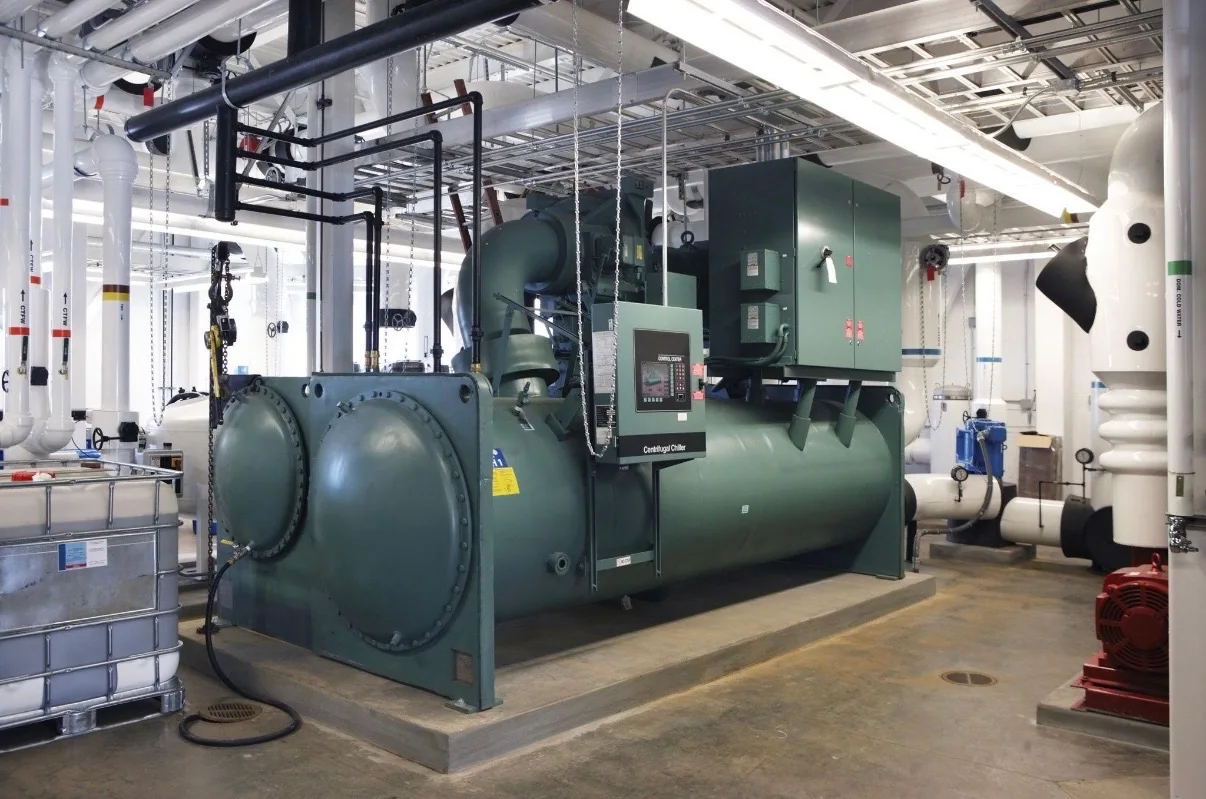
A manufacturer label is a useful starting point for McQuay chillers, but it does not identify the exact machine by itself. A straight-on image of the main plate can establish the model and serial number; an overall view shows the equipment those markings belong to. If several units are present, number the images so the right plate stays with the right machine.
A name on a cabinet cannot tell us which parts are missing or what surrounds the unit. Describe visible damage, modifications and any equipment that will remain at the property. We consider the unit's actual condition and removal requirements, not just its manufacturer, when deciding whether an offer can be made.
From first details to an agreed pickup
Build the inquiry around the actual asset and a person we can contact. Provide your name, company and the equipment location, followed by any known type, tonnage, voltage and refrigerant information. Attach plate and full-unit photos. Identify the authorized seller and the expected release window; mark a date or specification tentative if it has not been confirmed. Label each machine separately.
First we assess the submitted information; then any unresolved equipment or access questions can be discussed. A seller is free to review an offer, if made, and its stated removal scope before accepting it. An agreed sale moves to upfront payment and pickup coordination. We handle the agreed physical removal and cover the freight rather than requiring a seller-booked carrier.
What to send for a useful equipment review
Start by locating the main equipment label and taking a clear, straight-on photo if it can be reached safely. Pair that with an image of the full chiller; show controls and connections where possible. Manufacturer, model, serial number, cooling rating, refrigerant and voltage are useful details, but do not open energized cabinets or move guards to read them.
A unit may be connected, disconnected, incomplete or already retired; describe its actual condition rather than assuming that it must be operational. Mention known damage and any components that are absent. No testing is required, and you should not energize or operate equipment merely to request a quote. Existing records can help when a label is difficult to read.
Access, rigging and removal
Photograph the path from the chiller to an exit or loading point, not just the machine itself. Include doorways, stairs or ramps, overhead obstructions, nearby equipment and the area where a truck could approach. If the unit is on a roof or below grade, say how that area is reached. Approximate dimensions and known weights are helpful, but mark estimates as estimates.
Once a purchase and scope are agreed, the buyer handles refrigerant recovery and disconnects as well as rigging, loading, freight and hauling. Crane work is included when needed. The facility should identify power and water connections, equipment that must remain operational, and its rules for granting access. The seller does not need to test the chiller for our review.
How we evaluate an offer
A useful valuation discussion starts with facts, not an assumed price per ton. Provide the model and configuration, visible condition and whether components are complete, then describe the removal route and available timing. We consider the chiller and the associated work as one proposed transaction. Each case is evaluated and neither a price nor an offer is guaranteed.
Read the proposed terms against the asset list and the site plan. Clarify what is included, who can grant access and what pickup window is anticipated. The buyer pays upfront under the agreed sale terms, covers all freight and handles hauling. Agreeing on these points helps avoid treating a tentative date as a confirmed appointment.
Frequently asked questions
What if we cannot demonstrate that the unit runs?
You can still send the available information. Seller testing is not required, and a machine should not be energized solely for our quotation. Identify the unit and explain its known condition or any gaps in the record; any offer is subject to review.
Who organizes lifting and the trip away from the property?
We handle rigging, necessary crane work, loading, freight and hauling, as well as refrigerant recovery and disconnects, in the agreed removal scope. The buyer covers freight. The facility contact should explain restrictions and when access is available.
When is payment made if we agree to sell?
We pay upfront under the agreed sale terms. Before acceptance, review the equipment included, payment arrangements and removal scope. The individual machine and site are evaluated first, so a cash offer or particular price is not automatic.