A practical way to sell your industrial chiller
An industrial chiller sale is more than a model number or a pickup date. For centrifugal chillers in Memphis, Tennessee, we look at the equipment itself, the space around it and the work involved in removal. Our business buys industrial chillers; we are not offering chillers for sale.
Use this page as a starting point for the following: centrifugal configuration and site removal. The particular nameplate, condition and site constraints matter more than a general description; uncertain details can be discussed rather than guessed.
We buy industrial chillers only, of all tonnages and using all refrigerants, including equipment in the 20 to 2,000+ ton range. Air-cooled and water-cooled machines, whether centrifugal, scroll or screw, are within our buying scope. Cash offers and upfront payment are available under agreed terms. We buy from projects such as decommissioned data centers, shut-down power plants, hospital and campus closures, and industrial plant shutdowns. Each unit and its removal must be evaluated to determine whether an offer can be made.
Understanding the equipment configuration
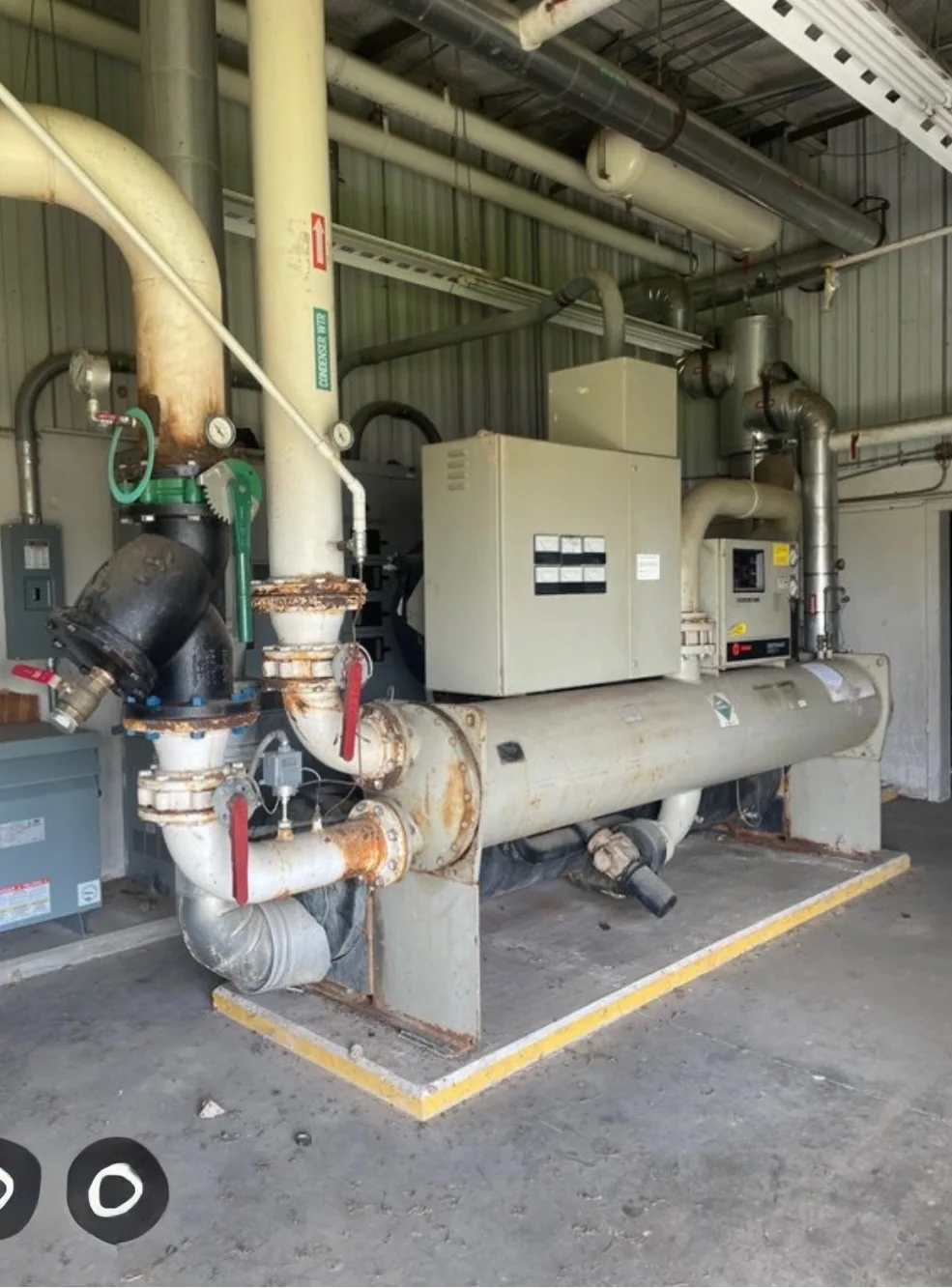
A useful equipment description starts with the configuration: air-cooled or water-cooled, and centrifugal, screw or scroll when known. Photograph a centrifugal machine, including the compressor assembly, controls and any separate components. If you do not know the type, the nameplate and a full-unit photo are a practical starting point; an uncertain label is not a reason to run the machine.
If the machine is water-cooled, explain the water connections and whether other equipment depends on the loops. If it is air-cooled, show the condenser area and the space beside it. Identify which machine will be released and what remains at the site; this defines the scope of the requested quote.
How we evaluate an offer
A cash offer is evaluated using the chiller's identification, capacity, configuration, visible condition and completeness, along with the practical costs and timing of removal. Access for equipment and trucks, the work required to disconnect the unit, and the destination for the load can all matter. None of these factors alone determines the price, and not every inquiry results in an offer.
If we propose a purchase, check that the offer identifies the correct machine and states the agreed payment and removal arrangements. Our payment is upfront under the sale terms; we cover freight and handle hauling. Before setting the work window, identify the person who can release the equipment and raise any unresolved site-access questions.
What to send for a useful equipment review
Make the identification images easy to match to the asset. A close view of the main plate may show the manufacturer, model, serial number, capacity, voltage and refrigerant; a separate wide view shows the whole chiller. If safe access permits, add controls and connection photographs. Do not open electrical enclosures or remove protective guards to obtain them.
The absence of a readable plate or a complete history is worth flagging, not concealing. Provide available records and photographs, indicate whether the chiller is connected and identify missing components or known damage. If you do not know a specification, say so. The seller is not required to run or test the equipment for our evaluation.
From first details to an agreed pickup
You can begin before every record has been located. Share your contact and company, the chiller's location and the name of the person able to authorize a sale. Include a photo of the label and machine, its known type, capacity, refrigerant and voltage, and the expected release date. Flag flexible timing and identify each chiller separately if there is more than one.
First we assess the submitted information; then any unresolved equipment or access questions can be discussed. A seller is free to review an offer, if made, and its stated removal scope before accepting it. An agreed sale moves to upfront payment and pickup coordination. We handle the agreed physical removal and cover the freight rather than requiring a seller-booked carrier.
Access, rigging and removal
Access can change the work needed even when two chillers have similar ratings. Show the unit in its surroundings, the exit route, the space for lifting and the area where freight could be loaded. Mention narrow openings, obstructions, rooftop placement and site-controlled access. Measurements and equipment weights are useful when available, but they do not need to be invented.
Our removal scope includes refrigerant recovery, disconnects, crane service when needed, rigging, loading, freight and hauling. Explain where the unit connects to power or water and whether neighboring equipment must stay in service. Site access and timing are coordinated with the appropriate contact. The seller does not have to test the machine before requesting a quote.
Frequently asked questions
Can I request an offer if the unit is not running?
Yes. No testing is required, and you should not start or energize the chiller just for our review. Share the nameplate, photos and what you know about its condition and connections. We evaluate the information rather than assuming that every inquiry results in an offer.
What work does the buyer handle after a sale is agreed?
We handle refrigerant recovery, disconnects, necessary crane work, rigging, loading, freight and hauling; all freight is covered by the buyer. Describe the machine's connections and the route out so the team can coordinate removal with the facility's access requirements.
Why do access and condition matter to an offer?
They help define both the asset being purchased and the work needed to remove it. Model, configuration, completeness and schedule also matter. We buy chillers of all tonnages and using all refrigerants, but the review does not guarantee a price or an offer. Payment for an agreed sale is upfront.