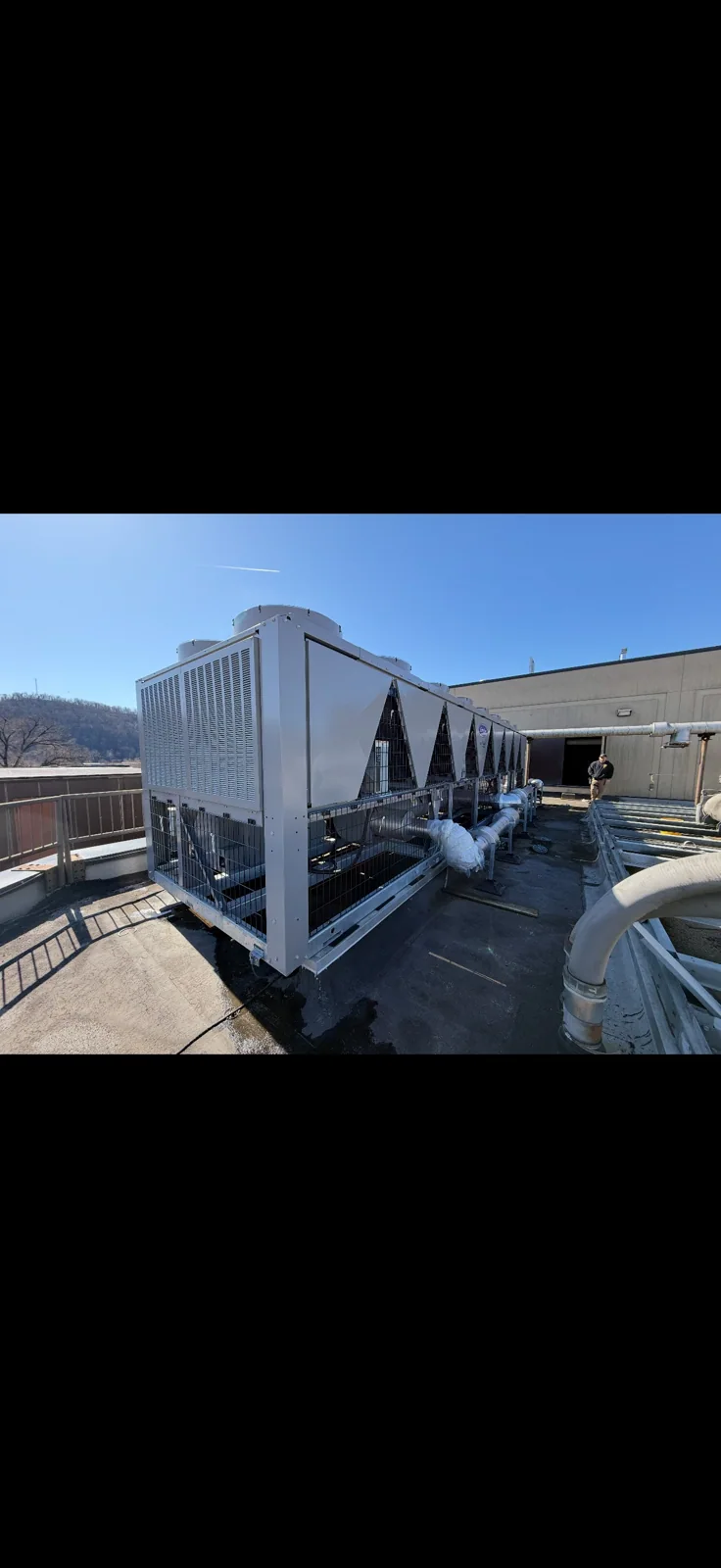
A practical way to sell your industrial chiller
Whether a chiller is still connected or has already been retired, its owner can ask us about a sale. We buy industrial chillers in Kingsport, Tennessee. With Carrier centrifugal chillers, we need an accurate picture of the equipment, its surroundings and the likely release window; a running demonstration is not required for our review.
The request has a specific focus: Carrier manufacturer identification and centrifugal equipment configuration. Tell us which parts of the situation are settled and which depend on a facility contact or an upcoming project milestone.
We buy industrial chillers only: air-cooled and water-cooled machines, including centrifugal, screw and scroll units. Our scope includes equipment from 20 to 2,000 or more tons; we buy chillers of all tonnages and using all refrigerants. The equipment may come from decommissioned data centers and power plants, hospital and campus closures, or industrial plant shutdowns. We make cash offers and pay upfront under the agreed sale terms. Every proposal depends on the individual equipment and circumstances, so an offer or price is not guaranteed.
Manufacturer and model details
For Carrier centrifugal chillers, ask the person familiar with the equipment to locate the main identification plate before relying on an asset-list description. The model and serial number help distinguish the proposed unit from other assets. If the label is inaccessible or missing, send what can be safely photographed and explain the limitation.
An asset list may not describe the present condition or the path out. Provide known history, visible defects and a description of what must stay behind. We consider those facts and the practical removal work alongside the manufacturer's identification; an individual review is necessary and a cash offer is not assured.
Understanding the equipment configuration
A useful equipment description starts with the configuration: air-cooled or water-cooled, and centrifugal, screw or scroll when known. Photograph a centrifugal machine, including the compressor assembly, controls and any separate components. If you do not know the type, the nameplate and a full-unit photo are a practical starting point; an uncertain label is not a reason to run the machine.
If the machine is water-cooled, explain the water connections and whether other equipment depends on the loops. If it is air-cooled, show the condenser area and the space beside it. Identify which machine will be released and what remains at the site; this defines the scope of the requested quote.
From first details to an agreed pickup
The most helpful submission links three things: the seller, the machine and its availability. Give a company and contact name, site address or location, authorized sale contact and expected pickup window. Send clear nameplate and overall views, plus the type, tonnage, voltage and refrigerant where known. State which fields remain uncertain and label multiple units individually.
The people who approve a sale and control a building may differ, so tell us whom to contact for each. We review the machine and may follow up about access. If an offer is made, check its scope before accepting. Payment is upfront under agreed terms, and removal and freight are then coordinated around the agreed release and access arrangements.
Access, rigging and removal
Start at the unit and trace a possible path to the loading area in your photographs. Doors, corners, ramps, overhead restrictions and nearby equipment may all matter. Explain where a vehicle could approach and whether the machine is elevated or below grade. Share documented dimensions and weight if available, identifying an approximation as such.
The buyer handles crane work when needed, rigging, refrigerant recovery, disconnects, loading, freight and hauling. Tell us about electrical connections, water piping and other nearby systems that must remain in service. The site contact should explain its access rules and release requirements; we can then coordinate the agreed work and timing. No seller-performed testing is needed.
How we evaluate an offer
We consider more than the manufacturer or tonnage when evaluating a cash offer. The machine's configuration and visible condition, whether parts are present, the removal route and the requested schedule all help define the work. A complete description makes it easier to discuss a realistic quote, but a particular value or an offer is never automatic.
If we propose a purchase, check that the offer identifies the correct machine and states the agreed payment and removal arrangements. Our payment is upfront under the sale terms; we cover freight and handle hauling. Before setting the work window, identify the person who can release the equipment and raise any unresolved site-access questions.
What to send for a useful equipment review
Think of the photographs as an identification set: one for the complete machine, one close enough to read the plate and, where safely reachable, others for controls and connections. The plate may give the manufacturer, serial and model numbers, cooling capacity, electrical voltage and refrigerant. Never expose energized parts or defeat guarding for a photo.
Not all surplus equipment comes with a complete file. Send the clearest label image and records you already have, note any absent parts or visible damage, and indicate whether the chiller is still hooked up. Leave unknown specifications marked as unknown. A seller does not need to perform a test or turn on the machine to begin the review.
Frequently asked questions
Do disconnected machines need to be reconnected for review?
No. Tell us the chiller is disconnected and send available identification and site photos instead. We do not ask sellers to operate or test equipment to request an offer. Describe missing components and leave uncertain details marked as unknown.
Must the seller disconnect the machine before pickup?
The buyer handles the agreed disconnects and refrigerant recovery, together with rigging, crane work when needed, loading, freight and hauling. All freight is covered. Identify power and water connections and any nearby systems that must remain in service.
Why do access and condition matter to an offer?
They help define both the asset being purchased and the work needed to remove it. Model, configuration, completeness and schedule also matter. We buy chillers of all tonnages and using all refrigerants, but the review does not guarantee a price or an offer. Payment for an agreed sale is upfront.