A practical way to sell your industrial chiller
When a cooling project leaves a surplus machine in Chattanooga, Tennessee, the first decision is often how to move it from the property. We buy industrial chillers. For 20–99 ton chillers, we review identification and site access together, so a seller can discuss a possible cash purchase without first arranging the move or operating the equipment.
Use this page as a starting point for the following: 20–99 ton nameplate capacity and equipment rigging. The particular nameplate, condition and site constraints matter more than a general description; uncertain details can be discussed rather than guessed.
Our business buys industrial chillers only, across all refrigerants and tonnages; the scope includes machines rated 20 to 2,000 or more tons. Air-cooled and water-cooled designs and centrifugal, scroll and screw compressors are included. Projects may involve retired data centers, power stations, hospitals, campuses or industrial plants. We offer cash and pay upfront when terms are agreed, but each proposed purchase requires evaluation.
Capacity, dimensions and the lift plan
For a request concerning 20–99 ton chillers, give the rated cooling capacity shown on the nameplate if it is legible. Capacity in tons describes cooling output, not the machine's shipping weight. Two units in a similar capacity range can have different dimensions, access requirements or configurations.
Describe the physical route for the machine: available doors, ceiling clearance, roof access and the path to a loading area. Send known length, width, height and weight, together with safe photographs of the base and lifting marks. The buyer handles needed crane and rigging work; a cooling rating does not promise a price.
What to send for a useful equipment review
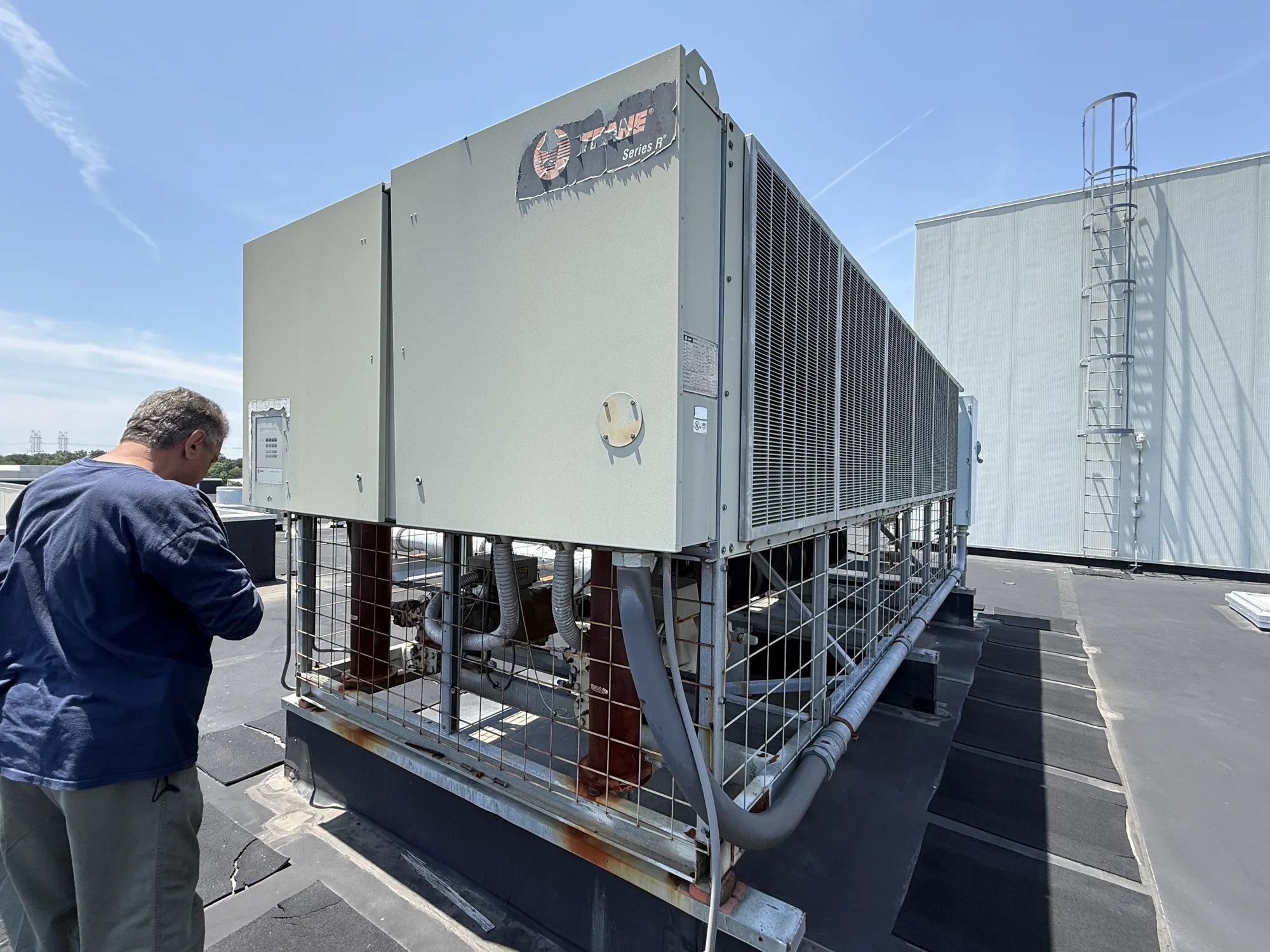
Start with a readable photo of the manufacturer's nameplate. The manufacturer, model, serial number, cooling capacity, voltage and refrigerant marking can help identify what is being offered. Add a full view of the chiller and, if accessible, photos of the controls, compressor area and visible connections. Do not remove guards or enter an unsafe area to take pictures.
Separate an observation from an operating claim. If you can see damage or know that a part was removed, explain that; if the service history is unavailable, say so. Let us know whether the unit is attached to its connections. We do not ask sellers to energize, run or pressure-test it, and existing records can supplement an unreadable plate.
How we evaluate an offer
Two chillers with the same rated capacity can present different purchase and removal considerations. Their configurations, completeness and condition may differ, as may their locations, routes out and schedules. Share the identifying details and any known restrictions so we can assess the complete job. A specific amount or cash offer cannot be promised before that assessment.
A seller considering an offer can ask how the scope, payment and pickup fit the proposed sale. Once terms are agreed, payment is upfront; we also cover freight and handle hauling. Confirm the actual equipment being transferred and the access arrangements so the work is planned around an agreed release, not an assumed one.
From first details to an agreed pickup
If you are preparing information for someone else to submit, gather the company and contact details, site location and authority to sell alongside the chiller photographs. Capacity, type, refrigerant and voltage are useful when known. Explain the anticipated removal date and whether it can move. A separate identification set for each unit prevents different machines from being confused.
After reviewing the equipment and site details, we may ask for clarification or additional photos. If an offer is made, review what is included and the payment and pickup terms before accepting. Following agreement, payment is upfront and the removal work is coordinated around the agreed access window. We handle the listed removal tasks and cover the freight.
Access, rigging and removal
A site plan is more useful when it shows obstacles as well as open space. Photograph the chiller in its room or outdoor setting, the openings toward the exit and the prospective truck area. Note roof access, slopes, low clearances or restrictions on entry. Provide known measurements and weight, but do not guess at missing figures.
Removal involves more than placing a machine on a truck. We handle the agreed disconnects and refrigerant recovery, arrange rigging and any necessary crane work, and take care of loading, freight and hauling. A site representative can explain water and electrical connections, adjacent operating systems and release procedures. No seller-operated performance test is part of the request.
Frequently asked questions
Do disconnected machines need to be reconnected for review?
No. Tell us the chiller is disconnected and send available identification and site photos instead. We do not ask sellers to operate or test equipment to request an offer. Describe missing components and leave uncertain details marked as unknown.
How is an agreed removal coordinated?
The site contact describes access and release requirements. We handle the disconnects, refrigerant recovery, rigging, loading and hauling, with a crane when needed, and cover freight. The actual plan and work window are coordinated under the sale's agreed scope.
Where should I look for capacity and lifting information?
A readable nameplate may show rated capacity; existing equipment records may provide dimensions or weight. Send what is available and flag uncertainty. Capacity in tons is not a lifting weight. We buy chillers of all tonnages and handle necessary crane and rigging within the agreed removal plan.