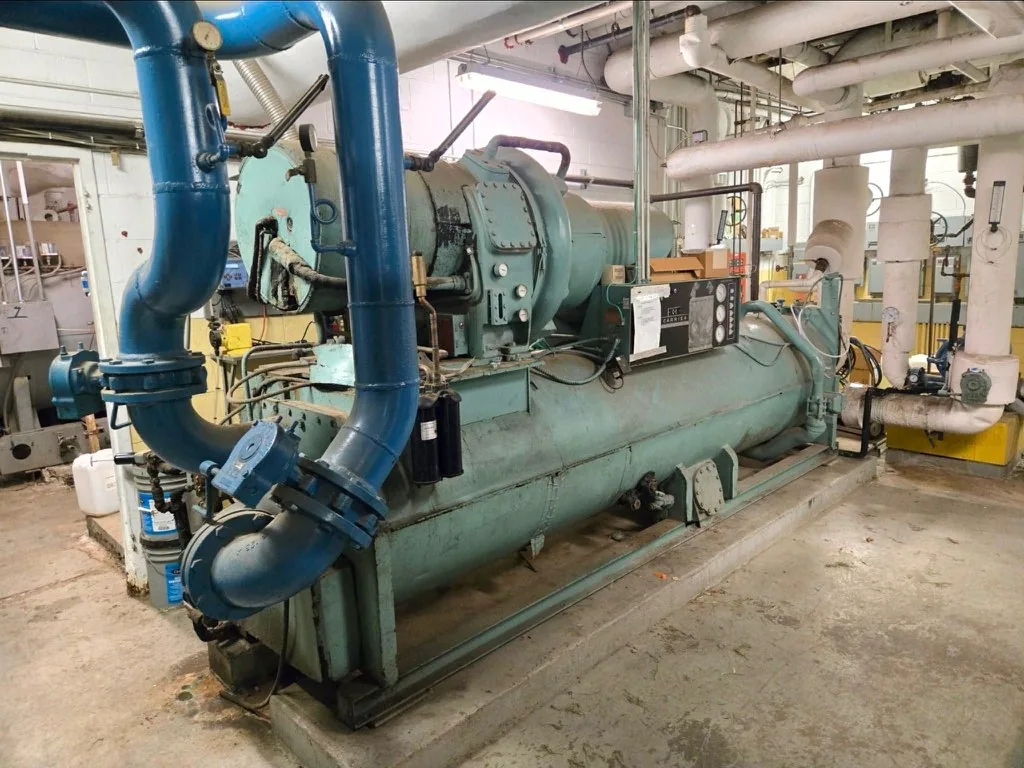
A practical way to sell your industrial chiller
A nameplate can tell part of the story; the route to a loading area tells another part. If you are considering selling 1,000–2,000+ ton chillers in Nashville, Tennessee, share both equipment and site information. Our business buys industrial chillers, and each possible purchase is assessed on its own circumstances.
The topic can be summarized as follows: 1,000–2,000+ ton nameplate capacity and equipment rigging. Start with the equipment you actually intend to sell; give us the information you have and distinguish it from assumptions about the installation or its release date.
The chiller, rather than the entire facility, is the subject of our buying service. We buy industrial chillers of all tonnages and using all refrigerants, including 20–2,000+ ton units, both air-cooled and water-cooled, with centrifugal, screw or scroll configurations. Sources include data centers, power plants, hospitals, campuses and industrial shutdowns. Cash offers and upfront payment are subject to the equipment review and agreed terms, not an automatic guarantee.
Capacity, dimensions and the lift plan
For a request concerning 1,000–2,000+ ton chillers, give the rated cooling capacity shown on the nameplate if it is legible. Capacity in tons describes cooling output, not the machine's shipping weight. Two units in a similar capacity range can have different dimensions, access requirements or configurations.
Pair the nameplate rating with any separate physical measurements you have. Weight, dimensions, base and lifting-point photographs can inform rigging; photos of doors and the loading area show site constraints. Mention ceiling height and roof access. We handle rigging and necessary crane work; the rating is not a guaranteed purchase value.
How we evaluate an offer
In reviewing a possible cash purchase, we look at the unit as described and the practical work at its property. The nameplate, capacity and type help identify it; photographs and condition notes show what is present. Disconnects, access, transport and the release window also affect the review. We do not guarantee that every machine will receive an offer.
If we propose a purchase, check that the offer identifies the correct machine and states the agreed payment and removal arrangements. Our payment is upfront under the sale terms; we cover freight and handle hauling. Before setting the work window, identify the person who can release the equipment and raise any unresolved site-access questions.
From first details to an agreed pickup
To begin, provide a contact name and company, the equipment location, and the type, tonnage, refrigerant and voltage shown on the chiller if known. Nameplate and full-unit photos help connect those details to the correct machine. Mention who can authorize the sale and your preferred release window; an unknown specification or tentative date can be marked as such.
First we assess the submitted information; then any unresolved equipment or access questions can be discussed. A seller is free to review an offer, if made, and its stated removal scope before accepting it. An agreed sale moves to upfront payment and pickup coordination. We handle the agreed physical removal and cover the freight rather than requiring a seller-booked carrier.
What to send for a useful equipment review
Make the identification images easy to match to the asset. A close view of the main plate may show the manufacturer, model, serial number, capacity, voltage and refrigerant; a separate wide view shows the whole chiller. If safe access permits, add controls and connection photographs. Do not open electrical enclosures or remove protective guards to obtain them.
Not all surplus equipment comes with a complete file. Send the clearest label image and records you already have, note any absent parts or visible damage, and indicate whether the chiller is still hooked up. Leave unknown specifications marked as unknown. A seller does not need to perform a test or turn on the machine to begin the review.
Access, rigging and removal
Show where the machine sits in relation to the space around it, then photograph the way out and the area available for loading. Point out narrow openings, immovable objects, stairs or overhead barriers, and explain any controlled entrance. If known, give the unit's dimensions and weight. An uncertain measurement should remain an estimate, not a fact.
For the agreed work, we take responsibility for disconnects, refrigerant recovery, rigging and loading, using a crane when needed; we also handle freight and hauling. Tell the coordinating contact about site rules and the unit's electrical and water connections, including any systems that must remain available. The quote request does not call for a seller-performed test.
Frequently asked questions
Do I need to test the chiller before requesting a quote?
No. We buy industrial chillers without requiring the seller to test or operate them. Send the nameplate, photos and any known condition information instead. If a detail is unknown or the machine is disconnected, tell us; do not energize equipment solely for the quotation.
Do I need a separate freight company?
No. For an agreed purchase, we handle hauling and cover all freight. Our scope also includes refrigerant recovery, disconnects, rigging, loading and crane work when needed. Let us know about the loading area and the site's access requirements.
Where should I look for capacity and lifting information?
A readable nameplate may show rated capacity; existing equipment records may provide dimensions or weight. Send what is available and flag uncertainty. Capacity in tons is not a lifting weight. We buy chillers of all tonnages and handle necessary crane and rigging within the agreed removal plan.