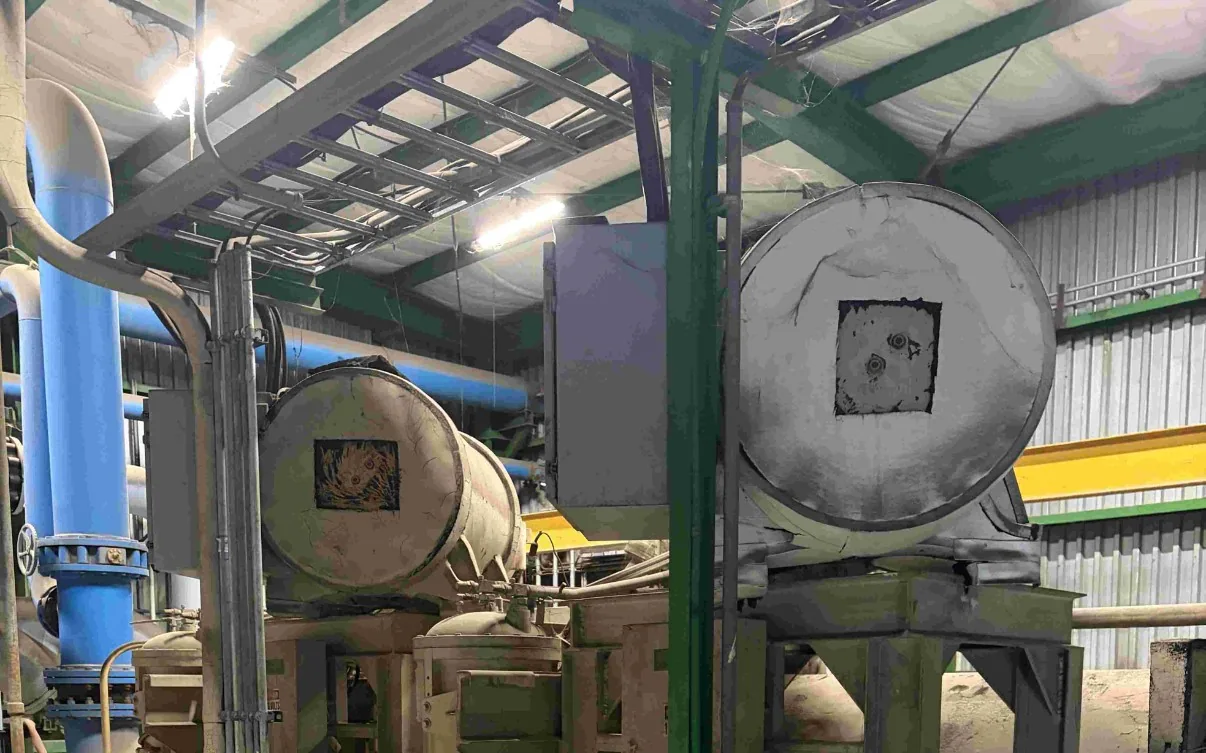
A practical way to sell your industrial chiller
Selling an industrial chiller starts with two questions: what is the equipment, and what will it take to remove it safely? We buy industrial chillers in Jackson, Tennessee. For a request concerning power plant chillers, photographs and honest site details help us assess the machine and prepare a practical cash offer.
Consider the circumstances behind the request: power plant closure, equipment decommissioning and project sequencing. An equipment label, a site photograph and a contact familiar with the property can help turn that broad description into a useful discussion.
We buy industrial chillers only, of all tonnages and using all refrigerants, including equipment in the 20 to 2,000+ ton range. Air-cooled and water-cooled machines, whether centrifugal, scroll or screw, are within our buying scope. Cash offers and upfront payment are available under agreed terms. We buy from projects such as decommissioned data centers, shut-down power plants, hospital and campus closures, and industrial plant shutdowns. Each unit and its removal must be evaluated to determine whether an offer can be made.
Planning around the facility timeline
For a power plant shutdown, the important distinction is between a chiller that is available for sale and equipment still controlled by the site's shutdown plan. Identify the asset and the person authorized to release it, then describe the expected decommissioning sequence and any site-specific access requirements.
A plant may have controlled work areas or other equipment that must remain in place. Explain any restrictions, the location of the chiller, and where a truck or crane could approach. We handle the removal work in the agreed scope; site rules and release timing should be discussed before scheduling.
From first details to an agreed pickup
You can begin before every record has been located. Share your contact and company, the chiller's location and the name of the person able to authorize a sale. Include a photo of the label and machine, its known type, capacity, refrigerant and voltage, and the expected release date. Flag flexible timing and identify each chiller separately if there is more than one.
Our review may lead to follow-up questions about the unit, the access route or the date the site can release it. If we make an offer, the seller can review the proposed purchase and removal scope before accepting. Payment is upfront under the agreed terms, and we coordinate the removal and freight rather than asking the seller to arrange hauling.
Access, rigging and removal
A site plan is more useful when it shows obstacles as well as open space. Photograph the chiller in its room or outdoor setting, the openings toward the exit and the prospective truck area. Note roof access, slopes, low clearances or restrictions on entry. Provide known measurements and weight, but do not guess at missing figures.
Our removal scope includes refrigerant recovery, disconnects, crane service when needed, rigging, loading, freight and hauling. Explain where the unit connects to power or water and whether neighboring equipment must stay in service. Site access and timing are coordinated with the appropriate contact. The seller does not have to test the machine before requesting a quote.
How we evaluate an offer
Before valuing the proposed purchase, we need to know whether the description matches the equipment that will actually be released. Missing pieces, model and capacity, together with condition and configuration, can matter. So can the space for rigging, transportation and timing. These are review factors rather than a published price formula, and an inquiry may not result in an offer.
An accepted cash offer should specify what will be sold and how the handoff will work. We pay upfront according to the agreed terms, cover all freight and handle hauling. Confirm who will provide access and when the chiller can be released, so the purchase and removal plan match the actual site and equipment.
What to send for a useful equipment review
If all you have at first is a building inventory, compare it with the markings on the chiller itself. We can use a readable nameplate showing the maker, model, serial number, tonnage, voltage and refrigerant, along with a photograph of the complete unit. Show accessible controls and connections too, without disturbing covers or entering hazardous spaces.
Separate an observation from an operating claim. If you can see damage or know that a part was removed, explain that; if the service history is unavailable, say so. Let us know whether the unit is attached to its connections. We do not ask sellers to energize, run or pressure-test it, and existing records can supplement an unreadable plate.
Frequently asked questions
What should replace a test in my initial submission?
Provide a readable nameplate if available, a full view of the chiller and an honest description of its condition and location. We do not require a performance test and you should not energize the machine just to seek a quote.
Must the seller disconnect the machine before pickup?
The buyer handles the agreed disconnects and refrigerant recovery, together with rigging, crane work when needed, loading, freight and hauling. All freight is covered. Identify power and water connections and any nearby systems that must remain in service.
What should a shutdown coordinator provide first?
Identify the machine, its owner or authorized seller and the estimated decommissioning window. Explain any active systems, restricted areas or milestones that could affect access. We can discuss these details before the shutdown is complete; an offer and pickup depend on agreed terms.