A practical way to sell your industrial chiller
When a cooling project leaves a surplus machine in Memphis, Tennessee, the first decision is often how to move it from the property. We buy industrial chillers. For hospital or campus chillers, we review identification and site access together, so a seller can discuss a possible cash purchase without first arranging the move or operating the equipment.
Consider the circumstances behind the request: hospital or campus closure, equipment decommissioning and project sequencing. An equipment label, a site photograph and a contact familiar with the property can help turn that broad description into a useful discussion.
We purchase industrial chillers, including equipment released by data-center decommissioning, power-plant shutdowns, hospital and campus closures and industrial shutdowns. Both water-cooled and air-cooled machines can be considered, including scroll, screw and centrifugal types. We buy chillers of all tonnages and using all refrigerants, including units from 20 to 2,000 or more tons. Cash offers with upfront payment depend on review and agreed terms; no offer is assured.
Planning around the facility timeline
At a hospital or campus, start by identifying the building and the specific chiller to be retired. Other cooling systems may need to stay in service even when one machine is being removed. Ask the facility contact to explain the release date, operating constraints and who can authorize the sale.
A mechanical room, occupied area or controlled entrance can affect the route out and the available work window. Label photos if multiple chillers are present, and mention any access approval or pedestrian-route restrictions. We can discuss the equipment without requiring a performance test.
What to send for a useful equipment review
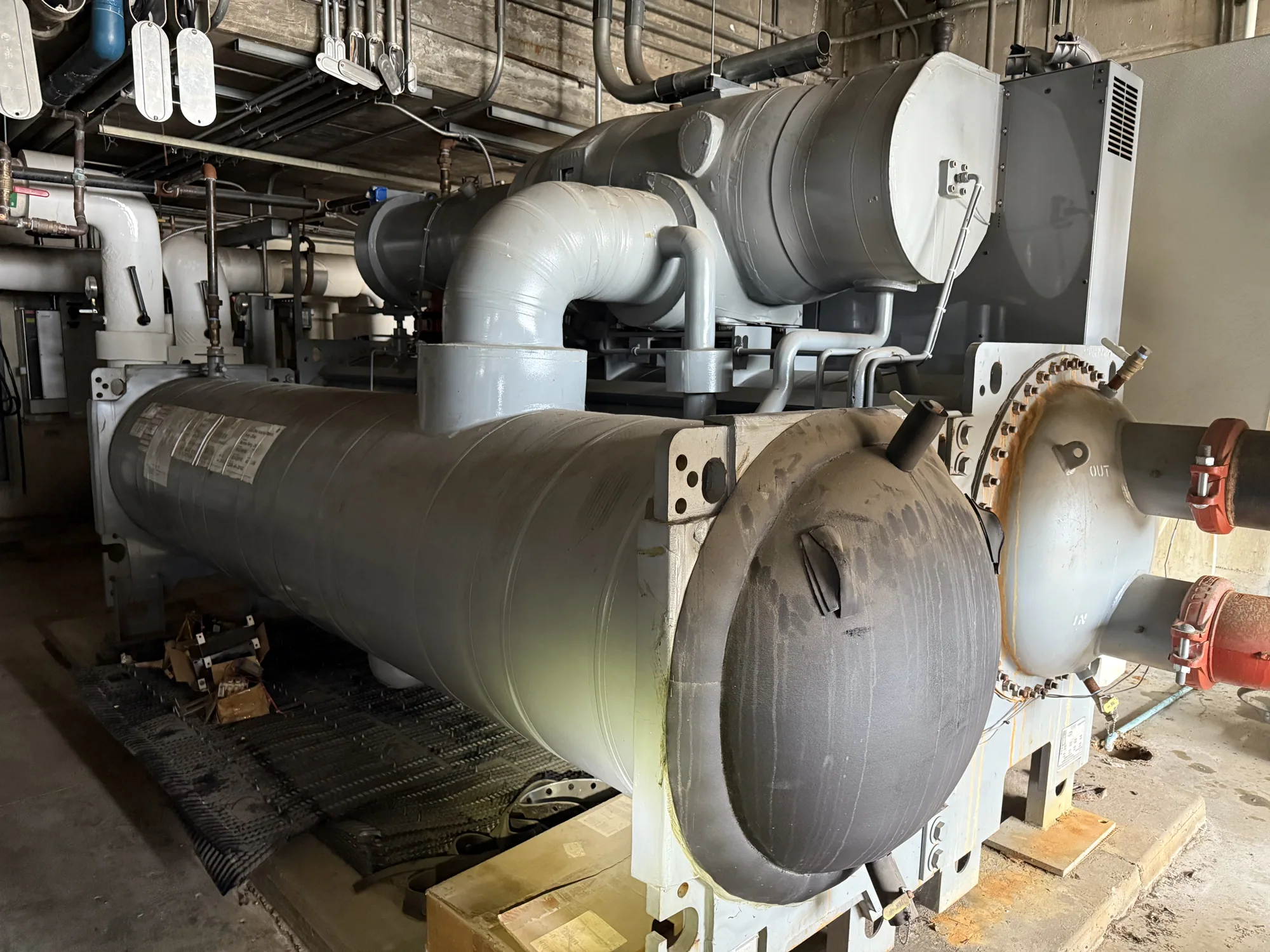
If all you have at first is a building inventory, compare it with the markings on the chiller itself. We can use a readable nameplate showing the maker, model, serial number, tonnage, voltage and refrigerant, along with a photograph of the complete unit. Show accessible controls and connections too, without disturbing covers or entering hazardous spaces.
Tell us what you know about condition, missing components and whether the machine is still connected. If the plate is damaged, send the clearest available image and any records you have. We do not require testing: please do not start, energize or pressure-test a chiller just to seek an offer. An unknown detail can be described as unknown.
Access, rigging and removal
The distance from a chiller to a truck is only one part of the route. Changes in floor level, door sizes, overhead structures and fixed equipment can affect the work. If the machine is on a roof or below grade, explain how that location is accessed. Photos and any reliable dimensions or weight help identify questions; estimates should be labeled.
Our removal scope includes refrigerant recovery, disconnects, crane service when needed, rigging, loading, freight and hauling. Explain where the unit connects to power or water and whether neighboring equipment must stay in service. Site access and timing are coordinated with the appropriate contact. The seller does not have to test the machine before requesting a quote.
From first details to an agreed pickup
The most helpful submission links three things: the seller, the machine and its availability. Give a company and contact name, site address or location, authorized sale contact and expected pickup window. Send clear nameplate and overall views, plus the type, tonnage, voltage and refrigerant where known. State which fields remain uncertain and label multiple units individually.
Once the equipment and location details are received, we review them and may ask about gaps in the record or the removal route. If we make an offer, the seller can consider the purchase and work scope before accepting. After agreement, payment is upfront on the agreed terms and pickup is coordinated with the site. We handle the removal and freight described in that scope.
How we evaluate an offer
A cash offer is evaluated using the chiller's identification, capacity, configuration, visible condition and completeness, along with the practical costs and timing of removal. Access for equipment and trucks, the work required to disconnect the unit, and the destination for the load can all matter. None of these factors alone determines the price, and not every inquiry results in an offer.
Read the proposed terms against the asset list and the site plan. Clarify what is included, who can grant access and what pickup window is anticipated. The buyer pays upfront under the agreed sale terms, covers all freight and handles hauling. Agreeing on these points helps avoid treating a tentative date as a confirmed appointment.
Frequently asked questions
What if we cannot demonstrate that the unit runs?
You can still send the available information. Seller testing is not required, and a machine should not be energized solely for our quotation. Identify the unit and explain its known condition or any gaps in the record; any offer is subject to review.
Will the seller need to arrange removal and transportation?
No. We handle disconnects, refrigerant recovery, rigging, crane work when needed, loading and hauling, and we cover all freight. The site contact can help by explaining access, release dates and any systems that must remain in place. Removal is coordinated under the agreed scope.
Should we wait until every building system is offline?
You can discuss a specific chiller before a full shutdown. Explain which neighboring systems must stay in service, who can authorize the sale and when the unit may be released. Timing and access must be coordinated; a cash offer is subject to review, not automatic.