A practical way to sell your industrial chiller
Selling an industrial chiller starts with two questions: what is the equipment, and what will it take to remove it safely? We buy industrial chillers in Johnson City, Tennessee. For a request concerning water-cooled chillers, photographs and honest site details help us assess the machine and prepare a practical cash offer.
The topic can be summarized as follows: water-cooled configuration and site removal. Start with the equipment you actually intend to sell; give us the information you have and distinguish it from assumptions about the installation or its release date.
Our business buys industrial chillers only, across all refrigerants and tonnages; the scope includes machines rated 20 to 2,000 or more tons. Air-cooled and water-cooled designs and centrifugal, scroll and screw compressors are included. Projects may involve retired data centers, power stations, hospitals, campuses or industrial plants. We offer cash and pay upfront when terms are agreed, but each proposed purchase requires evaluation.
Understanding the equipment configuration
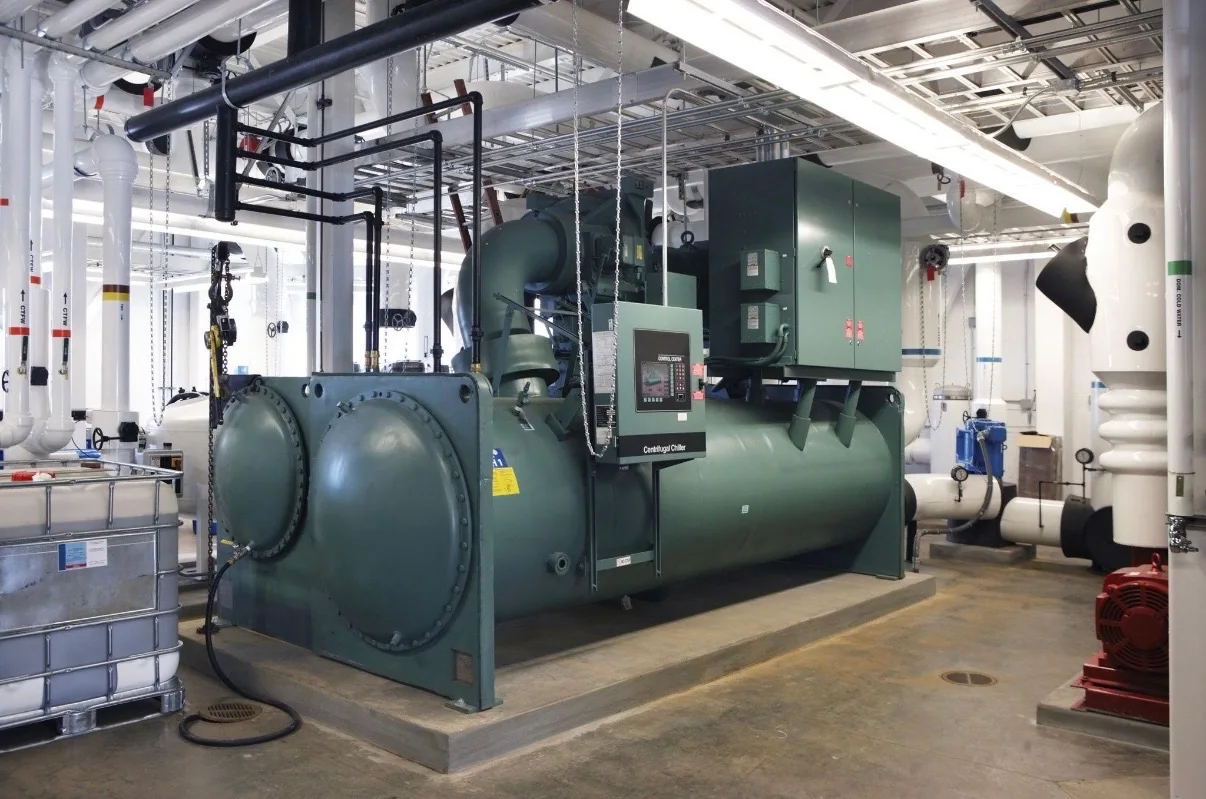
With a water-cooled chiller, show the machine and its connections rather than describing the entire cooling system as a single item. Photos of the evaporator and condenser sides, connection points and surrounding piping help identify what must be disconnected. Note whether chilled-water or condenser-water loops must remain available to other equipment.
Tell us if there are pumps, cooling towers or associated piping nearby and whether they are part of the proposed scope. We buy industrial chillers; do not assume that separate equipment is included. The buyer handles the agreed disconnects and removal, with the facility coordinating access and release of the unit.
Access, rigging and removal
For an initial access review, send a sequence of safe photographs: the chiller, its surrounding space, the exit and the place a truck might reach. Mention lifts between levels, rooftop placement and obstructions that are not obvious in the images. Existing weight and size information can help; we can discuss gaps without inventing measurements.
Removal involves more than placing a machine on a truck. We handle the agreed disconnects and refrigerant recovery, arrange rigging and any necessary crane work, and take care of loading, freight and hauling. A site representative can explain water and electrical connections, adjacent operating systems and release procedures. No seller-operated performance test is part of the request.
How we evaluate an offer
We consider more than the manufacturer or tonnage when evaluating a cash offer. The machine's configuration and visible condition, whether parts are present, the removal route and the requested schedule all help define the work. A complete description makes it easier to discuss a realistic quote, but a particular value or an offer is never automatic.
An accepted cash offer should specify what will be sold and how the handoff will work. We pay upfront according to the agreed terms, cover all freight and handle hauling. Confirm who will provide access and when the chiller can be released, so the purchase and removal plan match the actual site and equipment.
From first details to an agreed pickup
The most helpful submission links three things: the seller, the machine and its availability. Give a company and contact name, site address or location, authorized sale contact and expected pickup window. Send clear nameplate and overall views, plus the type, tonnage, voltage and refrigerant where known. State which fields remain uncertain and label multiple units individually.
The review comes before a commitment. We may need clarification on the unit, its connections or the release date; an offer is not automatic. If a proposal is made, compare its equipment, payment and removal terms with your plans. Once accepted, we pay upfront as agreed and arrange the removal and freight with the appropriate site contact.
What to send for a useful equipment review
The nameplate is often the quickest way to distinguish one machine from another. Send the manufacturer, model, serial number, tonnage, voltage and refrigerant details visible on the label, along with a wide photo of the whole unit. Photos of controls and connections can add context. Only photograph areas you can access safely; do not open energized equipment for a picture.
A unit may be connected, disconnected, incomplete or already retired; describe its actual condition rather than assuming that it must be operational. Mention known damage and any components that are absent. No testing is required, and you should not energize or operate equipment merely to request a quote. Existing records can help when a label is difficult to read.
Frequently asked questions
What if we cannot demonstrate that the unit runs?
You can still send the available information. Seller testing is not required, and a machine should not be energized solely for our quotation. Identify the unit and explain its known condition or any gaps in the record; any offer is subject to review.
Must the seller disconnect the machine before pickup?
The buyer handles the agreed disconnects and refrigerant recovery, together with rigging, crane work when needed, loading, freight and hauling. All freight is covered. Identify power and water connections and any nearby systems that must remain in service.
Does a cash inquiry commit either side to a sale?
No offer is guaranteed. We first evaluate the equipment and its removal circumstances; the seller can review any proposal before agreeing. We pay upfront according to the terms of an accepted sale, with the equipment and work scope clearly identified.