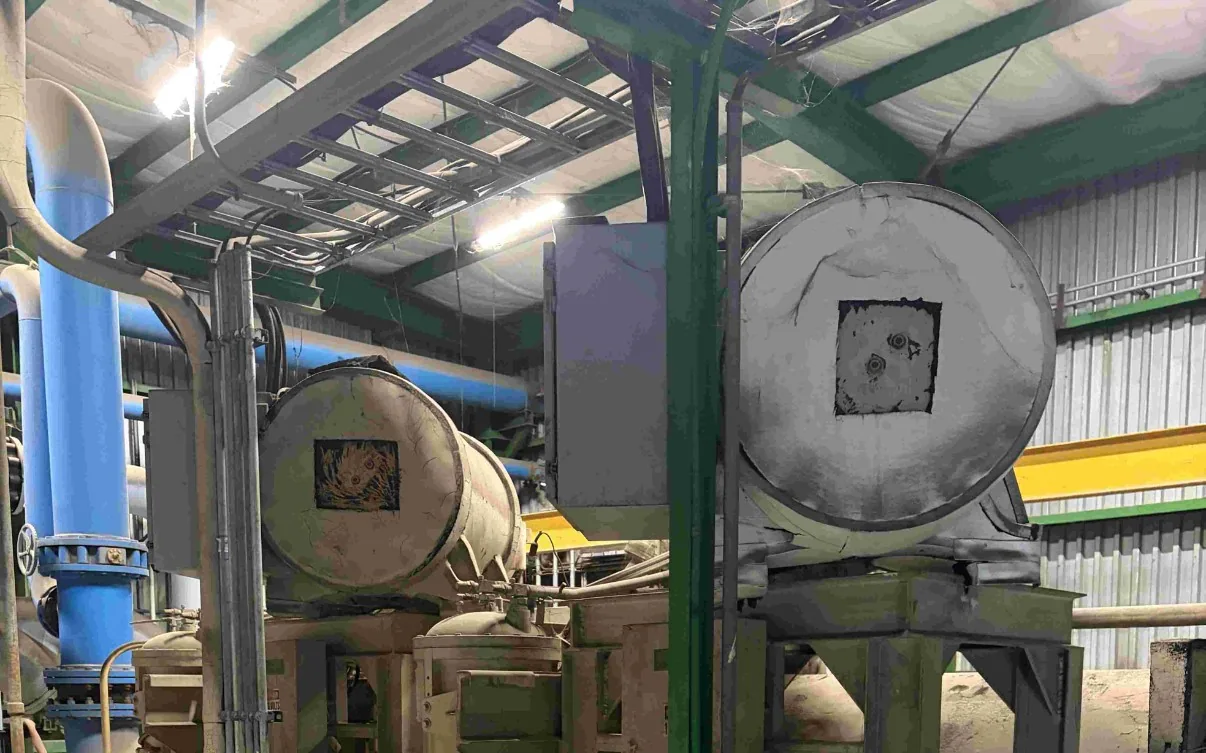
A practical way to sell your industrial chiller
If you have an industrial chiller to remove in Johnson City, Tennessee, you do not need to make it operational before contacting us. We buy industrial chillers and can evaluate a request concerning Smardt chillers using the equipment details, available photographs and the conditions at the site.
The request has a specific focus: Smardt chiller identity, configuration, access and removal. Tell us which parts of the situation are settled and which depend on a facility contact or an upcoming project milestone.
We purchase industrial chillers, including equipment released by data-center decommissioning, power-plant shutdowns, hospital and campus closures and industrial shutdowns. Both water-cooled and air-cooled machines can be considered, including scroll, screw and centrifugal types. We buy chillers of all tonnages and using all refrigerants, including units from 20 to 2,000 or more tons. Cash offers with upfront payment depend on review and agreed terms; no offer is assured.
Manufacturer and model details
A manufacturer label is a useful starting point for Smardt chillers, but it does not identify the exact machine by itself. A straight-on image of the main plate can establish the model and serial number; an overall view shows the equipment those markings belong to. If several units are present, number the images so the right plate stays with the right machine.
A name on a cabinet cannot tell us which parts are missing or what surrounds the unit. Describe visible damage, modifications and any equipment that will remain at the property. We consider the unit's actual condition and removal requirements, not just its manufacturer, when deciding whether an offer can be made.
What to send for a useful equipment review
Start with a readable photo of the manufacturer's nameplate. The manufacturer, model, serial number, cooling capacity, voltage and refrigerant marking can help identify what is being offered. Add a full view of the chiller and, if accessible, photos of the controls, compressor area and visible connections. Do not remove guards or enter an unsafe area to take pictures.
A unit may be connected, disconnected, incomplete or already retired; describe its actual condition rather than assuming that it must be operational. Mention known damage and any components that are absent. No testing is required, and you should not energize or operate equipment merely to request a quote. Existing records can help when a label is difficult to read.
From first details to an agreed pickup
Build the inquiry around the actual asset and a person we can contact. Provide your name, company and the equipment location, followed by any known type, tonnage, voltage and refrigerant information. Attach plate and full-unit photos. Identify the authorized seller and the expected release window; mark a date or specification tentative if it has not been confirmed. Label each machine separately.
A preliminary description lets us determine what additional information, if any, is needed. We may discuss photographs, condition or how the machine can leave the site. If we make an offer, review the equipment and removal terms; there is no guarantee of a proposal. After agreement we pay upfront and coordinate the listed work, including freight, for pickup.
How we evaluate an offer
We consider more than the manufacturer or tonnage when evaluating a cash offer. The machine's configuration and visible condition, whether parts are present, the removal route and the requested schedule all help define the work. A complete description makes it easier to discuss a realistic quote, but a particular value or an offer is never automatic.
Payment and logistics should not be left implicit. If an offer is accepted, we pay upfront on the agreed terms, cover all freight and handle hauling. Establish which unit is being purchased and discuss the planned release window with the facility contact. Any unresolved questions about access or scope can be addressed before scheduling.
Access, rigging and removal
A site plan is more useful when it shows obstacles as well as open space. Photograph the chiller in its room or outdoor setting, the openings toward the exit and the prospective truck area. Note roof access, slopes, low clearances or restrictions on entry. Provide known measurements and weight, but do not guess at missing figures.
Our removal scope includes refrigerant recovery, disconnects, crane service when needed, rigging, loading, freight and hauling. Explain where the unit connects to power or water and whether neighboring equipment must stay in service. Site access and timing are coordinated with the appropriate contact. The seller does not have to test the machine before requesting a quote.
Frequently asked questions
What if we cannot demonstrate that the unit runs?
You can still send the available information. Seller testing is not required, and a machine should not be energized solely for our quotation. Identify the unit and explain its known condition or any gaps in the record; any offer is subject to review.
Who handles refrigerant, rigging and freight?
The buyer handles refrigerant recovery, disconnects, crane work when needed, rigging, loading, freight and hauling. We cover all freight. Tell us about the site's access rules and the equipment's connections so those activities can be coordinated within the agreed removal plan.
Is there a set price for a particular capacity or brand?
No. An offer depends on the individual equipment and the practical work of removal, not on capacity or manufacturer alone. We buy chillers of all tonnages and using all refrigerants, but a quote is not guaranteed. When a sale is agreed, payment is upfront under those terms.