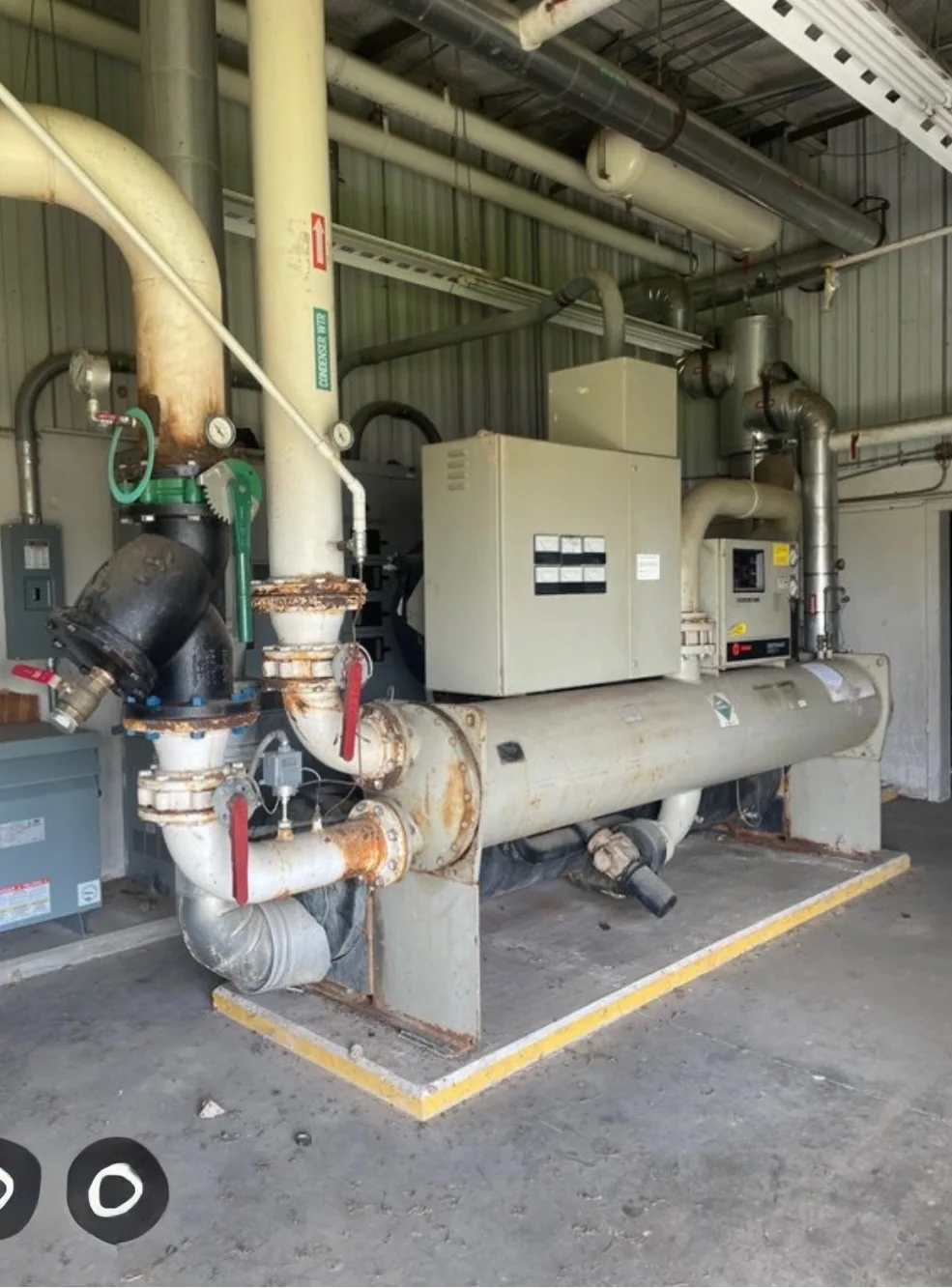
A practical way to sell your industrial chiller
An owner considering the sale of R-404A chillers in Murfreesboro, Tennessee can start with the information already at hand. Send clear pictures and describe where the chiller sits. We buy industrial chillers and evaluate both the machine and the practical work involved before deciding whether to propose a cash offer.
Use this page as a starting point for the following: R-404A identification and buyer-handled recovery. The particular nameplate, condition and site constraints matter more than a general description; uncertain details can be discussed rather than guessed.
We purchase industrial chillers, including equipment released by data-center decommissioning, power-plant shutdowns, hospital and campus closures and industrial shutdowns. Both water-cooled and air-cooled machines can be considered, including scroll, screw and centrifugal types. We buy chillers of all tonnages and using all refrigerants, including units from 20 to 2,000 or more tons. Cash offers with upfront payment depend on review and agreed terms; no offer is assured.
Refrigerant identification and recovery
For a request concerning R-404A chillers, a clear photo of the refrigerant marking and equipment nameplate is more useful than an estimate based on age or appearance. If the marking is unreadable or you are unsure what is in the system, say so. We buy chillers using all refrigerants; the refrigerant designation by itself does not guarantee a particular offer.
The records supplied with the inquiry can include an existing service report, a noted leak or information on prior recovery. Those details help frame the removal discussion without asking you to run a test. Do not vent or assume the system is empty. The buyer handles refrigerant recovery in the agreed scope.
What to send for a useful equipment review
Think of the photographs as an identification set: one for the complete machine, one close enough to read the plate and, where safely reachable, others for controls and connections. The plate may give the manufacturer, serial and model numbers, cooling capacity, electrical voltage and refrigerant. Never expose energized parts or defeat guarding for a photo.
A unit may be connected, disconnected, incomplete or already retired; describe its actual condition rather than assuming that it must be operational. Mention known damage and any components that are absent. No testing is required, and you should not energize or operate equipment merely to request a quote. Existing records can help when a label is difficult to read.
How we evaluate an offer
In reviewing a possible cash purchase, we look at the unit as described and the practical work at its property. The nameplate, capacity and type help identify it; photographs and condition notes show what is present. Disconnects, access, transport and the release window also affect the review. We do not guarantee that every machine will receive an offer.
If we propose a purchase, check that the offer identifies the correct machine and states the agreed payment and removal arrangements. Our payment is upfront under the sale terms; we cover freight and handle hauling. Before setting the work window, identify the person who can release the equipment and raise any unresolved site-access questions.
From first details to an agreed pickup
To begin, provide a contact name and company, the equipment location, and the type, tonnage, refrigerant and voltage shown on the chiller if known. Nameplate and full-unit photos help connect those details to the correct machine. Mention who can authorize the sale and your preferred release window; an unknown specification or tentative date can be marked as such.
Once the equipment and location details are received, we review them and may ask about gaps in the record or the removal route. If we make an offer, the seller can consider the purchase and work scope before accepting. After agreement, payment is upfront on the agreed terms and pickup is coordinated with the site. We handle the removal and freight described in that scope.
Access, rigging and removal
A good removal plan begins with the route out. Show the surrounding room, available openings, any overhead obstructions and the intended loading area. Tell us about roof access, restricted driveways or equipment that cannot be moved. If you have measurements or a documented weight, include them; if not, share clear photos rather than guessing.
The division of responsibility is straightforward: the buyer handles recovery of refrigerant, disconnects, crane work when required, rigging, loading, freight and hauling in the agreed scope. The site contact helps identify access conditions and the connections or neighboring systems that need consideration. There is no need to run a chiller to ask for an offer.
Frequently asked questions
Should we run a performance test before sending photos?
No. Our buying process does not require a seller to run a test. Provide the equipment identification, visible condition and available site details. If the unit has already been shut down or a specification is unknown, say so rather than operating equipment for the quote.
What work does the buyer handle after a sale is agreed?
We handle refrigerant recovery, disconnects, necessary crane work, rigging, loading, freight and hauling; all freight is covered by the buyer. Describe the machine's connections and the route out so the team can coordinate removal with the facility's access requirements.
A contractor recovered refrigerant earlier. What should I send?
Mention the known prior recovery and share any available documentation and equipment labels. Do not assume the system is empty or vent it. We handle any refrigerant recovery needed within the agreed removal process and can discuss gaps in the record.