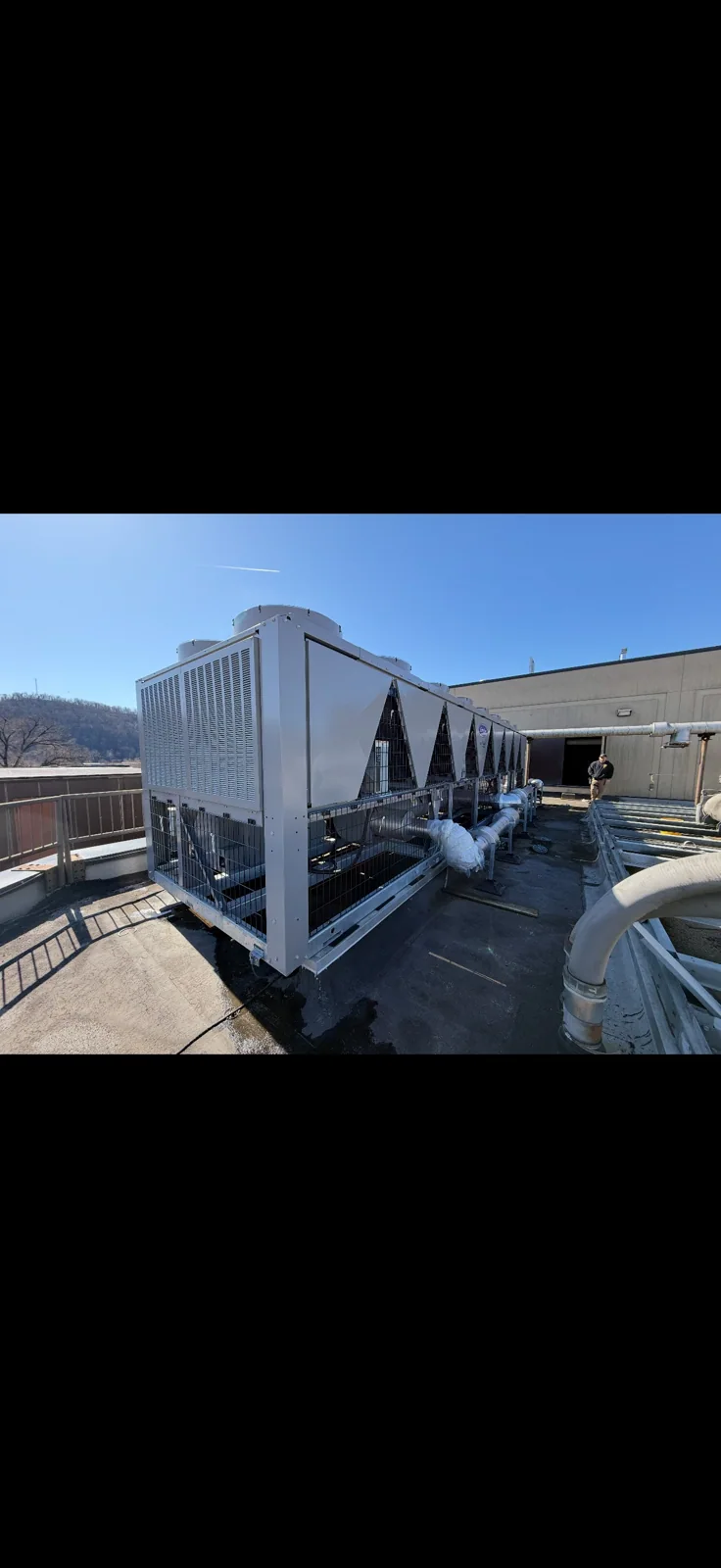
A practical way to sell your industrial chiller
Whether a chiller is still connected or has already been retired, its owner can ask us about a sale. We buy industrial chillers in Murfreesboro, Tennessee. With Multistack scroll chillers, we need an accurate picture of the equipment, its surroundings and the likely release window; a running demonstration is not required for our review.
Use this page as a starting point for the following: Multistack manufacturer identification and scroll equipment configuration. The particular nameplate, condition and site constraints matter more than a general description; uncertain details can be discussed rather than guessed.
Our buying scope is industrial chillers only. It includes air-cooled and water-cooled units, whether equipped with centrifugal, screw or scroll compressors. We buy chillers of all tonnages and using all refrigerants, including units from 20 to 2,000 or more tons. Data centers, power plants, hospitals, campuses and industrial plants are examples of decommissioning sources. We make cash offers and pay upfront under agreed terms; an individual offer is not guaranteed.
Manufacturer and model details
For a property with several machines described as Multistack scroll chillers, identify the one being offered before discussing a pickup. Match each serial number and label image to a full view of that particular chiller. If units have different release dates or locations, include those details with their respective photographs rather than combining the records.
A shared manufacturer does not mean the machines have the same configuration or condition. Note known missing parts, alterations and connections, as well as any neighboring units that must stay in place. A review considers each proposed sale and its logistics; a brand name is not a promise of a price or offer.
Understanding the equipment configuration
A useful equipment description starts with the configuration: air-cooled or water-cooled, and centrifugal, screw or scroll when known. Photograph a scroll chiller, including the compressor arrangement, controls and any separate components. If you do not know the type, the nameplate and a full-unit photo are a practical starting point; an uncertain label is not a reason to run the machine.
Define the boundary between the chiller and the rest of the plant. Water-cooled equipment may have connections to loops that must stay available; for air-cooled equipment, access around the condenser is worth showing. Indicate the unit's location and anything that needs to be left behind so the proposed removal can be assessed accurately.
Access, rigging and removal
A good removal plan begins with the route out. Show the surrounding room, available openings, any overhead obstructions and the intended loading area. Tell us about roof access, restricted driveways or equipment that cannot be moved. If you have measurements or a documented weight, include them; if not, share clear photos rather than guessing.
Removal involves more than placing a machine on a truck. We handle the agreed disconnects and refrigerant recovery, arrange rigging and any necessary crane work, and take care of loading, freight and hauling. A site representative can explain water and electrical connections, adjacent operating systems and release procedures. No seller-operated performance test is part of the request.
From first details to an agreed pickup
If you are preparing information for someone else to submit, gather the company and contact details, site location and authority to sell alongside the chiller photographs. Capacity, type, refrigerant and voltage are useful when known. Explain the anticipated removal date and whether it can move. A separate identification set for each unit prevents different machines from being confused.
Our review may lead to follow-up questions about the unit, the access route or the date the site can release it. If we make an offer, the seller can review the proposed purchase and removal scope before accepting. Payment is upfront under the agreed terms, and we coordinate the removal and freight rather than asking the seller to arrange hauling.
What to send for a useful equipment review
The words on a nameplate help connect the offered chiller to its actual specification. Photograph the maker, model and serial number, rated tons, voltage and refrigerant marking if legible. A whole-machine picture and safe views of connections and controls add context. If taking an image would require removing a cover or entering an unsafe space, leave it out.
The absence of a readable plate or a complete history is worth flagging, not concealing. Provide available records and photographs, indicate whether the chiller is connected and identify missing components or known damage. If you do not know a specification, say so. The seller is not required to run or test the equipment for our evaluation.
How we evaluate an offer
We consider more than the manufacturer or tonnage when evaluating a cash offer. The machine's configuration and visible condition, whether parts are present, the removal route and the requested schedule all help define the work. A complete description makes it easier to discuss a realistic quote, but a particular value or an offer is never automatic.
The handoff should be clear before anyone schedules a truck. Review which chiller and components the agreement covers, when payment is due and the expected pickup window. We pay upfront according to the agreed terms and cover all freight and hauling. If the site's schedule depends on another party, bring that dependency into the discussion.
Frequently asked questions
The chiller has been shut down. Must it be restarted?
No. We do not require operation or testing for a quote. Send pictures of the equipment and its identification, and describe what you know about its present condition. Unknown history or specifications can be noted without energizing a retired machine.
What should the facility contribute to removal planning?
Explain the route, connections, access rules and release window. We handle refrigerant recovery, disconnects, rigging, loading and hauling; crane work is handled when needed and all freight is covered. The site should identify neighboring equipment that must stay in place or service.
Is there a set price for a particular capacity or brand?
No. An offer depends on the individual equipment and the practical work of removal, not on capacity or manufacturer alone. We buy chillers of all tonnages and using all refrigerants, but a quote is not guaranteed. When a sale is agreed, payment is upfront under those terms.