A practical way to sell your industrial chiller
When a cooling project leaves a surplus machine in Knoxville, Tennessee, the first decision is often how to move it from the property. We buy industrial chillers. For AAON air-cooled chillers, we review identification and site access together, so a seller can discuss a possible cash purchase without first arranging the move or operating the equipment.
Use this page as a starting point for the following: AAON manufacturer identification and air-cooled equipment configuration. The particular nameplate, condition and site constraints matter more than a general description; uncertain details can be discussed rather than guessed.
We buy industrial chillers only: air-cooled and water-cooled machines, including centrifugal, screw and scroll units. Our scope includes equipment from 20 to 2,000 or more tons; we buy chillers of all tonnages and using all refrigerants. The equipment may come from decommissioned data centers and power plants, hospital and campus closures, or industrial plant shutdowns. We make cash offers and pay upfront under the agreed sale terms. Every proposal depends on the individual equipment and circumstances, so an offer or price is not guaranteed.
Manufacturer and model details
A useful description of AAON air-cooled chillers separates identification from assumptions about operation. Send the model, serial number and other details visible on the main nameplate, together with a view showing the complete machine. Where a label cannot be read, an existing document or clearer safe photograph is more useful than a guessed specification.
Also say what you want included in the sale. Nearby controls, piping or other machines should not automatically be treated as part of the chiller. Mention visible damage and known modifications. We assess that scope together with site conditions, and the manufacturer's identity does not on its own guarantee a purchase.
Understanding the equipment configuration
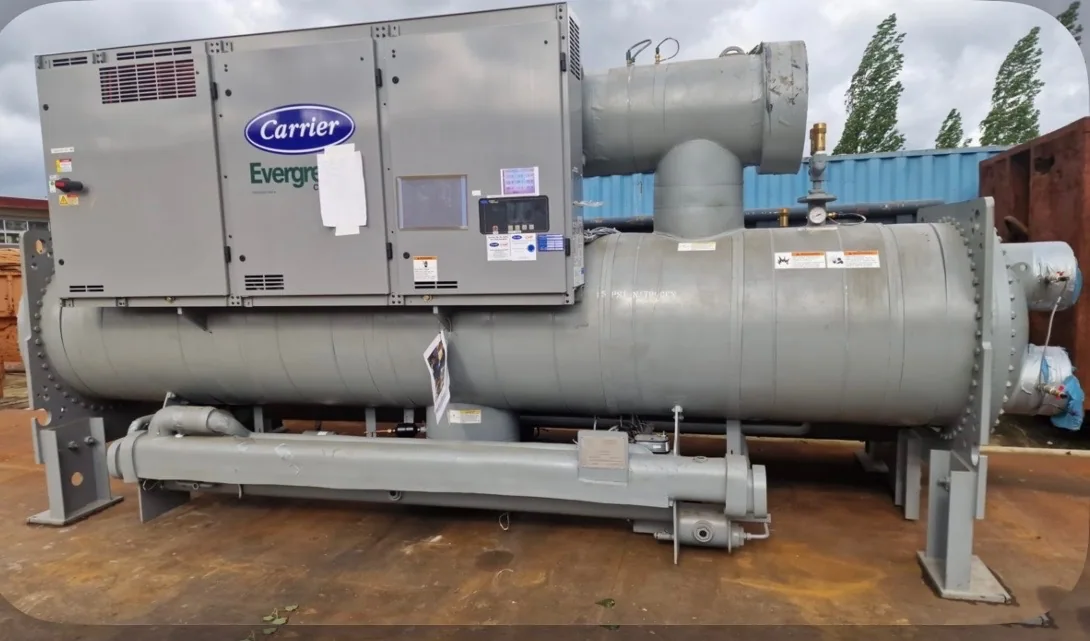
For an air-cooled chiller, a wide photo can show the cabinet, condenser coils, fans and the clearance around the machine. Note whether it is on a pad, roof, platform or inside a restricted area. Those details can affect the lifting path even when the unit's cooling capacity is already known.
Describe any barriers, overhead lines or structures along the intended removal route, and mention whether other equipment is close by. The seller need not test the chiller. We handle the agreed disconnects, refrigerant recovery, rigging and loading; the site contact can explain access constraints.
How we evaluate an offer
In reviewing a possible cash purchase, we look at the unit as described and the practical work at its property. The nameplate, capacity and type help identify it; photographs and condition notes show what is present. Disconnects, access, transport and the release window also affect the review. We do not guarantee that every machine will receive an offer.
If we propose a purchase, check that the offer identifies the correct machine and states the agreed payment and removal arrangements. Our payment is upfront under the sale terms; we cover freight and handle hauling. Before setting the work window, identify the person who can release the equipment and raise any unresolved site-access questions.
From first details to an agreed pickup
You can begin before every record has been located. Share your contact and company, the chiller's location and the name of the person able to authorize a sale. Include a photo of the label and machine, its known type, capacity, refrigerant and voltage, and the expected release date. Flag flexible timing and identify each chiller separately if there is more than one.
The review comes before a commitment. We may need clarification on the unit, its connections or the release date; an offer is not automatic. If a proposal is made, compare its equipment, payment and removal terms with your plans. Once accepted, we pay upfront as agreed and arrange the removal and freight with the appropriate site contact.
What to send for a useful equipment review
The nameplate is often the quickest way to distinguish one machine from another. Send the manufacturer, model, serial number, tonnage, voltage and refrigerant details visible on the label, along with a wide photo of the whole unit. Photos of controls and connections can add context. Only photograph areas you can access safely; do not open energized equipment for a picture.
An incomplete record does not need to become a guess. Tell us which components are visibly missing, whether the chiller remains connected and what is known about its condition. A worn label can be supplemented by existing documentation. No performance test is required; leave a retired or disconnected machine off rather than starting it for a quote.
Access, rigging and removal
Show where the machine sits in relation to the space around it, then photograph the way out and the area available for loading. Point out narrow openings, immovable objects, stairs or overhead barriers, and explain any controlled entrance. If known, give the unit's dimensions and weight. An uncertain measurement should remain an estimate, not a fact.
You do not have to select a hauler or lifting crew for an agreed sale. We handle loading, freight and hauling, along with refrigerant recovery, disconnects, rigging and crane work when needed. Please describe the site's access and release requirements, power and water connections, and anything nearby that must stay in service. We do not require the seller to test the unit.
Frequently asked questions
The chiller has been shut down. Must it be restarted?
No. We do not require operation or testing for a quote. Send pictures of the equipment and its identification, and describe what you know about its present condition. Unknown history or specifications can be noted without energizing a retired machine.
Will the seller need to arrange removal and transportation?
No. We handle disconnects, refrigerant recovery, rigging, crane work when needed, loading and hauling, and we cover all freight. The site contact can help by explaining access, release dates and any systems that must remain in place. Removal is coordinated under the agreed scope.
What should we confirm before accepting a cash offer?
Review the equipment included, the payment terms, the expected release window and the agreed removal scope. We pay upfront when the sale is agreed. An offer depends on the specific unit and logistics, so its availability and amount cannot be promised in advance.