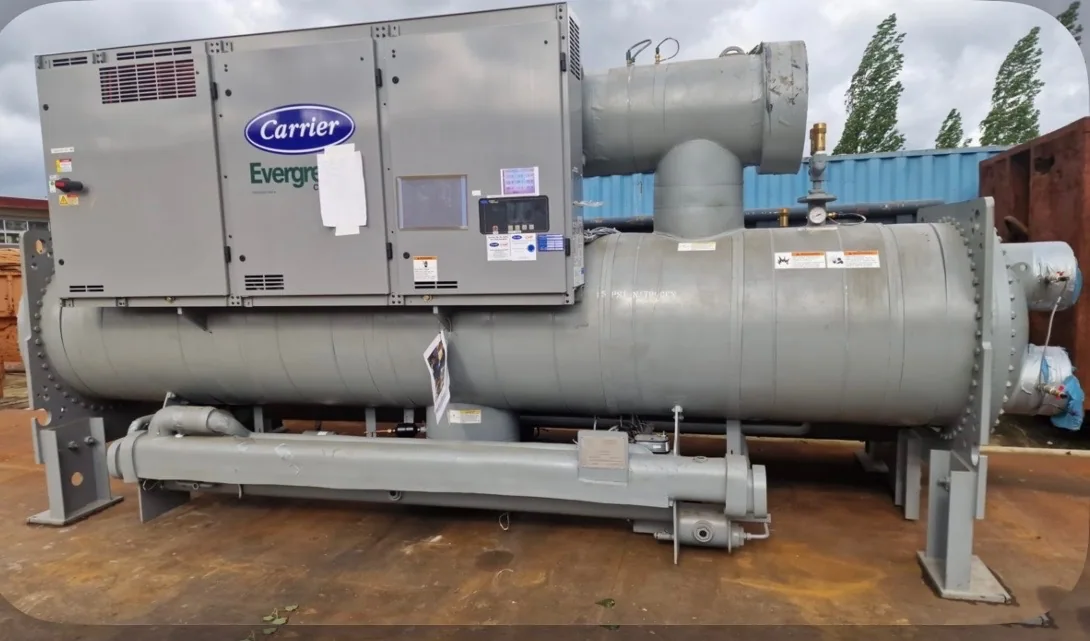
A practical way to sell your industrial chiller
Whether a chiller is still connected or has already been retired, its owner can ask us about a sale. We buy industrial chillers in Johnson City, Tennessee. With 500–999 ton chillers, we need an accurate picture of the equipment, its surroundings and the likely release window; a running demonstration is not required for our review.
Use this page as a starting point for the following: 500–999 ton nameplate capacity and equipment rigging. The particular nameplate, condition and site constraints matter more than a general description; uncertain details can be discussed rather than guessed.
We buy industrial chillers only: air-cooled and water-cooled machines, including centrifugal, screw and scroll units. Our scope includes equipment from 20 to 2,000 or more tons; we buy chillers of all tonnages and using all refrigerants. The equipment may come from decommissioned data centers and power plants, hospital and campus closures, or industrial plant shutdowns. We make cash offers and pay upfront under the agreed sale terms. Every proposal depends on the individual equipment and circumstances, so an offer or price is not guaranteed.
Capacity, dimensions and the lift plan
For a request concerning 500–999 ton chillers, give the rated cooling capacity shown on the nameplate if it is legible. Capacity in tons describes cooling output, not the machine's shipping weight. Two units in a similar capacity range can have different dimensions, access requirements or configurations.
Describe the physical route for the machine: available doors, ceiling clearance, roof access and the path to a loading area. Send known length, width, height and weight, together with safe photographs of the base and lifting marks. The buyer handles needed crane and rigging work; a cooling rating does not promise a price.
How we evaluate an offer
Two chillers with the same rated capacity can present different purchase and removal considerations. Their configurations, completeness and condition may differ, as may their locations, routes out and schedules. Share the identifying details and any known restrictions so we can assess the complete job. A specific amount or cash offer cannot be promised before that assessment.
Read the proposed terms against the asset list and the site plan. Clarify what is included, who can grant access and what pickup window is anticipated. The buyer pays upfront under the agreed sale terms, covers all freight and handles hauling. Agreeing on these points helps avoid treating a tentative date as a confirmed appointment.
What to send for a useful equipment review
Start by locating the main equipment label and taking a clear, straight-on photo if it can be reached safely. Pair that with an image of the full chiller; show controls and connections where possible. Manufacturer, model, serial number, cooling rating, refrigerant and voltage are useful details, but do not open energized cabinets or move guards to read them.
An incomplete record does not need to become a guess. Tell us which components are visibly missing, whether the chiller remains connected and what is known about its condition. A worn label can be supplemented by existing documentation. No performance test is required; leave a retired or disconnected machine off rather than starting it for a quote.
From first details to an agreed pickup
Build the inquiry around the actual asset and a person we can contact. Provide your name, company and the equipment location, followed by any known type, tonnage, voltage and refrigerant information. Attach plate and full-unit photos. Identify the authorized seller and the expected release window; mark a date or specification tentative if it has not been confirmed. Label each machine separately.
We review the information and discuss any questions about the equipment or access. If we can make an offer, you can review it and the scope before deciding whether to proceed. Once terms are agreed, upfront payment and the removal schedule are coordinated. Keep the machine and its surroundings accessible as agreed; our team handles the listed removal and freight work.
Access, rigging and removal
Start at the unit and trace a possible path to the loading area in your photographs. Doors, corners, ramps, overhead restrictions and nearby equipment may all matter. Explain where a vehicle could approach and whether the machine is elevated or below grade. Share documented dimensions and weight if available, identifying an approximation as such.
The division of responsibility is straightforward: the buyer handles recovery of refrigerant, disconnects, crane work when required, rigging, loading, freight and hauling in the agreed scope. The site contact helps identify access conditions and the connections or neighboring systems that need consideration. There is no need to run a chiller to ask for an offer.
Frequently asked questions
What if we cannot demonstrate that the unit runs?
You can still send the available information. Seller testing is not required, and a machine should not be energized solely for our quotation. Identify the unit and explain its known condition or any gaps in the record; any offer is subject to review.
How is an agreed removal coordinated?
The site contact describes access and release requirements. We handle the disconnects, refrigerant recovery, rigging, loading and hauling, with a crane when needed, and cover freight. The actual plan and work window are coordinated under the sale's agreed scope.
Do similarly rated chillers require the same removal plan?
Not necessarily. Units with similar cooling output can have different dimensions, weights and site access. Supply the rating and any known weight or lifting information rather than equating tons with weight. We handle rigging and needed crane work; the offer depends on the individual review.