A practical way to sell your industrial chiller
Whether a chiller is still connected or has already been retired, its owner can ask us about a sale. We buy industrial chillers in Franklin, Tennessee. With 500–999 ton chillers, we need an accurate picture of the equipment, its surroundings and the likely release window; a running demonstration is not required for our review.
Each project has its own boundaries. Keep this focus in mind: 500–999 ton nameplate capacity and equipment rigging. Identify the machine, the responsible contact and any open questions before making decisions about access or timing.
From a 20-ton unit to equipment rated 2,000 tons or more, our industrial chiller buying scope covers all tonnages and all refrigerants. We consider air-cooled and water-cooled chillers, including centrifugal, screw and scroll machines. Shutdowns at industrial plants, campuses, hospitals, power plants and data centers can produce surplus units. We make cash offers and pay upfront on agreed terms; the equipment and removal must first be evaluated.
Capacity, dimensions and the lift plan
For a request concerning 500–999 ton chillers, give the rated cooling capacity shown on the nameplate if it is legible. Capacity in tons describes cooling output, not the machine's shipping weight. Two units in a similar capacity range can have different dimensions, access requirements or configurations.
The seller need not choose the lift method. Instead, provide known equipment dimensions and weight and show any labeled lifting points and the machine's base. Explain the door and ceiling clearances, roof access and loading route. We handle the necessary rigging and crane work, and assess value in context rather than promising a tonnage-based price.
How we evaluate an offer
A cash offer is evaluated using the chiller's identification, capacity, configuration, visible condition and completeness, along with the practical costs and timing of removal. Access for equipment and trucks, the work required to disconnect the unit, and the destination for the load can all matter. None of these factors alone determines the price, and not every inquiry results in an offer.
Read the proposed terms against the asset list and the site plan. Clarify what is included, who can grant access and what pickup window is anticipated. The buyer pays upfront under the agreed sale terms, covers all freight and handles hauling. Agreeing on these points helps avoid treating a tentative date as a confirmed appointment.
What to send for a useful equipment review
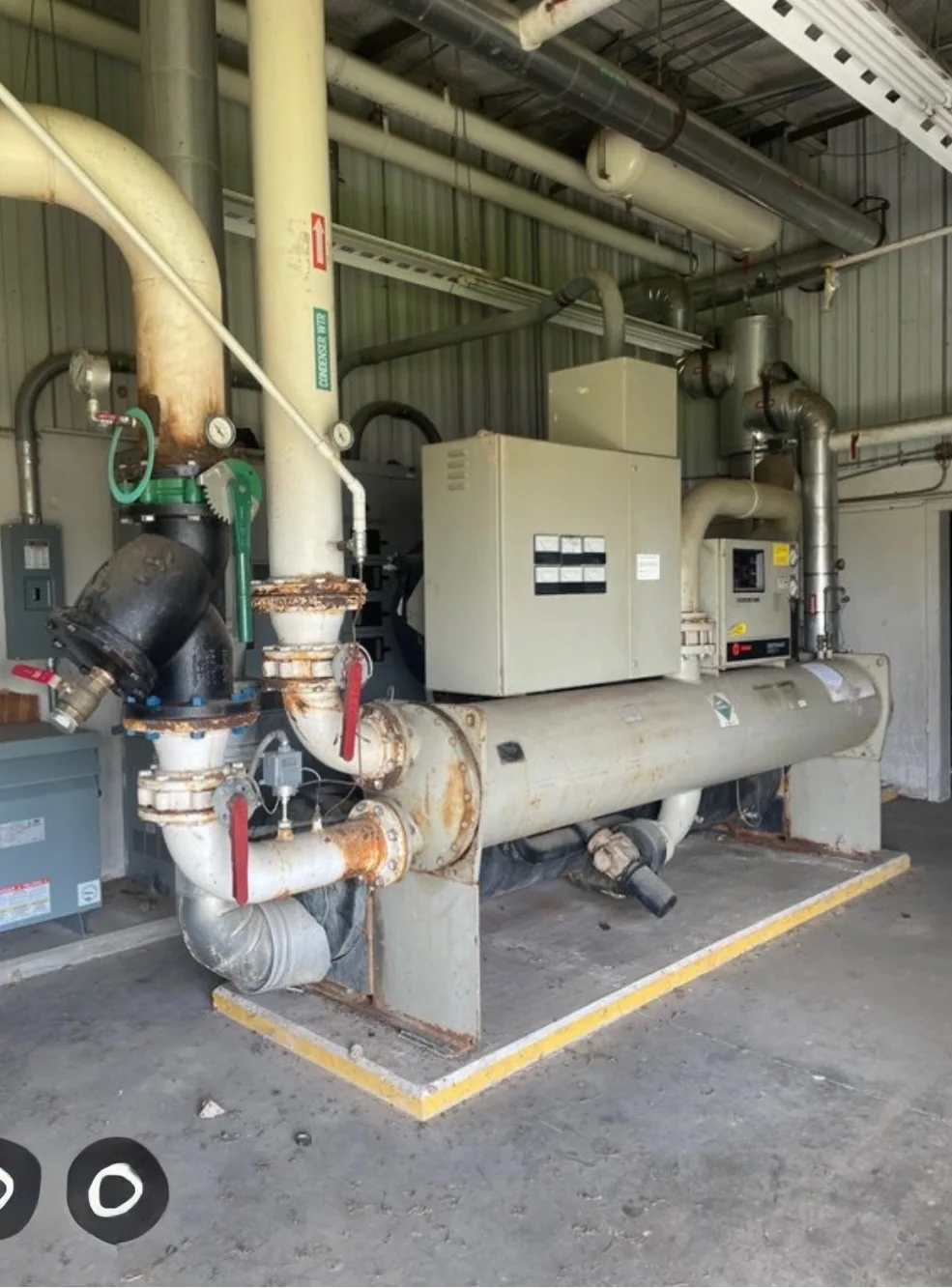
Think of the photographs as an identification set: one for the complete machine, one close enough to read the plate and, where safely reachable, others for controls and connections. The plate may give the manufacturer, serial and model numbers, cooling capacity, electrical voltage and refrigerant. Never expose energized parts or defeat guarding for a photo.
A unit may be connected, disconnected, incomplete or already retired; describe its actual condition rather than assuming that it must be operational. Mention known damage and any components that are absent. No testing is required, and you should not energize or operate equipment merely to request a quote. Existing records can help when a label is difficult to read.
Access, rigging and removal
Photograph the path from the chiller to an exit or loading point, not just the machine itself. Include doorways, stairs or ramps, overhead obstructions, nearby equipment and the area where a truck could approach. If the unit is on a roof or below grade, say how that area is reached. Approximate dimensions and known weights are helpful, but mark estimates as estimates.
Removal involves more than placing a machine on a truck. We handle the agreed disconnects and refrigerant recovery, arrange rigging and any necessary crane work, and take care of loading, freight and hauling. A site representative can explain water and electrical connections, adjacent operating systems and release procedures. No seller-operated performance test is part of the request.
From first details to an agreed pickup
You can begin before every record has been located. Share your contact and company, the chiller's location and the name of the person able to authorize a sale. Include a photo of the label and machine, its known type, capacity, refrigerant and voltage, and the expected release date. Flag flexible timing and identify each chiller separately if there is more than one.
A preliminary description lets us determine what additional information, if any, is needed. We may discuss photographs, condition or how the machine can leave the site. If we make an offer, review the equipment and removal terms; there is no guarantee of a proposal. After agreement we pay upfront and coordinate the listed work, including freight, for pickup.
Frequently asked questions
Do I need to test the chiller before requesting a quote?
No. We buy industrial chillers without requiring the seller to test or operate them. Send the nameplate, photos and any known condition information instead. If a detail is unknown or the machine is disconnected, tell us; do not energize equipment solely for the quotation.
What should the facility contribute to removal planning?
Explain the route, connections, access rules and release window. We handle refrigerant recovery, disconnects, rigging, loading and hauling; crane work is handled when needed and all freight is covered. The site should identify neighboring equipment that must stay in place or service.
What if we know the tonnage but not the weight?
Send the nameplate capacity and say the weight is unknown. Photographs, dimensions and any existing lifting information can help us discuss access. Do not infer weight from cooling tons. The buyer handles crane work when needed and rigging, but an offer is not guaranteed.