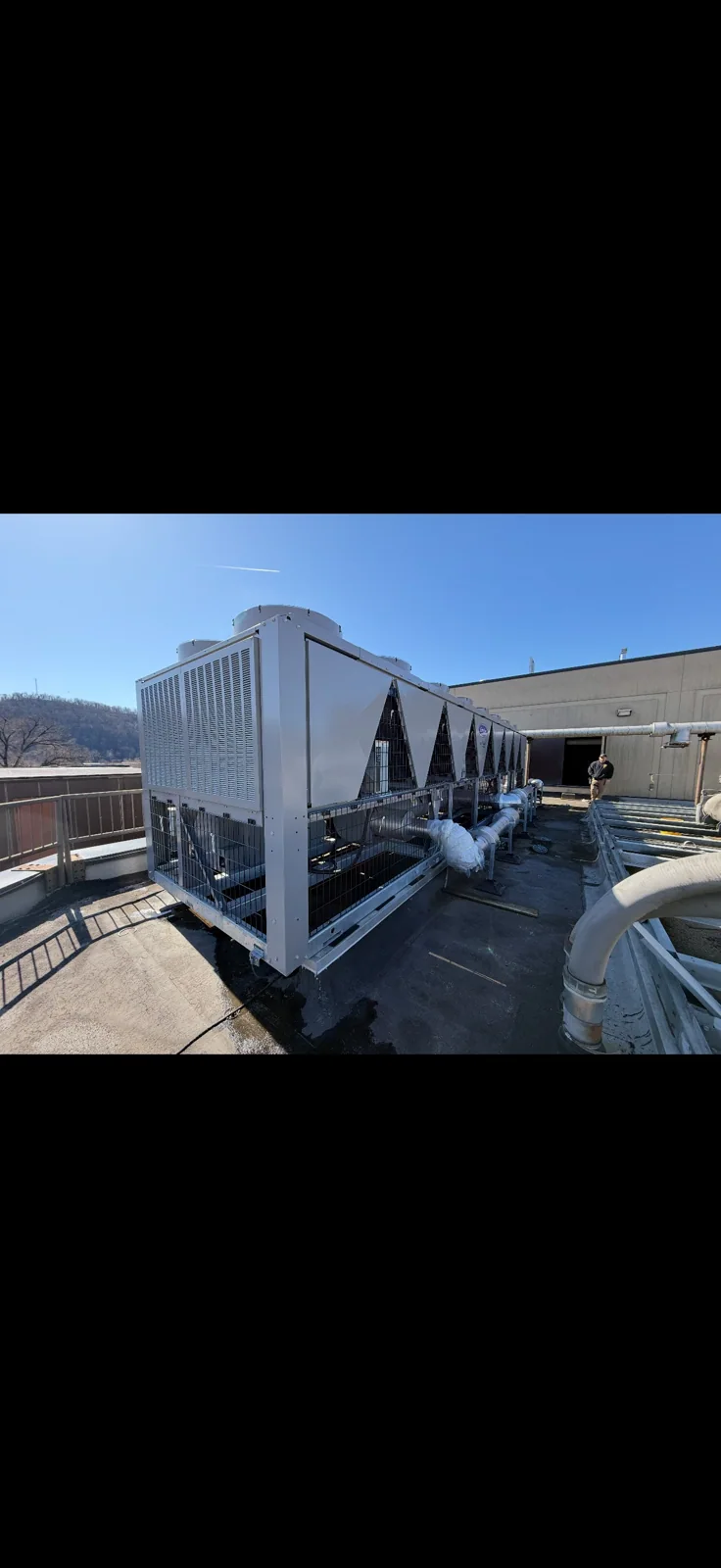
A practical way to sell your industrial chiller
Owners and authorized representatives with 20–99 ton chillers in Franklin, Tennessee can contact us to discuss a potential sale. We buy industrial chillers, not other equipment as part of this service. Describe the machine and its location, and we can review whether a cash purchase and buyer-handled removal are practical.
The topic can be summarized as follows: 20–99 ton nameplate capacity and equipment rigging. Start with the equipment you actually intend to sell; give us the information you have and distinguish it from assumptions about the installation or its release date.
Our business buys industrial chillers only, including air-cooled and water-cooled machines with centrifugal, screw or scroll compressors. Equipment from 20 to 2,000+ tons is included, and we buy chillers of all tonnages and using all refrigerants. Sources can include data center decommissioning, power plant shutdowns, hospital or campus closures and industrial plant shutdown projects. A seller may receive a cash offer, with upfront payment under agreed terms. The machine and logistics must be evaluated first; no particular offer is promised.
Capacity, dimensions and the lift plan
For a request concerning 20–99 ton chillers, give the rated cooling capacity shown on the nameplate if it is legible. Capacity in tons describes cooling output, not the machine's shipping weight. Two units in a similar capacity range can have different dimensions, access requirements or configurations.
If equipment documentation contains dimensions or an actual weight, include them with the capacity information. Images of the base, marked lifting points, doors and loading approach can add context. Mention ceiling or rooftop limitations. We handle rigging and crane work as needed; capacity alone does not establish an offer.
What to send for a useful equipment review
Start with a readable photo of the manufacturer's nameplate. The manufacturer, model, serial number, cooling capacity, voltage and refrigerant marking can help identify what is being offered. Add a full view of the chiller and, if accessible, photos of the controls, compressor area and visible connections. Do not remove guards or enter an unsafe area to take pictures.
If a component is missing, a label is unreadable or a service history is not available, simply say so. Include visible condition and whether the equipment remains connected. Our process does not require testing, so there is no need to run or energize the chiller for us. Clear answers are more useful than invented specifications.
From first details to an agreed pickup
A useful inquiry pairs your contact and company information with the chiller's location and identification. Send photos, capacity, type, voltage and refrigerant details where available, and identify the authorized seller. Add the anticipated pickup window and label each machine if more than one is involved. It is fine to say when a field or date is not yet known.
We review the information and discuss any questions about the equipment or access. If we can make an offer, you can review it and the scope before deciding whether to proceed. Once terms are agreed, upfront payment and the removal schedule are coordinated. Keep the machine and its surroundings accessible as agreed; our team handles the listed removal and freight work.
How we evaluate an offer
We consider more than the manufacturer or tonnage when evaluating a cash offer. The machine's configuration and visible condition, whether parts are present, the removal route and the requested schedule all help define the work. A complete description makes it easier to discuss a realistic quote, but a particular value or an offer is never automatic.
The handoff should be clear before anyone schedules a truck. Review which chiller and components the agreement covers, when payment is due and the expected pickup window. We pay upfront according to the agreed terms and cover all freight and hauling. If the site's schedule depends on another party, bring that dependency into the discussion.
Access, rigging and removal
A good removal plan begins with the route out. Show the surrounding room, available openings, any overhead obstructions and the intended loading area. Tell us about roof access, restricted driveways or equipment that cannot be moved. If you have measurements or a documented weight, include them; if not, share clear photos rather than guessing.
Our removal scope includes refrigerant recovery, disconnects, crane service when needed, rigging, loading, freight and hauling. Explain where the unit connects to power or water and whether neighboring equipment must stay in service. Site access and timing are coordinated with the appropriate contact. The seller does not have to test the machine before requesting a quote.
Frequently asked questions
Do I need to test the chiller before requesting a quote?
No. We buy industrial chillers without requiring the seller to test or operate them. Send the nameplate, photos and any known condition information instead. If a detail is unknown or the machine is disconnected, tell us; do not energize equipment solely for the quotation.
What should the facility contribute to removal planning?
Explain the route, connections, access rules and release window. We handle refrigerant recovery, disconnects, rigging, loading and hauling; crane work is handled when needed and all freight is covered. The site should identify neighboring equipment that must stay in place or service.
Is a capacity rating enough to plan the lift?
It is only one identification detail. Actual weight, dimensions, the route out and available lifting information help with removal planning. Cooling tons must not be confused with weight. We buy chillers of all tonnages and handle necessary crane and rigging work, subject to review and agreed scope.