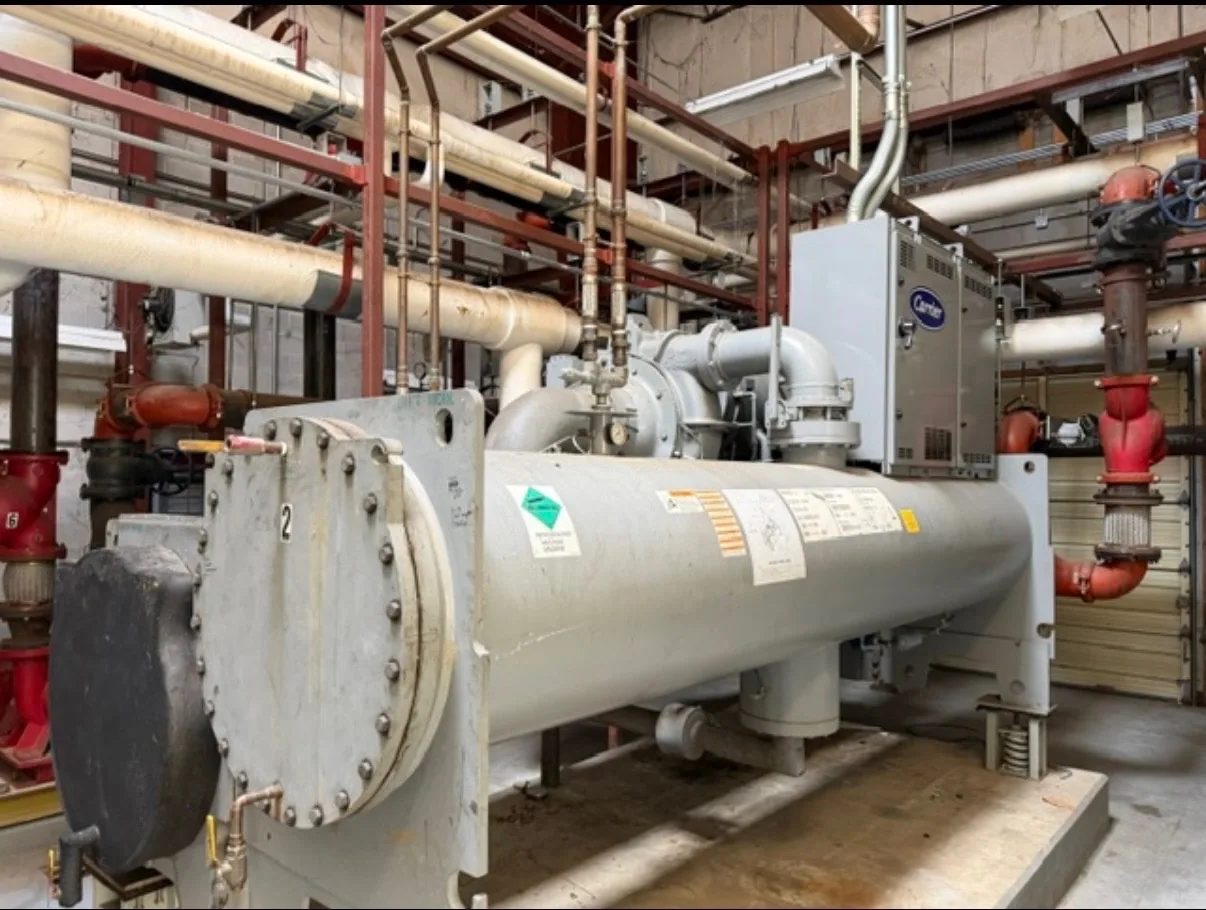
A practical way to sell your industrial chiller
An owner considering the sale of 100–249 ton chillers in Johnson City, Tennessee can start with the information already at hand. Send clear pictures and describe where the chiller sits. We buy industrial chillers and evaluate both the machine and the practical work involved before deciding whether to propose a cash offer.
Use this page as a starting point for the following: 100–249 ton nameplate capacity and equipment rigging. The particular nameplate, condition and site constraints matter more than a general description; uncertain details can be discussed rather than guessed.
Our buying scope is industrial chillers only. It includes air-cooled and water-cooled units, whether equipped with centrifugal, screw or scroll compressors. We buy chillers of all tonnages and using all refrigerants, including units from 20 to 2,000 or more tons. Data centers, power plants, hospitals, campuses and industrial plants are examples of decommissioning sources. We make cash offers and pay upfront under agreed terms; an individual offer is not guaranteed.
Capacity, dimensions and the lift plan
For a request concerning 100–249 ton chillers, give the rated cooling capacity shown on the nameplate if it is legible. Capacity in tons describes cooling output, not the machine's shipping weight. Two units in a similar capacity range can have different dimensions, access requirements or configurations.
Before a removal approach can be discussed, identify any known weight, dimensions and marked lifting points. Show the base, doorways and route to a loading area, noting ceiling height or rooftop access. The buyer handles rigging and crane work when needed. Those site facts inform the review, but tonnage alone does not guarantee an offer.
Access, rigging and removal
Access can change the work needed even when two chillers have similar ratings. Show the unit in its surroundings, the exit route, the space for lifting and the area where freight could be loaded. Mention narrow openings, obstructions, rooftop placement and site-controlled access. Measurements and equipment weights are useful when available, but they do not need to be invented.
Our removal scope includes refrigerant recovery, disconnects, crane service when needed, rigging, loading, freight and hauling. Explain where the unit connects to power or water and whether neighboring equipment must stay in service. Site access and timing are coordinated with the appropriate contact. The seller does not have to test the machine before requesting a quote.
How we evaluate an offer
Two chillers with the same rated capacity can present different purchase and removal considerations. Their configurations, completeness and condition may differ, as may their locations, routes out and schedules. Share the identifying details and any known restrictions so we can assess the complete job. A specific amount or cash offer cannot be promised before that assessment.
Payment and logistics should not be left implicit. If an offer is accepted, we pay upfront on the agreed terms, cover all freight and handle hauling. Establish which unit is being purchased and discuss the planned release window with the facility contact. Any unresolved questions about access or scope can be addressed before scheduling.
From first details to an agreed pickup
The most helpful submission links three things: the seller, the machine and its availability. Give a company and contact name, site address or location, authorized sale contact and expected pickup window. Send clear nameplate and overall views, plus the type, tonnage, voltage and refrigerant where known. State which fields remain uncertain and label multiple units individually.
Once the equipment and location details are received, we review them and may ask about gaps in the record or the removal route. If we make an offer, the seller can consider the purchase and work scope before accepting. After agreement, payment is upfront on the agreed terms and pickup is coordinated with the site. We handle the removal and freight described in that scope.
What to send for a useful equipment review
Start by locating the main equipment label and taking a clear, straight-on photo if it can be reached safely. Pair that with an image of the full chiller; show controls and connections where possible. Manufacturer, model, serial number, cooling rating, refrigerant and voltage are useful details, but do not open energized cabinets or move guards to read them.
Tell us what you know about condition, missing components and whether the machine is still connected. If the plate is damaged, send the clearest available image and any records you have. We do not require testing: please do not start, energize or pressure-test a chiller just to seek an offer. An unknown detail can be described as unknown.
Frequently asked questions
Do disconnected machines need to be reconnected for review?
No. Tell us the chiller is disconnected and send available identification and site photos instead. We do not ask sellers to operate or test equipment to request an offer. Describe missing components and leave uncertain details marked as unknown.
Who organizes lifting and the trip away from the property?
We handle rigging, necessary crane work, loading, freight and hauling, as well as refrigerant recovery and disconnects, in the agreed removal scope. The buyer covers freight. The facility contact should explain restrictions and when access is available.
Does a higher capacity mean a fixed purchase price?
No. Tonnage describes output rather than weight or value. Condition, configuration, dimensions, site access and the proposed work also matter. We buy chillers of all tonnages and handle rigging and needed crane work, but each unit is evaluated and no offer or price is assured.