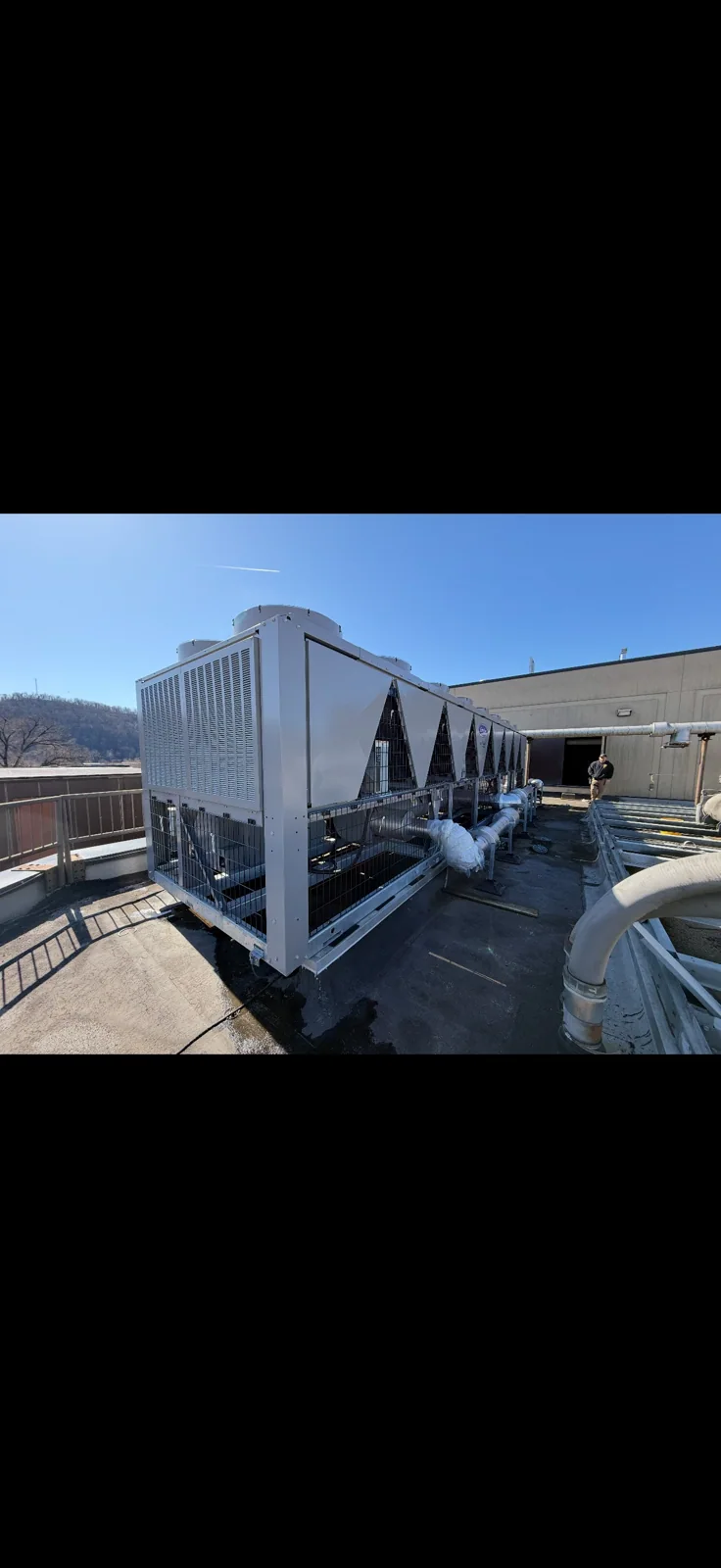
A practical way to sell your industrial chiller
An industrial chiller sale is more than a model number or a pickup date. For power plant chillers in Murfreesboro, Tennessee, we look at the equipment itself, the space around it and the work involved in removal. Our business buys industrial chillers; we are not offering chillers for sale.
Each project has its own boundaries. Keep this focus in mind: power plant closure, equipment decommissioning and project sequencing. Identify the machine, the responsible contact and any open questions before making decisions about access or timing.
Our business buys industrial chillers only, across all refrigerants and tonnages; the scope includes machines rated 20 to 2,000 or more tons. Air-cooled and water-cooled designs and centrifugal, scroll and screw compressors are included. Projects may involve retired data centers, power stations, hospitals, campuses or industrial plants. We offer cash and pay upfront when terms are agreed, but each proposed purchase requires evaluation.
Planning around the facility timeline
For a power plant shutdown, the important distinction is between a chiller that is available for sale and equipment still controlled by the site's shutdown plan. Identify the asset and the person authorized to release it, then describe the expected decommissioning sequence and any site-specific access requirements.
A plant may have controlled work areas or other equipment that must remain in place. Explain any restrictions, the location of the chiller, and where a truck or crane could approach. We handle the removal work in the agreed scope; site rules and release timing should be discussed before scheduling.
Access, rigging and removal
A good removal plan begins with the route out. Show the surrounding room, available openings, any overhead obstructions and the intended loading area. Tell us about roof access, restricted driveways or equipment that cannot be moved. If you have measurements or a documented weight, include them; if not, share clear photos rather than guessing.
Our removal scope includes refrigerant recovery, disconnects, crane service when needed, rigging, loading, freight and hauling. Explain where the unit connects to power or water and whether neighboring equipment must stay in service. Site access and timing are coordinated with the appropriate contact. The seller does not have to test the machine before requesting a quote.
What to send for a useful equipment review
A full-unit photograph and a legible nameplate give us a starting point for identifying the chiller. Useful label details include manufacturer, model and serial numbers, rated capacity, voltage and refrigerant. Include accessible views of the controls and connections as well. Leave covers and guards in place rather than taking risks to obtain a photograph.
Separate an observation from an operating claim. If you can see damage or know that a part was removed, explain that; if the service history is unavailable, say so. Let us know whether the unit is attached to its connections. We do not ask sellers to energize, run or pressure-test it, and existing records can supplement an unreadable plate.
From first details to an agreed pickup
Send the chiller's location, type, tonnage, refrigerant, voltage and nameplate photos, together with your contact details and company name. If some fields are unknown, provide what is available. Include the intended removal date, whether it is flexible, and the name of the person authorized to discuss the sale. For multiple chillers, label the photos and specifications by unit.
Our review may lead to follow-up questions about the unit, the access route or the date the site can release it. If we make an offer, the seller can review the proposed purchase and removal scope before accepting. Payment is upfront under the agreed terms, and we coordinate the removal and freight rather than asking the seller to arrange hauling.
How we evaluate an offer
Before valuing the proposed purchase, we need to know whether the description matches the equipment that will actually be released. Missing pieces, model and capacity, together with condition and configuration, can matter. So can the space for rigging, transportation and timing. These are review factors rather than a published price formula, and an inquiry may not result in an offer.
If we propose a purchase, check that the offer identifies the correct machine and states the agreed payment and removal arrangements. Our payment is upfront under the sale terms; we cover freight and handle hauling. Before setting the work window, identify the person who can release the equipment and raise any unresolved site-access questions.
Frequently asked questions
Can I inquire without current performance readings?
Yes. A performance test is not a condition of our review. The nameplate, overall photographs, known condition and site details are a useful starting point. Do not start or energize the chiller simply to obtain readings for the request.
Will the seller need to arrange removal and transportation?
No. We handle disconnects, refrigerant recovery, rigging, crane work when needed, loading and hauling, and we cover all freight. The site contact can help by explaining access, release dates and any systems that must remain in place. Removal is coordinated under the agreed scope.
What should a shutdown coordinator provide first?
Identify the machine, its owner or authorized seller and the estimated decommissioning window. Explain any active systems, restricted areas or milestones that could affect access. We can discuss these details before the shutdown is complete; an offer and pickup depend on agreed terms.