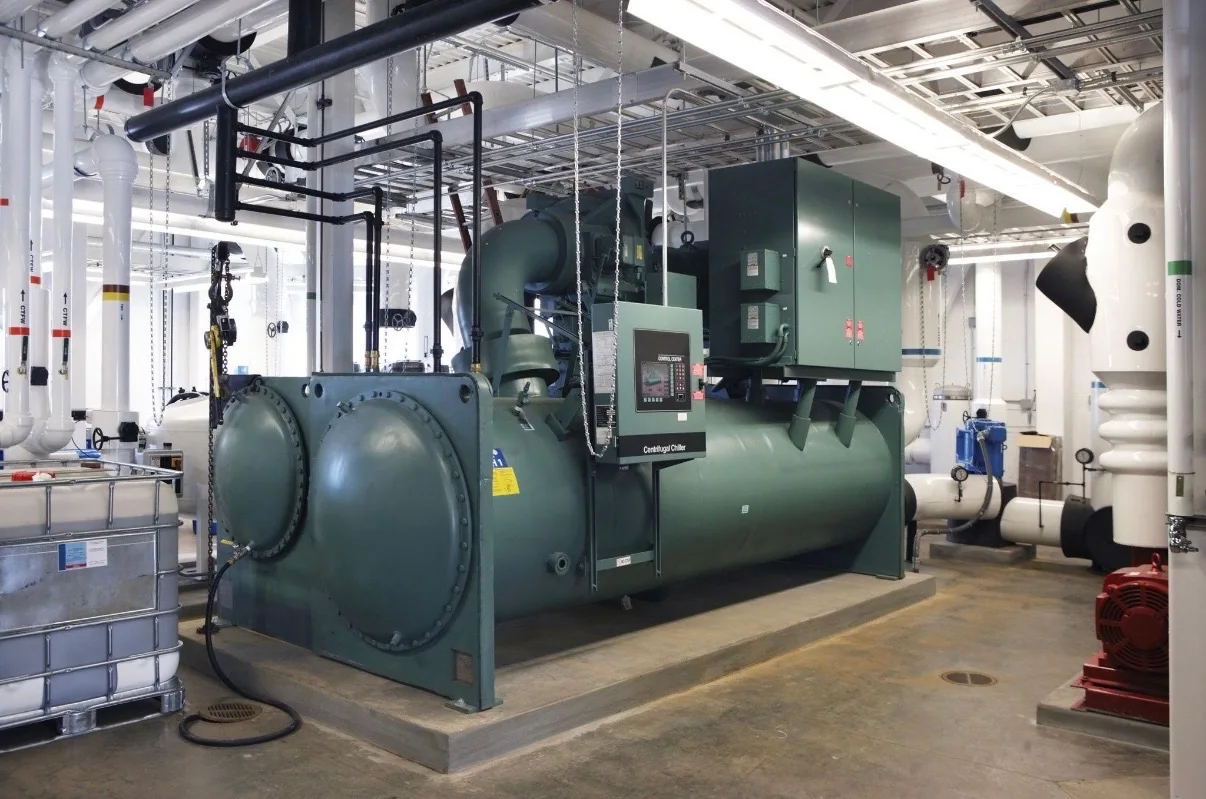
A practical way to sell your industrial chiller
Selling an industrial chiller starts with two questions: what is the equipment, and what will it take to remove it safely? We buy industrial chillers in Franklin, Tennessee. For a request concerning power plant chillers, photographs and honest site details help us assess the machine and prepare a practical cash offer.
The subject of this discussion is: power plant closure, equipment decommissioning and project sequencing. A useful first step is to separate the confirmed details from those that require checking, whether they concern the chiller itself or the surrounding property.
The chiller, rather than the entire facility, is the subject of our buying service. We buy industrial chillers of all tonnages and using all refrigerants, including 20–2,000+ ton units, both air-cooled and water-cooled, with centrifugal, screw or scroll configurations. Sources include data centers, power plants, hospitals, campuses and industrial shutdowns. Cash offers and upfront payment are subject to the equipment review and agreed terms, not an automatic guarantee.
Planning around the facility timeline
For a power plant shutdown, the important distinction is between a chiller that is available for sale and equipment still controlled by the site's shutdown plan. Identify the asset and the person authorized to release it, then describe the expected decommissioning sequence and any site-specific access requirements.
A plant may have controlled work areas or other equipment that must remain in place. Explain any restrictions, the location of the chiller, and where a truck or crane could approach. We handle the removal work in the agreed scope; site rules and release timing should be discussed before scheduling.
How we evaluate an offer
Two chillers with the same rated capacity can present different purchase and removal considerations. Their configurations, completeness and condition may differ, as may their locations, routes out and schedules. Share the identifying details and any known restrictions so we can assess the complete job. A specific amount or cash offer cannot be promised before that assessment.
A seller considering an offer can ask how the scope, payment and pickup fit the proposed sale. Once terms are agreed, payment is upfront; we also cover freight and handle hauling. Confirm the actual equipment being transferred and the access arrangements so the work is planned around an agreed release, not an assumed one.
Access, rigging and removal
A good removal plan begins with the route out. Show the surrounding room, available openings, any overhead obstructions and the intended loading area. Tell us about roof access, restricted driveways or equipment that cannot be moved. If you have measurements or a documented weight, include them; if not, share clear photos rather than guessing.
Once a purchase and scope are agreed, the buyer handles refrigerant recovery and disconnects as well as rigging, loading, freight and hauling. Crane work is included when needed. The facility should identify power and water connections, equipment that must remain operational, and its rules for granting access. The seller does not need to test the chiller for our review.
From first details to an agreed pickup
If you are preparing information for someone else to submit, gather the company and contact details, site location and authority to sell alongside the chiller photographs. Capacity, type, refrigerant and voltage are useful when known. Explain the anticipated removal date and whether it can move. A separate identification set for each unit prevents different machines from being confused.
A preliminary description lets us determine what additional information, if any, is needed. We may discuss photographs, condition or how the machine can leave the site. If we make an offer, review the equipment and removal terms; there is no guarantee of a proposal. After agreement we pay upfront and coordinate the listed work, including freight, for pickup.
What to send for a useful equipment review
The nameplate is often the quickest way to distinguish one machine from another. Send the manufacturer, model, serial number, tonnage, voltage and refrigerant details visible on the label, along with a wide photo of the whole unit. Photos of controls and connections can add context. Only photograph areas you can access safely; do not open energized equipment for a picture.
A unit may be connected, disconnected, incomplete or already retired; describe its actual condition rather than assuming that it must be operational. Mention known damage and any components that are absent. No testing is required, and you should not energize or operate equipment merely to request a quote. Existing records can help when a label is difficult to read.
Frequently asked questions
What if we cannot demonstrate that the unit runs?
You can still send the available information. Seller testing is not required, and a machine should not be energized solely for our quotation. Identify the unit and explain its known condition or any gaps in the record; any offer is subject to review.
What work does the buyer handle after a sale is agreed?
We handle refrigerant recovery, disconnects, necessary crane work, rigging, loading, freight and hauling; all freight is covered by the buyer. Describe the machine's connections and the route out so the team can coordinate removal with the facility's access requirements.
Who should coordinate a facility chiller sale?
Identify the equipment owner or authorized seller and a site contact who can explain the release window, access rules and systems that must remain operational. These may be different people. The proposed purchase and pickup depend on review of the particular unit and agreed terms.