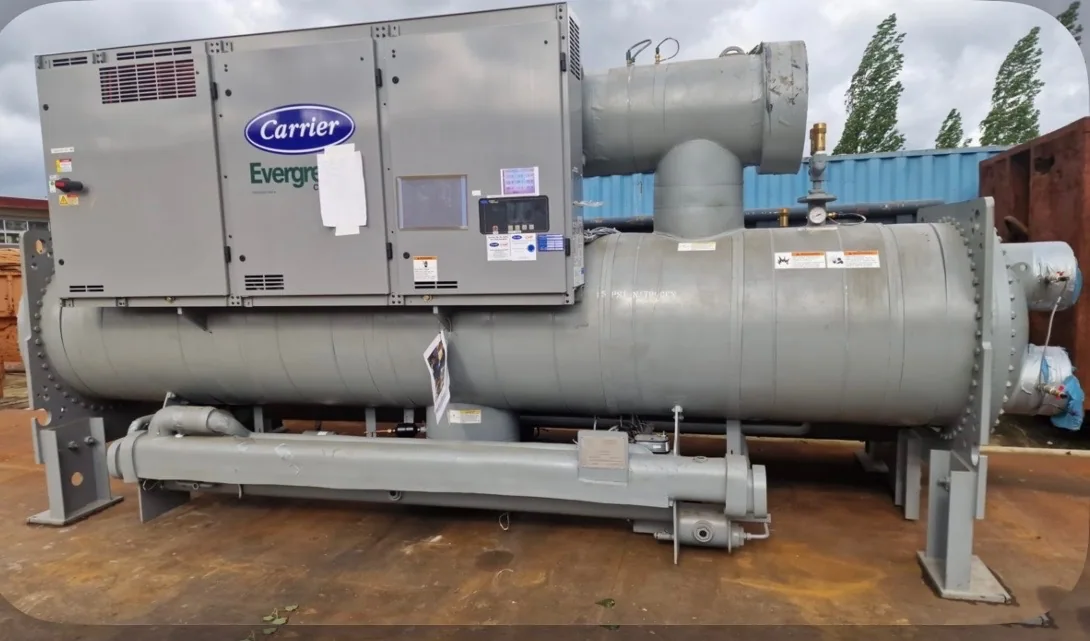
A practical way to sell your industrial chiller
When a cooling project leaves a surplus machine in Franklin, Tennessee, the first decision is often how to move it from the property. We buy industrial chillers. For data center chillers, we review identification and site access together, so a seller can discuss a possible cash purchase without first arranging the move or operating the equipment.
Consider the circumstances behind the request: data center closure, equipment decommissioning and project sequencing. An equipment label, a site photograph and a contact familiar with the property can help turn that broad description into a useful discussion.
The chiller, rather than the entire facility, is the subject of our buying service. We buy industrial chillers of all tonnages and using all refrigerants, including 20–2,000+ ton units, both air-cooled and water-cooled, with centrifugal, screw or scroll configurations. Sources include data centers, power plants, hospitals, campuses and industrial shutdowns. Cash offers and upfront payment are subject to the equipment review and agreed terms, not an automatic guarantee.
Planning around the facility timeline
For a data center decommissioning, identify which chiller is actually being retired and whether neighboring cooling equipment must remain available. A site contact can explain redundancy requirements, security procedures and the window in which the unit will be released. We can plan the purchase and removal around the information provided rather than assuming the entire facility is shutting down.
If the equipment is on a roof, in a plant room or behind controlled-access doors, describe that route and any escort or loading restrictions. Share the identification of the unit to be sold, not just a list of cooling assets. No performance test is needed for our buying process.
How we evaluate an offer
A useful valuation discussion starts with facts, not an assumed price per ton. Provide the model and configuration, visible condition and whether components are complete, then describe the removal route and available timing. We consider the chiller and the associated work as one proposed transaction. Each case is evaluated and neither a price nor an offer is guaranteed.
The handoff should be clear before anyone schedules a truck. Review which chiller and components the agreement covers, when payment is due and the expected pickup window. We pay upfront according to the agreed terms and cover all freight and hauling. If the site's schedule depends on another party, bring that dependency into the discussion.
From first details to an agreed pickup
Send the chiller's location, type, tonnage, refrigerant, voltage and nameplate photos, together with your contact details and company name. If some fields are unknown, provide what is available. Include the intended removal date, whether it is flexible, and the name of the person authorized to discuss the sale. For multiple chillers, label the photos and specifications by unit.
A preliminary description lets us determine what additional information, if any, is needed. We may discuss photographs, condition or how the machine can leave the site. If we make an offer, review the equipment and removal terms; there is no guarantee of a proposal. After agreement we pay upfront and coordinate the listed work, including freight, for pickup.
What to send for a useful equipment review
Make the identification images easy to match to the asset. A close view of the main plate may show the manufacturer, model, serial number, capacity, voltage and refrigerant; a separate wide view shows the whole chiller. If safe access permits, add controls and connection photographs. Do not open electrical enclosures or remove protective guards to obtain them.
An incomplete record does not need to become a guess. Tell us which components are visibly missing, whether the chiller remains connected and what is known about its condition. A worn label can be supplemented by existing documentation. No performance test is required; leave a retired or disconnected machine off rather than starting it for a quote.
Access, rigging and removal
Photograph the path from the chiller to an exit or loading point, not just the machine itself. Include doorways, stairs or ramps, overhead obstructions, nearby equipment and the area where a truck could approach. If the unit is on a roof or below grade, say how that area is reached. Approximate dimensions and known weights are helpful, but mark estimates as estimates.
You do not need to arrange a freight carrier or rigging crew for the agreed purchase. We handle crane work as needed, refrigerant recovery, disconnects, rigging, loading, freight and hauling. Describe the electrical and water connections and any adjacent systems that need protection. A site contact can help coordinate access and release; no seller testing is required.
Frequently asked questions
Should we run a performance test before sending photos?
No. Our buying process does not require a seller to run a test. Provide the equipment identification, visible condition and available site details. If the unit has already been shut down or a specification is unknown, say so rather than operating equipment for the quote.
Who handles refrigerant, rigging and freight?
The buyer handles refrigerant recovery, disconnects, crane work when needed, rigging, loading, freight and hauling. We cover all freight. Tell us about the site's access rules and the equipment's connections so those activities can be coordinated within the agreed removal plan.
Can we discuss a sale before a facility is fully shut down?
Yes. Identify the chiller proposed for sale, the person who can authorize its release and the expected decommissioning window. Explain which nearby systems must remain in service and whether the date could change. An offer and pickup depend on the equipment, access and agreed terms.